What to Do After a Contractor Site Visit: The 48-Hour Strategy
Confused after contractor site visits? Use this 48-hour strategy to rank contractors, spot red flags, and prepare for bids like a renovation pro.
|
April 28, 2026

In this article:
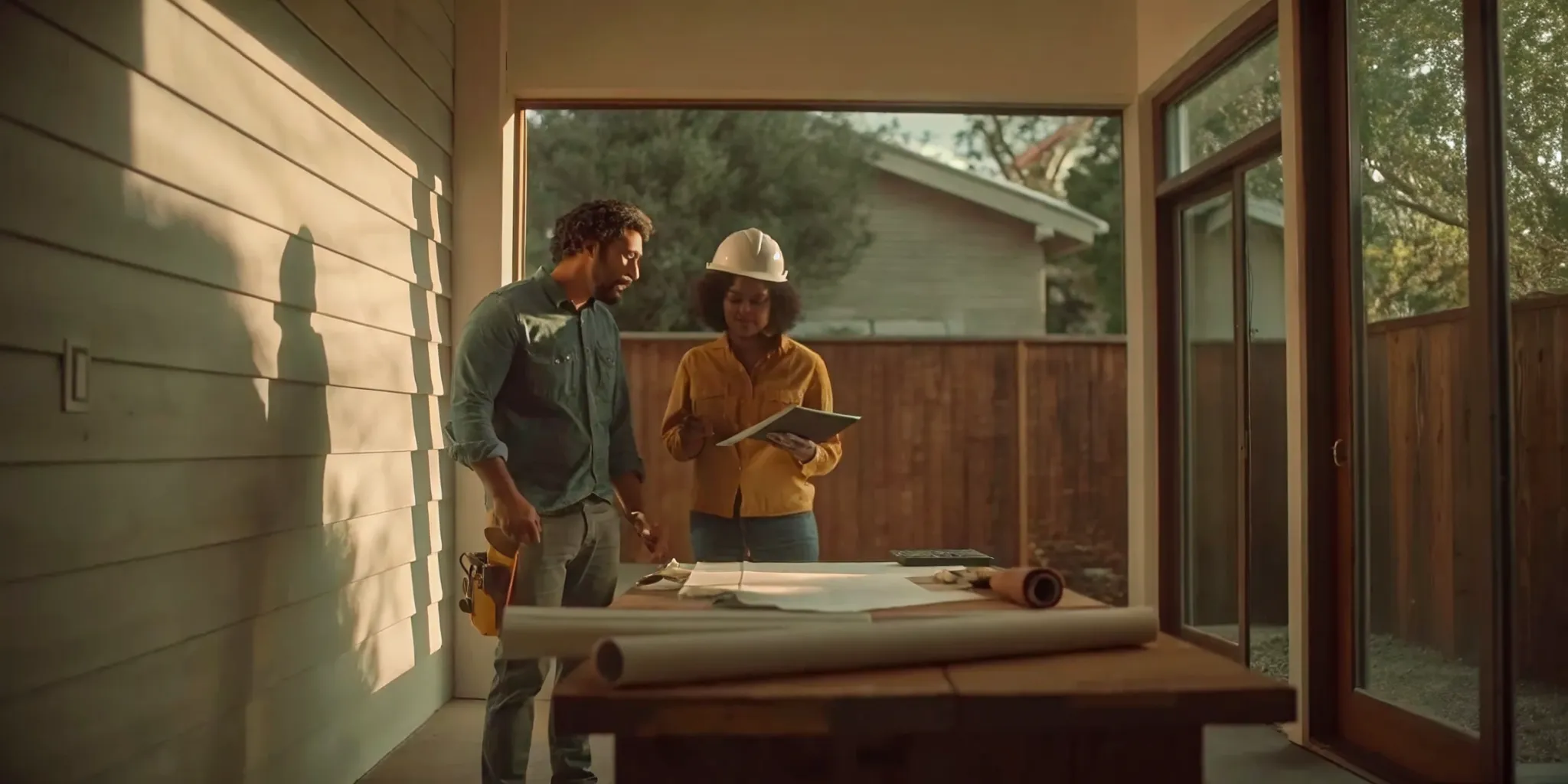
You've just had your first contractor site visit. Maybe you've had two or three. Now you're sitting in your kitchen, surrounded by business cards and half-remembered conversations, wondering: What am I supposed to do with all this?
If you're feeling uncertain, you're not alone. Realm sees this confusion in 72% of homeowner advisory calls—the anxious window after site visits end but before bids arrive. Homeowners describe it the same way: too much information, not enough structure, and a nagging worry that they're missing something important. They replay conversations in their head, second-guess their impressions, and worry they forgot to mention something critical.
Here's what we've learned from guiding thousands of homeowners through this exact moment: In over 70% of cases, the eventual contractor choice is predictable from site visit behavior—before a single price is seen. The clues are already there. You just need to know what to look for and how to organize it. The homeowners who navigate this phase successfully aren't luckier or more experienced—they simply have a system for capturing and evaluating what they observed.
This guide gives you a concrete 48-hour strategy to transform that post-visit confusion into clarity. We'll walk you through exactly what to document, how to score contractors objectively, what red flags should disqualify a bidder, and how to set yourself up for meaningful bid comparisons. By the time you finish reading, you'll have a framework you can use immediately.
Key Takeaways
- A site visit is an information exchange, not a final price. Contractors are gathering data to build accurate bids—and you should be gathering data on them. Think of it as a mutual interview where both parties are assessing fit.
- Document everything within 48 hours. Write down your gut reaction, what they measured (or didn't), and any comments they made about scope. Memory fades faster than you think, and when you're comparing three or four contractors, details blur together quickly.
- Five behavioral signals predict contractor fit: communication speed, attention to detail, questions asked, punctuality, and how they handle uncertainty. Score each contractor on these before bids arrive so you have objective data alongside your subjective impressions.
- Send a scope clarification note before bids are finalized. This ensures everyone is bidding on the same project and gives you one more communication data point. It also demonstrates that you're an organized, serious client—which attracts better contractor behavior.
- Watch for red flags: contractors who don't measure, quote numbers on the spot, dismiss your questions, or badmouth competitors. Any of these behaviors during the sales phase will amplify during the construction phase.
- Wildly different bids are normal. Variation reflects different scope interpretations, material assumptions, and risk calculations—not necessarily dishonesty. Your job is to understand what's behind each number, not just compare totals.
- The 48-hour window is decision time. The notes you take now will shape your ability to compare bids and choose wisely. Treat this window as an active working phase, not passive waiting.
1. Understand What a Site Visit Actually Is
First, let's reset expectations. A site visit is an information exchange, not a final price. Many homeowners approach site visits hoping to walk away with a number, but that expectation sets you up for disappointment or, worse, leads you to trust premature estimates that will shift dramatically once a contractor actually runs the numbers.
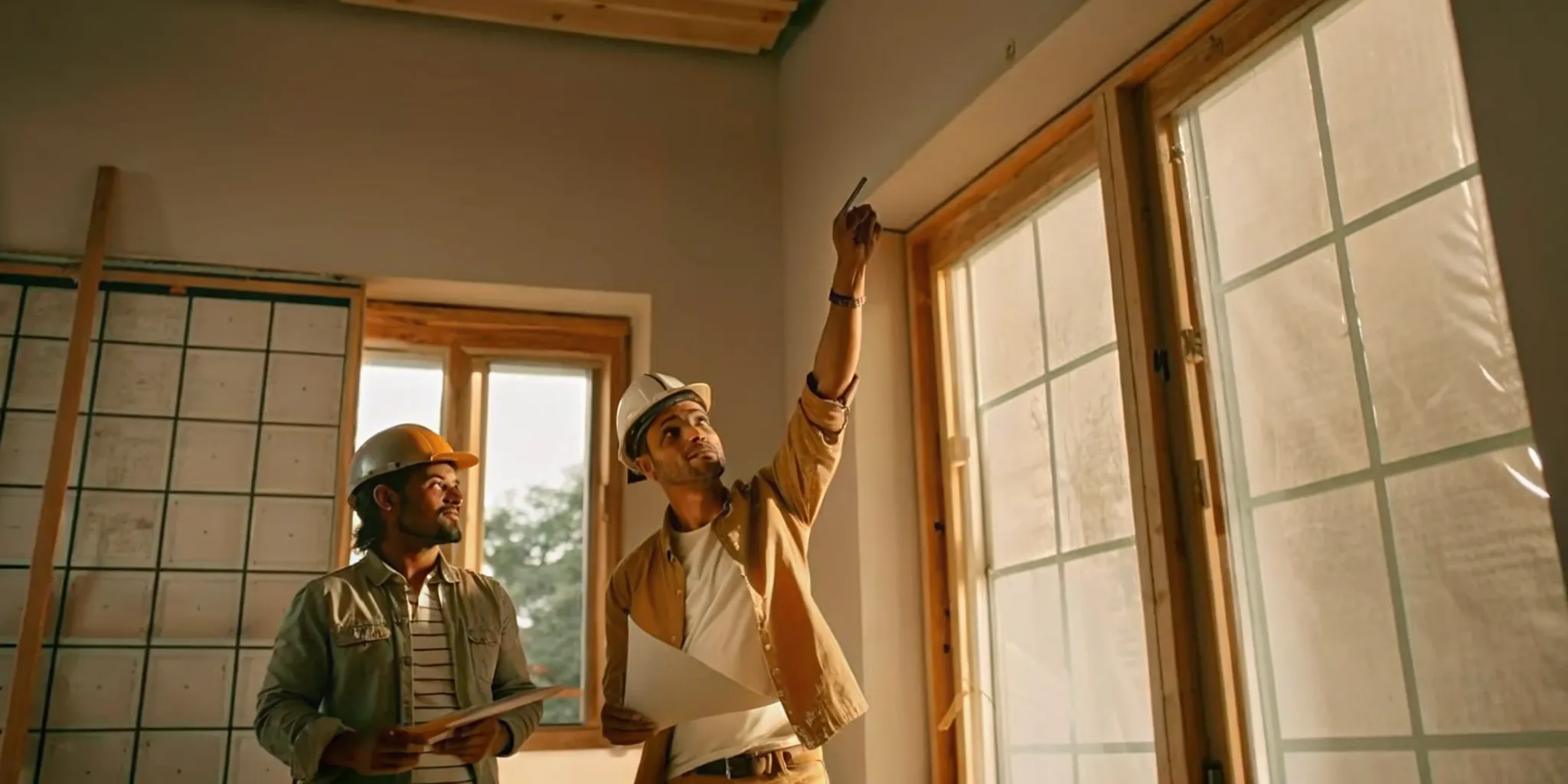
When a contractor walks through your home, they're doing reconnaissance: understanding the scope, assessing conditions, and gathering the details needed to build an accurate bid. They're looking at access points, structural quirks, existing systems, and potential complications you might not even know exist. A good contractor is mentally cataloging everything from ceiling heights to electrical panel capacity to how difficult it will be to get materials through your front door. This assessment takes focus and experience—which is why the best contractors often seem quieter during visits than you'd expect.
You, in turn, are gathering data about them. How do they approach problems? How do they communicate? Do they ask questions, or do they make assumptions? Are they present and engaged, or are they rushing through to get to their next appointment? The site visit is your best window into how this person operates before money changes hands—before the polite sales demeanor fades into everyday working behavior.
A site visit that feels "too quick" or "too slow" often says more about fit than competence. The contractor who breezes through might be deeply experienced—or might be cutting corners. The contractor who takes an hour might be thorough—or might be padding their time. Context matters: a contractor who's done fifty kitchen remodels in your neighborhood genuinely needs less time to assess your kitchen than someone seeing that layout for the first time. Don't judge speed in isolation.
Your job isn't to evaluate their speed. It's to notice their behavior patterns and document them immediately. What you observe during this visit—and how well you capture those observations—will become your most valuable decision-making tool when bids arrive and prices compete for your attention.
2. The 3 Things to Write Down Within 48 Hours
Memory fades faster than you think, especially when you're comparing multiple contractors. Studies on eyewitness recall show that details degrade significantly within 24-48 hours, and that's for memorable events—contractor site visits blend together even faster. Within 48 hours of each site visit, capture these three things in writing, ideally in a dedicated notebook or document you'll reference when bids arrive.
Your Gut Reaction (Yes, Really)
Write one sentence about how you felt during the visit. Not what they said—how you felt. This might seem unscientific, but your intuitive response captures information your conscious mind hasn't fully processed yet.
Were you comfortable asking questions? Did you feel rushed? Did something feel off that you can't quite articulate? Did you feel like they were genuinely listening, or performing listening while waiting to talk? These impressions matter because renovation projects are relationships that last months—sometimes a year or more. The interpersonal dynamics you sense in a 45-minute site visit will amplify over a 6-month construction project.
Gut reactions aren't irrational. They're your brain processing hundreds of micro-signals—body language, tone, attention, eye contact, how they treated your space—that don't fit neatly into spreadsheets. Research in cognitive psychology calls this "thin-slicing," and it's remarkably accurate for predicting relationship outcomes. Don't dismiss your gut; document it while it's fresh and let it inform your final decision alongside the objective data.
Measurements and Physical Assessment
Did they measure? What did they measure? How? The physical actions a contractor takes during a site visit reveal their process and attention to detail more clearly than anything they say. Words are easy; pulling out a laser measure and documenting every window opening takes effort and signals intent.
A bathroom remodel contractor who doesn't pull out a tape measure is giving you a signal. An addition contractor who doesn't examine the foundation or roofline is telling you something about their process. A kitchen contractor who doesn't open cabinet doors, check under the sink, or look at your electrical panel is planning to discover those details later—potentially as change orders. The thoroughness of their physical assessment predicts the thoroughness of their bid.
Write down what you observed: "Measured all window openings, sketched cabinet layout, took photos of electrical panel" or "Didn't measure anything, said he'd 'work from the plans.'" Note whether they brought tools, what tools they used, and whether they documented their findings or trusted memory. These details feel minor now but become significant when you're trying to understand why one bid is $40,000 higher than another.
Scope Comments and Questions
What did they say about the project itself? Did they suggest additions or alternatives? Did they point out potential issues you hadn't considered? The comments contractors make during site visits reveal how they think about projects—whether they're order-takers who build exactly what you describe, or consultants who bring expertise and perspective to improve your outcome.
Pay particular attention to unsolicited observations. A contractor who notices that your bathroom vent doesn't actually vent outside, or that your kitchen's load-bearing wall might complicate your island plans, is demonstrating the kind of proactive thinking that prevents problems during construction. These observations show experience and engagement—they've seen enough projects to pattern-match potential issues before they become expensive surprises.
One homeowner recently told us: "He was on time, but he was not keen on details that much." Another said: "He got there late but he was really good with trying to get measurements and be precise with his quote." Both observations are valuable—and both would be lost if those homeowners hadn't written them down. Capture the specific comments, suggestions, and concerns each contractor raised. When bids arrive at different price points, these notes will help you understand what's behind the numbers.
3. The 5 Behavioral Signals That Actually Matter
After hundreds of advisory calls, we've identified five behavioral signals that consistently predict contractor fit—before you ever see a number. These aren't guarantees, but they're patterns we've observed across thousands of projects. When you're facing three similar bids and struggling to differentiate, these behavioral signals often break the tie more reliably than price comparisons.
Signal 1: Communication Speed
How quickly did they respond to schedule the visit? How quickly did they follow up afterward? Communication speed during the sales phase—when contractors are most motivated to impress you—establishes the baseline for what you can expect during construction when they're juggling multiple active projects.
Speed alone isn't the metric—consistency is. A contractor who responds in 2 hours, then goes silent for 4 days, is showing you their communication pattern. That pattern will continue through your project, and the gaps will likely widen once they have your deposit. Look for contractors whose response time is predictable, even if it's not instant. A contractor who consistently responds within 24 hours is more reliable than one who sometimes responds in 10 minutes and sometimes disappears for a week.
Also note the quality of communication, not just speed. Are responses thorough and on-topic, or vague and evasive? Do they answer your actual questions, or deflect to what they'd rather discuss? Do they communicate proactively, or only reactively when you reach out first? These patterns predict how informed (or frustrated) you'll feel during the months of construction ahead.
Signal 2: Attention to Detail
Did they notice things you didn't mention? Did they ask clarifying questions about finishes, materials, or design intent? Attention to detail during a site visit predicts attention to detail during construction—and in renovation, details are where projects succeed or fail. A contractor who glosses over specifics during the sales phase will gloss over specifics when installing your tile or trimming your windows.
Detail-oriented contractors prevent change orders. They identify ambiguities in your scope before they become expensive surprises mid-project. When a contractor asks whether you want your cabinet hinges exposed or concealed, whether your tile runs under or up to your vanity, or how you want your outlets positioned relative to your backsplash—that's not nitpicking. That's the process that prevents you from discovering misalignments after materials are installed and changes cost real money.
Watch for contractors who take notes during the visit, who ask follow-up questions that build on earlier answers, and who reference specific details from your initial conversation or project brief. These behaviors indicate someone who's building a mental model of your project, not just checking a box on their sales calendar before sending a templated bid.
Signal 3: Questions Asked
The best contractors ask more questions, not fewer. They want to understand your priorities, your budget constraints, your timeline flexibility, your tolerance for disruption, and the outcome you're actually trying to achieve—which isn't always the literal scope you described. A contractor who doesn't ask questions is either assuming they know everything—or planning to figure it out later at your expense.
Pay attention to the type of questions asked. Surface-level questions ("So you want new cabinets?") suggest a transactional approach. Deeper questions ("What's driving the timeline—is there an event you're planning around?" or "How do you actually use this space day-to-day?") suggest a contractor who's trying to solve your underlying problem, not just complete a task. The latter approach leads to better outcomes and fewer mid-project pivots.
A contractor who doesn't ask questions is either assuming they know everything—or planning to figure it out later at your expense. Silence during a site visit isn't necessarily confidence; it might be indifference, or a sign that they're already composing a generic bid rather than a customized one. The contractors who ask the most questions typically submit the most accurate bids—because they've gathered the information needed to price the actual project, not a simplified version of it.
Signal 4: Punctuality
Timeliness matters, but context matters more. Punctuality signals respect for your time and, by extension, respect for the project. But rigid lateness rules miss the nuance of real-world contracting, where traffic delays and previous appointments can create unpredictable scheduling challenges. What matters is how they handle the situation.
A contractor who arrives 15 minutes late but texts ahead and apologizes is demonstrating accountability. They anticipated the problem, communicated proactively, and acknowledged the impact on you. A contractor who arrives 15 minutes late with no acknowledgment is demonstrating how they'll handle schedule slips on your project—which is to say, they'll expect you to absorb the inconvenience without explanation or apology.
Also note whether they end on time or let the visit expand indefinitely. A contractor who schedules a 30-minute visit and stays for 90 minutes might seem thorough, but they may also struggle with time management on your job site. The ideal is someone who arrives when expected, uses the time efficiently, and respects boundaries—both yours and their own.
Signal 5: How They Handle Uncertainty
What happens when you ask a question they can't answer on the spot? Every project has unknowns, and renovation projects have more unknowns than most. How a contractor handles uncertainty during the sales phase predicts how they'll handle the inevitable surprises during construction—the hidden water damage, the outdated wiring, the permit requirement nobody anticipated.
Strong contractors say, "I need to check on that and get back to you." They're comfortable acknowledging limits to their knowledge because they know their expertise is demonstrated through follow-through, not improvised answers. They might say, "That depends on what we find behind the wall—here's how I'd approach it either way," which shows both honesty and experience.
Weak contractors guess, deflect, or give vague non-answers. They might say, "Yeah, that shouldn't be a problem," without actually addressing your question, or change the subject to territory where they feel more confident. These responses aren't just unhelpful—they're predictive. A contractor who bluffs through uncertainty during the sales phase will bluff through uncertainty during construction, and you'll be the one dealing with the consequences.
How to Score Your Contractors
Create a simple scoring system to compare contractors objectively before emotions and pricing cloud your judgment. This isn't about reducing complex human interactions to a single number—it's about creating a structured record of your observations that you can reference when three bids arrive on the same day and your memory of the site visits has blurred. Having scores written down removes the recency bias that often leads homeowners to favor whoever they met most recently.
For each contractor, rate them on a scale of 1 to 5 across five categories: gut feeling, communication, attention to detail, punctuality, and how they handle uncertainty. A score of 1 means poor performance in that area, while 5 means excellent. Be honest with yourself—if something felt off, give it a 3 even if you can't articulate why. If they exceeded expectations, don't hold back on giving a 5. The goal is to capture your genuine assessment, not to be generous or harsh.
For example, Contractor A might score a 4 on gut feeling because you felt comfortable but slightly rushed, a 5 on communication because they responded same-day and followed up promptly, a 3 on attention to detail because they measured but didn't ask many clarifying questions, a 5 on punctuality because they arrived early, and a 4 on handling uncertainty because they acknowledged what they didn't know but seemed slightly defensive about it. That gives Contractor A a total of 21 out of 25. Write a few sentences explaining each score—these notes will be invaluable when you're reviewing bids weeks later.
Run through this exercise for each contractor within 48 hours of their visit. Don't wait until all visits are complete—by then, the early ones will have faded and you'll be reconstructing impressions from fragments rather than documenting fresh observations. When bids arrive, you'll have behavioral data to weigh alongside the numbers, and you'll often find that your highest-scoring contractor also submitted the most thorough, well-organized bid. That's not coincidence; the same traits that make someone impressive during a site visit make them thorough in their estimating process.
4. Template: The Scope Clarification Note
Before contractors finalize their bids, send a brief scope clarification note. This accomplishes two things: it ensures everyone is bidding on the same project, and it gives you one more data point on how they communicate. The clarification note also signals that you're an organized, detail-oriented client—which tends to bring out better behavior from contractors who might otherwise cut corners on their estimates.
Many bid discrepancies stem from simple misunderstandings: one contractor assumed you wanted to keep the existing flooring, another assumed you were replacing it. One included permit fees, another listed them as an allowance, and a third forgot them entirely. These aren't necessarily signs of dishonesty—they're signs that contractors interpreted ambiguous information differently. A scope clarification note removes that ambiguity and makes your eventual bid comparison much more meaningful.
Subject: Scope Clarification – [Your Name] [Project Type]
Hi [Contractor Name],
Thank you for visiting on [date]. I appreciated your time and insights about the project. Before you finalize your bid, I wanted to clarify a few details to ensure we're aligned on the scope:
1. [Specific item – e.g., "The kitchen island will be 8 feet, not 6 feet as originally discussed"]
2. [Specific item – e.g., "We'd like the bid to include permit costs as a line item, not an allowance"]
3. [Specific item – e.g., "Please confirm the timeline assumes a [month] start date"]
4. [Specific item – e.g., "We discussed potentially moving the dishwasher—please include this as an optional line item so we can evaluate the cost"]
I'd also appreciate it if your bid includes a line-item breakdown so I can compare proposals accurately. If any of these details significantly impact your estimate, I'd rather know now than discover it later.
Please let me know if you have any questions or need any additional information. Looking forward to receiving your bid.
Best, [Your Name]
Send this 2-3 days after the site visit—enough time for them to have processed the visit, but early enough to influence their bid. Their response (or lack thereof) is another behavioral signal. A contractor who responds promptly with clarifying questions is engaged; a contractor who ignores the email entirely might be signaling how they'll handle communication during your project. Don't over-interpret a single data point, but do add it to your overall assessment.
5. Red Flags to Watch For
Not every contractor who visits should make it to your bid comparison. Some behaviors during site visits are significant enough to disqualify a contractor regardless of how competitive their eventual bid might be. These red flags aren't minor annoyances—they're predictive signals of how the contractor will operate during your project, when the stakes are higher and your leverage is lower. Trust what you observe.
They Didn't Measure Anything
A contractor who doesn't measure is estimating from memory or experience—which might work for simple projects, but introduces risk on anything complex. If they didn't bring a tape measure or laser, ask yourself why. Either they believe their experience is sufficient to estimate without verification, or they're not invested enough in your project to do basic due diligence.
Some contractors argue that they'll return to measure if they get the job, or that they'll work from your architectural plans. But site visits exist precisely because plans don't capture everything—actual dimensions vary from drawn dimensions, existing conditions create complications, and the only way to know what's really there is to measure it yourself. A contractor who skips this step is building their bid on assumptions, and assumptions become change orders.
The exception is when a contractor explicitly explains their process: "I'm going to take rough notes today and schedule a detailed measurement visit before finalizing the bid." That's different from showing up empty-handed and eyeballing everything. Watch for the tools they bring and whether they use them—this tells you more about their process than anything they say about it.
They Quoted Numbers on the Spot
Verbal ballpark figures during a site visit are almost always inaccurate. A contractor who confidently says "$85,000" before they've left your driveway is either guessing or anchoring you to a number they can adjust later. Neither scenario serves your interests. Accurate estimates require material takeoffs, subcontractor quotes, permit research, and actual calculation—none of which happen during a site visit.
Professional contractors take time to build accurate bids. That's the process you want. When contractors throw out numbers on-site, they're often lowballing to stay in the running, knowing they can raise the price later through "discoveries" and change orders. Or they're inflating to leave themselves margin for the unknowns they haven't bothered to investigate. Either way, the number isn't reliable, and it will shift.
If a contractor offers a verbal range, that's somewhat different—"Projects like this typically run $80,000-$120,000 depending on finishes and what we find behind the walls" is a contextualized estimate, not a commitment. But a single confident number delivered without caveats should make you skeptical. The most trustworthy response to "What do you think this will cost?" is "I'll need to work up the numbers and get back to you."
They Dismissed Your Questions
Did you ask about permits and get a vague hand-wave? Did you ask about their approach to an issue and get "don't worry about it"? Did you raise a concern and feel like they changed the subject rather than addressing it? Dismissiveness during sales is a preview of dismissiveness during construction, when dismissiveness can cost you thousands of dollars.
Homeowners often second-guess themselves when contractors brush off concerns—maybe the contractor knows something they don't, maybe the question was naive, maybe they're overthinking. But your questions are valid, and a professional contractor should be willing to address them directly. "That's a good question—here's how we handle it" is the response you're looking for. "Don't worry about that" is a red flag, especially for concerns about permits, timelines, or budget.
Dismissiveness also manifests as talking over you, explaining why your priorities are wrong, or making you feel unsophisticated for asking basic questions. These behaviors reveal how the contractor views the client relationship—as a partnership or as an obstacle to manage. You'll be working with this person for months; don't sign up for a dynamic where your input is unwelcome.
They Badmouthed Other Contractors
Professionals compete on their own merits. Contractors who spend visit time criticizing competitors are usually deflecting from their own weaknesses or trying to undermine your confidence in alternatives rather than building confidence in themselves. It's a sales tactic, and an unimpressive one.
It's one thing to make factual comparisons when asked: "Yes, some contractors use that approach—we prefer this method because..." That's professional. It's another thing to volunteer negative commentary about competitors by name, spread rumors about their quality or business practices, or suggest that choosing anyone else would be a mistake. This behavior suggests insecurity, and often comes from contractors who've lost bids to those competitors and haven't processed it gracefully.
Beyond the immediate red flag, badmouthing signals a mindset that externalizes blame. If problems arise during your project, will this contractor take responsibility or point fingers at subcontractors, suppliers, and you? The way they talk about competitors predicts the way they'll talk about anyone who isn't serving their interests—including you, eventually.
For more on evaluating bids once they arrive, see our guide on how to assess contractor bids.
6. What a Realm Advisor Debrief Call Looks Like
If you're working with Realm, here's what happens next: your Advisor schedules a debrief call to walk through your site visit observations together. This call typically happens within a few days of your last site visit, while impressions are fresh but before bids have arrived—the optimal window for processing what you observed and preparing for what comes next.
On that call, your Advisor—who has 2,000+ hours of renovation experience and has guided hundreds of homeowners through this exact process—helps you decode the signals you observed and put them in context. What felt like a red flag might be standard practice in your project type; what seemed normal might actually be concerning. Your Advisor has the pattern recognition to distinguish between the two, drawing on experience across thousands of similar contractor interactions.
Your Advisor also helps you identify questions to ask before bids arrive—specific follow-ups that can clarify scope, surface hidden assumptions, and ensure you're comparing apples to apples when numbers land. They'll help you anticipate bid differences based on what contractors said during visits, so you're not surprised when one bid is 40% higher than another. And they'll flag potential concerns from patterns we've seen across thousands of projects—subtle signals that might not register as problematic to a first-time renovator but that our Advisors recognize immediately.
This isn't generic advice. It's pattern recognition built from guiding 4,000+ homeowners through the same moments you're experiencing. Our Advisors have seen which contractor behaviors predict smooth projects and which predict problems. They've seen which communication styles lead to change order disputes and which lead to collaborative problem-solving. They bring that context to your specific situation, not as abstract wisdom but as practical guidance tailored to the contractors you met and the project you're planning.
The debrief happens before bids arrive, so you're prepared—not reactive—when numbers hit your inbox. Your Advisor stays with you through bid comparison, negotiation, and contractor selection, ensuring you're never making high-stakes decisions alone. Having an experienced partner who's seen hundreds of projects like yours removes the guesswork and second-guessing that makes this phase so stressful.
Learn more about our expert-guided renovation process.
7. Why Wildly Different Bids Are Completely Normal
When bids arrive, you may see numbers that are 30%, 50%, or even 100% apart. Your first instinct might be panic or suspicion—someone must be ripping you off, or someone must be cutting corners. But wide variation is actually normal in renovation bidding, and understanding why it happens will help you evaluate bids more effectively than simply comparing bottom-line numbers.
Here's why it happens:
Different scope interpretations. Even with a scope clarification note, contractors may include or exclude different items. One bid includes appliances; another doesn't. One includes permit fees; another shows them as an allowance. One includes a full dumpster rental; another assumes you'll handle debris removal. These aren't errors—they're different assumptions about where your scope boundaries lie. Your job is to identify these differences and normalize them before comparing totals.
Different material assumptions. "Tile" could mean $3/square foot or $30/square foot. "Cabinets" could mean stock, semi-custom, or custom. "Countertops" could mean laminate or quartzite. Contractors make assumptions about material grades when your scope isn't specific, and those assumptions vary based on their typical client base, their supplier relationships, and their interpretation of your style preferences. A bid that seems high might include premium materials; a bid that seems low might assume builder-grade everything.
Different labor models. Some contractors use W-2 employees; others use subcontractors. Some are booked 6 months out and price accordingly; others need the work and are willing to sharpen their pencils. Some have high overhead (office, project managers, warranty staff); others run lean. These structural differences affect pricing independent of quality—a more expensive contractor isn't necessarily better, and a cheaper contractor isn't necessarily worse. But the differences are real and worth understanding.
Different risk calculations. Experienced contractors build contingency into their bids because they've learned that renovation projects surface surprises—old wiring that doesn't meet code, water damage hidden behind walls, structural issues that weren't visible during the site visit. Less experienced contractors (or more desperate ones) might bid tighter and hope nothing goes wrong. A "high" bid with built-in contingency might ultimately cost you less than a "low" bid that grows through change orders every time something unexpected appears.
Wide variation isn't a sign that someone is "ripping you off"—it's a sign that you're comparing different approaches to the same problem. Your job is to understand what's behind each number, not to automatically choose the cheapest option or distrust the most expensive one. The right contractor for your project might be the highest bidder, the lowest bidder, or somewhere in between—but you won't know until you understand what each bid actually includes.
For a deeper dive on this topic, read our full guide on how to compare home renovation bids.
Frequently Asked Questions
How long should a contractor site visit take?
There's no single right answer—it depends on your project's complexity, the contractor's experience with similar work, and how much information they need to gather. A simple bathroom remodel might warrant 20-30 minutes, while a whole-home renovation or addition could justify 60-90 minutes. Kitchen remodels typically fall in the 30-45 minute range, while ADU projects might require a full hour to assess site conditions, setbacks, and utility connections.
What matters more than duration is what happens during that time. Did they measure? Did they ask questions? Did they examine the areas that will affect the work? A thorough 25-minute visit from an experienced contractor often beats a meandering hour-long visit from someone who's disorganized or using extra time to compensate for inexperience. Pay attention to how they use the time, not just how much time they use.
Also consider that contractors who've done many similar projects in your area genuinely need less time—they already know local permit requirements, common construction methods, and typical challenges. A kitchen contractor who's completed 50 kitchens in your neighborhood can assess your project faster than one who's never worked in your city. Speed combined with thoroughness is ideal; speed combined with superficiality is concerning.
Should I be present for the contractor site visit?
Yes, absolutely. Being present allows you to answer questions in real-time, observe how the contractor approaches your project, and clarify details about your vision and priorities that wouldn't come through in a written scope. You'll also catch misunderstandings before they become incorrect bids—a contractor might assume you want to keep existing flooring when you actually plan to replace it, and only your presence will surface that disconnect.
It's also your opportunity to assess the behavioral signals—communication style, attention to detail, how they handle uncertainty—that will predict how they'll perform during your project. These observations require direct interaction; you can't evaluate them through a proxy. Even small signals like how they greet you, whether they take off their shoes, or how they speak about your home reveal personality and professionalism.
If you absolutely can't be there, have someone who deeply understands the project scope attend on your behalf—ideally someone who can make decisions or at least answer questions authoritatively. A contractor who visits with only a locked door or an uninformed house-sitter won't gather the information needed for an accurate bid, and you'll miss the opportunity to evaluate them directly.
How many contractors should I get bids from?
Three is the sweet spot for most projects. Fewer than three doesn't give you enough comparison data to identify outliers or understand the reasonable range for your project. With only two bids, you have no way to know if both are high, both are low, or if one is an anomaly. Three bids give you triangulation—when two contractors are within 15% and one is 50% higher or lower, you have useful information about market reality.
More than five becomes overwhelming and time-consuming for both you and the contractors. Site visits require scheduling coordination, time off work, and mental energy. Evaluating more than five bids creates decision paralysis and often leads to focusing on price as the only differentiator because you don't have bandwidth for deeper analysis. You also risk developing a reputation among contractors as someone who's "shopping around" excessively, which can affect the quality of attention you receive.
Quality matters more than quantity—three bids from vetted, qualified contractors beat six bids from whoever answered the phone. Focus on finding three contractors with strong credentials and relevant experience, then invest your energy in evaluating those three thoroughly rather than expanding your pool to feel like you've done more homework.
What questions should I ask during a contractor site visit?
Focus on questions that reveal process and fit, not just price. Ask how they handle change orders—is there a formal process, and how are additional costs communicated? Ask what their typical timeline looks like for projects like yours, and what factors might extend it. Ask who will be your day-to-day contact during construction—will you communicate with the owner, a project manager, or the crew lead? Ask how they communicate during construction—some contractors use apps, others prefer phone calls, and you'll want to know what to expect.
Ask about their recent experience with similar projects and whether you can speak with past clients. Specific experience matters more than general experience—a contractor who's done fifty bathroom remodels but never touched a kitchen is less qualified for your kitchen project than their overall experience suggests. Ask about permits: which ones will be required, who pulls them, and what inspections should you expect? Ask what their warranty covers and for how long.
Pay attention to how they answer as much as what they say—vague or dismissive responses are signals. A contractor who can't clearly explain their change order process probably doesn't have one. A contractor who hesitates when asked about references might not have satisfied clients to offer. The best contractors welcome questions because they're confident in their answers; evasiveness suggests there's something they'd rather not discuss.
How long does it take to get a bid after a site visit?
Most professional contractors provide detailed bids within 5-10 business days after a site visit. This allows time to calculate material quantities, gather subcontractor quotes for specialized work, research permit requirements, and build an accurate estimate rather than a guess. Complex projects—additions, whole-home remodels, projects requiring structural engineering—may take two weeks or more, especially if the contractor needs to consult with specialists.
If a contractor promises a bid "tomorrow" after a single visit, be cautious—accurate bids require time to calculate materials, labor, and subcontractor costs. A next-day bid is almost certainly a rough estimate that will change once actual numbers are calculated, or a template bid that isn't customized to your specific project. Fast isn't better when it comes to estimates; thorough is better.
On the flip side, if two weeks pass with no communication, that's a signal about their reliability or interest level. A quick follow-up email asking for an expected timeline is perfectly appropriate: "Hi [Name], just checking in on the bid timeline—when should I expect to receive your proposal?" Their response (or lack thereof) tells you something about how they'll communicate during your project.
Is it a bad sign if a contractor points out problems during the site visit?
Not at all—it's often a good sign. Experienced contractors identify potential issues early because they've seen those issues turn into expensive surprises on past projects. A contractor who points out that your electrical panel may need upgrading, or that your bathroom floor shows signs of water damage, or that your desired window placement will require a structural header—that's protecting both of you from mid-project discoveries that blow up budgets and timelines.
The red flag isn't when contractors raise concerns; it's when they dismiss your concerns or promise everything will be "no problem." Every renovation project has complexities; contractors who pretend otherwise are either inexperienced or telling you what you want to hear. The problems don't go away because someone ignores them—they just surface later, when they're more expensive to address and you have less leverage.
That said, use judgment about how concerns are raised. A contractor who points out every possible problem with an air of doom might be setting up an inflated bid or managing expectations so low that anything better seems like a win. The ideal is a matter-of-fact approach: "Here's what I'm seeing, here's what it might mean, and here's how we'd address it." That's professionalism.
Should I tell contractors what other contractors bid?
No. Sharing bid amounts creates a race to the bottom and can lead to corners being cut. When contractors know the number they need to beat, they find ways to hit that number—by using cheaper materials, reducing labor hours, or excluding scope items they assume you won't notice. You might "win" a lower price but lose on quality, durability, or project completeness.
It also signals that you're prioritizing price over quality and fit—which attracts the wrong kind of contractor and repels the right kind. Quality contractors know their value and won't compromise their standards to win a bidding war. When you share competitor pricing, you're essentially telling contractors that price is your primary criterion, and they'll respond accordingly by deprioritizing everything else.
Instead, if a preferred contractor's bid is higher than expected, ask them to walk you through the line items. Say, "Your bid came in higher than I anticipated for this project—can you help me understand what's driving the cost?" This opens a productive conversation about value, alternatives, and priorities without pressuring them to simply drop their number. Understanding why bids differ is more valuable than pressuring contractors to match a number they can't sustainably deliver.
What if I liked a contractor but their bid is the highest?
High bids aren't automatically bad—they may reflect more thorough scope understanding, higher-quality materials, better insurance coverage, stronger warranties, or more realistic timelines. A contractor who includes 10% contingency for unknowns might seem expensive compared to one who bids tight—until the tight bid grows by 25% through change orders and the "expensive" contractor finishes at the original number.
Before eliminating a high bidder, schedule a call to review their bid line by line. Ask what's included that others might have missed. Ask about material grades and why they specified what they did. Ask whether there are alternatives that would reduce cost without compromising quality—maybe the custom cabinets could be semi-custom, or the tile scope could be reduced in low-visibility areas. Contractors often have ideas for value engineering that they don't volunteer until asked.
Sometimes the "highest" bid is actually the most complete, and the "lowest" bid will grow through change orders as excluded items and cheaper materials reveal themselves. Your goal is to compare apples to apples, not just numbers to numbers. A bid that includes everything, with realistic allowances and built-in contingency, might be the best value even if its total is highest. Price is what you pay; value is what you get.
The Bottom Line
The 48 hours after a contractor site visit aren't dead time—they're decision time. The signals you observed, the notes you take, and the questions you send will shape the quality of the bids you receive and your ability to choose wisely. This is when the most important work happens: capturing observations before they fade, scoring contractors before prices bias your judgment, and clarifying scope before bids are finalized.
Don't let this window slip by in a haze of business cards and forgotten conversations. The homeowners who navigate contractor selection successfully aren't luckier or more connected—they're more systematic. They document while details are fresh, they score before numbers arrive, and they ask questions before assumptions harden into bids.
Write it down. Score it. Send the clarification note. And if you want an experienced partner to help you make sense of it all, we're here.
Ready to turn post-visit confusion into confidence?
Book a free 30-minute Advisor debrief call and walk through your site visits with someone who's seen thousands of renovation projects. We'll help you spot the patterns, ask the right questions, and prepare for the bids heading your way. Our Advisors have 2,000+ hours of renovation experience each—they've seen what you're seeing, and they know what it means.