The ADU Bid Review Guide: What to Compare and What to Ignore
Confused by wildly different ADU quotes? Learn the 6 most commonly missing line items and how to build a true apples-to-apples comparison. Free bid review inside.
|
April 28, 2026

In this article:
You've done the hard work. You've talked to three (or five, or seven) contractors. You've scheduled site visits, answered the same questions a dozen times, and now you're staring at a stack of ADU bids that might as well be written in different languages.
One quote says $180,000. Another says $285,000. A third lands somewhere in between but includes mysterious line items like "allowances" and "site work TBD." The gap between the lowest and highest bid can easily span $100,000 or more—and without context, you have no way of knowing whether you're comparing a complete project to a partial one.
If you're feeling overwhelmed, you're not alone. ADU bids come up in 8 out of 10 advisory calls at Realm—making them our single largest category of homeowner questions. Across California's 6.9 million single-family homeowners and the growing Seattle market, ADU projects consistently generate more confusion than any other renovation type. This isn't because homeowners aren't doing their research—it's because the nature of ADU construction invites wildly different scope assumptions from contractor to contractor.
Here's what one Realm homeowner told us after reviewing her bids: "I thought one contractor was just more expensive. Then I realized his bid had a bathroom and a bedroom that the 'cheaper' contractor didn't include at all."
That's not a pricing difference. That's a completely different house. When California's complex ADU regulations intersect with local permit requirements, solar mandates, and site-specific conditions, the result is bids that can look incomparable on the surface—even when they're for the same exact property.
This guide will help you understand why ADU bids look so different, what's commonly missing, and how to build a true apples-to-apples comparison—so you can make the decision that's right for your property, your budget, and your goals. With Realm having managed over $900 million in renovation projects and supported 3,500+ completed projects, we've seen every variation of bid confusion—and we know exactly how to cut through it.
Key Takeaways
- ADU bids vary wildly due to scope assumptions, not just pricing. The "cheapest" bid often excludes critical items that will surface as change orders mid-project. Always normalize bids to the same scope before comparing totals.
- Six line items are most commonly missing from ADU bids: demolition/site prep, utility trenching, fire sprinklers, solar panels, city/permit fees, and landscaping restoration. Together, these can represent $30,000–$80,000 in unaccounted costs.
- California garage conversions often qualify for solar waivers since you're not adding new conditioned square footage—but detached ADUs and above-garage builds typically require solar compliance ($8,000–$15,000).
- Allowances are budget traps. A $5,000 cabinet allowance covers builder-grade basics; the selections you actually want often cost $8,000–$12,000 or more. Get specific allowance details in writing before signing.
- Permit fees vary dramatically by jurisdiction. San Francisco can charge $20,000+ while smaller California cities run $5,000–$8,000. Call your building department directly for accurate estimates.
- Soft costs add $10,000–$30,000 beyond construction. Title 24 reports, school impact fees, utility connections, surveys, and financing costs are frequently omitted from contractor bids.
- The financial case is strong in key markets. Bay Area ADUs rent for $2,200–$3,500/month with 6–10 year payback; LA runs $1,800–$2,800/month with 7–12 year payback; Seattle averages $1,600–$2,400/month with 8–14 year payback.
- Working with an experienced advisor saves 10–25% on project costs by identifying missing scope, leveling bids accurately, and negotiating on your behalf.
Why ADU Bids Look So Different
The core problem with ADU bids isn't that contractors are trying to mislead you. It's that there's no industry-standard way to scope these projects. Unlike a kitchen remodel where the footprint and major systems are largely defined, ADU projects involve new construction decisions at every level—foundation, framing, utilities, finishes, and compliance requirements that vary dramatically by jurisdiction. This creates exponential complexity that shows up directly in how contractors format their proposals.
The renovation industry has a 33% project issue rate, meaning roughly one in three projects encounters significant problems—many of which stem from misaligned expectations at the bid stage. When you're comparing ADU quotes without a standardized framework, you're essentially comparing different versions of what your project could be, not different prices for the same project. Understanding this distinction is the first step toward making an informed decision.
Three factors create most of the confusion:
Assumption Differences
Contractor A assumes you'll handle demolition yourself. Contractor B includes it. Contractor C assumes your existing garage slab is in good condition; Contractor D budgeted for a new foundation after seeing a hairline crack. These aren't pricing differences—they're entirely different project definitions that can represent $10,000–$30,000 in variance before construction even begins.
Site conditions drive many of these assumptions, and contractors who do thorough site evaluations often appear more expensive—when in reality, they're simply being more complete. A contractor who prices in potential foundation work is accounting for risk that a lower bidder may be ignoring entirely. The "cheaper" bid may simply be deferring those costs to change orders once the project is underway.
What makes ADU projects especially vulnerable to assumption gaps is their new-construction nature combined with existing-property constraints. Your property's setbacks, utility locations, soil conditions, and existing structure all create site-specific variables that contractors interpret differently. Without explicit documentation of what each contractor is assuming, you're comparing bids built on different foundations—literally and figuratively.
Allowance Bundling
Some contractors give you a single "turnkey" number. Others break out allowances for fixtures, finishes, and appliances—which looks cheaper upfront but can balloon later when you actually select materials. The difference between these approaches can represent 15–25% of total project cost, making direct comparison nearly impossible without normalization.
Allowances are essentially placeholders: a contractor allocates a dollar amount for a category (cabinets, flooring, plumbing fixtures) based on assumptions about what you'll select. The problem is that these assumptions are rarely explained. A $5,000 cabinet allowance might reflect contractor cost for builder-grade boxes, while your expectations involve soft-close drawers and custom organization—a $12,000+ difference that won't surface until you're mid-project and committed.
Turnkey bids hide this complexity by bundling everything into one number, but they create a different risk: you may not know what quality level is included until installation begins. The best approach is to request detailed allowance breakdowns even from turnkey bidders, so you can evaluate whether their assumptions match your expectations. This is one area where working with an advisor who has reviewed thousands of bids can save you from mid-project budget shock.
Fee Treatment
Permit fees in Los Angeles can run $15,000–$25,000 for a detached ADU. Some contractors include this; others assume you'll pay the city directly. Neither approach is wrong, but comparing those two bids without adjustment is meaningless. The same applies to design fees, engineering costs, and utility connection charges—all of which can be included, excluded, or partially bundled depending on the contractor's proposal format.
California's SB 9 and SB 10 legislation has accelerated ADU demand, but the permit landscape remains fragmented across jurisdictions. San Francisco, Los Angeles, San Diego, and Seattle each have different fee structures, timeline requirements, and inspection processes. A contractor experienced in your specific city will price fees accurately; a contractor working outside their usual territory may estimate low and surprise you later.
As one homeowner shared with us: "I kept thinking one bid had all these 'extra things.' Turns out, those extras were just scope items the other contractors hadn't included at all." This realization—that "expensive" bids are often just complete bids—is one of the most important mental shifts you can make when evaluating ADU proposals.
Understanding how to compare home renovation bids [blocked] is essential before you can evaluate what's truly different between your ADU quotes. The frameworks that apply to kitchen and bathroom remodels become even more critical when the project involves new construction, independent utilities, and complex permitting.
The 6 Most Commonly Missing Line Items
After reviewing thousands of ADU bids through our advisor network—each advisor brings 2,000+ hours of renovation experience—Realm has identified six line items that are most frequently missing and most likely to cause mid-project surprises. These gaps represent real dollars that will eventually be spent; the only question is whether you budget for them now or encounter them as change orders later.
The average ADU project in California falls in the $150,000–$500,000 range, depending on type and location. Within that range, these six commonly missing items can represent $30,000–$80,000 in unaccounted costs. Identifying them before you sign a contract is one of the highest-leverage activities in your entire project planning process.
1. Demolition and Site Prep
If you're converting a garage or removing an existing structure, demolition costs can run $5,000–$15,000 depending on size and complexity. Many contractors assume this work is done before they start, meaning they're bidding on construction of the ADU, not preparation of the site. This distinction seems obvious in retrospect but is rarely made explicit in proposal documents.
Site prep goes beyond just removing the old structure. It includes grading, debris hauling, hazardous material abatement (lead paint, asbestos in older garages), and preparing a clean foundation surface. A 1950s garage conversion in Los Angeles carries very different site prep requirements than a clean-lot detached ADU in Seattle. Make sure each bid specifies exactly where their scope begins—ideally with photos or diagrams documenting assumed starting conditions.
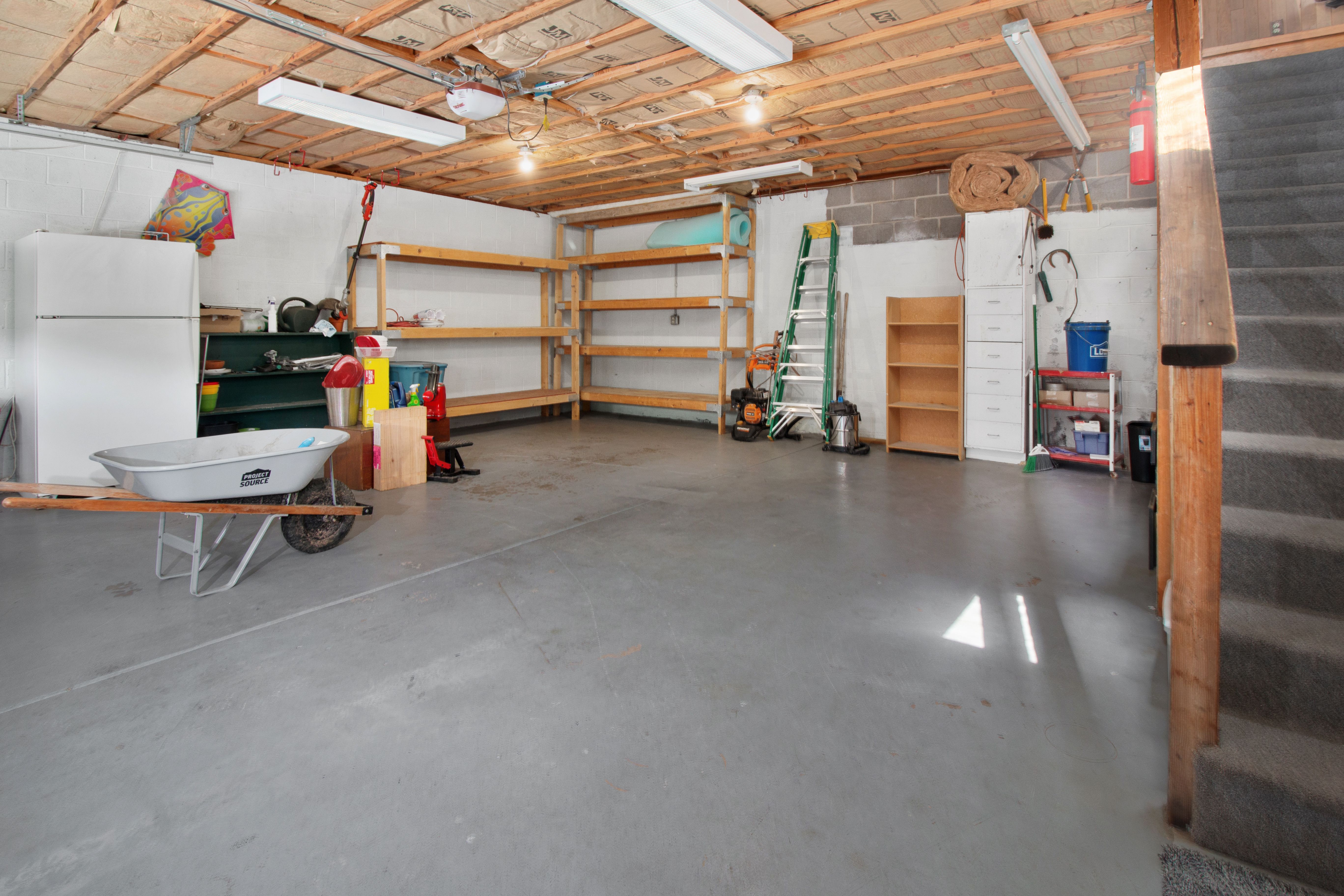
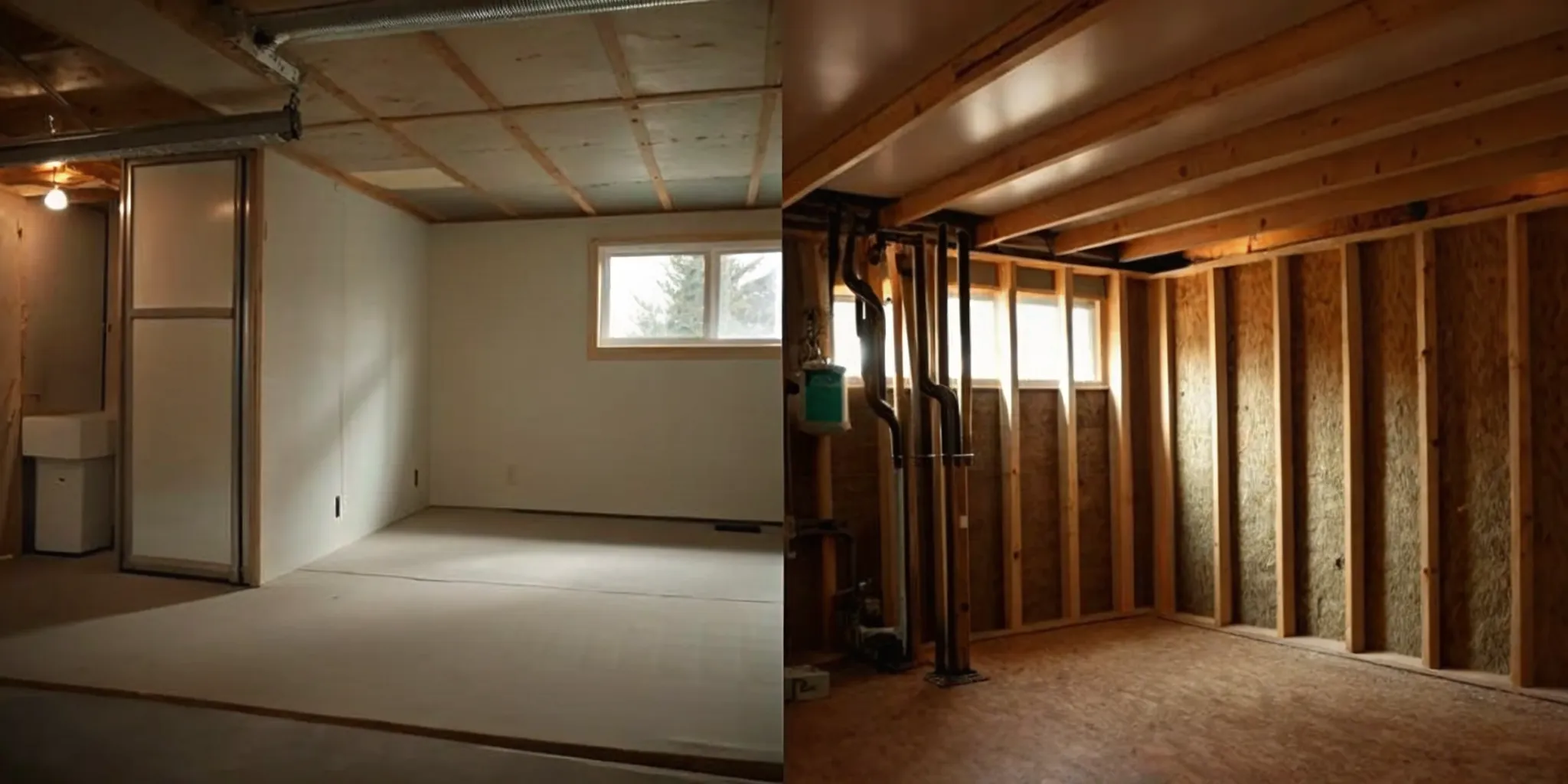
For garage conversions [blocked], the existing structure creates both opportunities and constraints. You may save on foundation costs but face unexpected expenses when the existing slab doesn't meet current code, when electrical panels need relocation, or when structural reinforcement is required for new openings. These discoveries typically happen after demo, when it's too late to comparison shop.
2. Utility Trenching
Running electrical, water, and sewer to a detached ADU typically requires trenching across your yard. This can cost $8,000–$25,000+ depending on distance and whether you hit rock, roots, or existing utility lines. Frequently listed as "site work TBD" or simply excluded, trenching costs can vary by 300% between properties that appear similar on the surface.
The variables driving trenching costs are largely invisible until you dig: soil composition, existing utility routing, irrigation systems, tree roots, and required depth all impact the final number. A contractor who prices trenching at $8,000 may be assuming sandy soil and clear routing; encountering clay soil or crossing an existing gas line can double or triple that estimate overnight. This is why "site work TBD" should be a red flag, not an acceptable line item.
Distance from your main house to the ADU location is the primary cost driver you can assess yourself. Every additional 10 feet of trenching adds roughly $500–$1,500 depending on complexity. If your detached ADU is 60 feet from your utility connections versus 30 feet, you're looking at $3,000–$9,000 in additional trenching—a difference that may not be reflected in bids that simply say "trenching included" without linear-foot specifications.
3. Fire Sprinklers
California requires fire sprinklers in most new ADUs, and this requirement trips up homeowners more than almost any other code item. This adds $4,000–$10,000 to your project depending on square footage and system complexity. Some contractors exclude this assuming you'll hire a separate specialty contractor; others build it in. Check specifically—and verify the contractor's assumption matches your city's current requirements.
The sprinkler requirement applies to most detached ADUs and JADUs over a certain size, but exemptions exist in some circumstances—particularly for garage conversions that maintain certain structural characteristics. This is an area where jurisdictional expertise matters enormously. A contractor who primarily works in unincorporated county areas may not be current on city-specific requirements, leading to undersized bids that don't account for mandatory systems.
Beyond the system itself, fire sprinkler installation requires coordination with your water service. If your existing water pressure is insufficient (common in older California homes), you may need a booster pump or larger service line—another $2,000–$5,000 that can appear as a mid-project surprise. Ask each contractor specifically: "Does your sprinkler cost include verification of adequate water pressure, and what happens if we need service upgrades?"
4. Solar Panels
Here's where it gets nuanced: California's Title 24 requires solar on most new construction, but garage conversions often qualify for waivers since you're not adding new conditioned square footage. Understanding which category your project falls into can mean a $10,000+ difference in your required budget. One homeowner told us: "I had three different answers from three contractors about whether I needed solar. Turns out my garage conversion was exempt, but my neighbor's detached ADU wasn't."
The solar requirement generally applies when you're adding new square footage to your property, which detached ADUs and above-garage builds clearly trigger. Garage conversions occupy a gray area that depends on how the project is classified and whether you're adding square footage or repurposing existing space. This is a question for your building department, not your contractor—get it in writing before finalizing your budget.
If you're building a detached ADU or JADU with new square footage, expect to budget $8,000–$15,000 for solar compliance. The good news is that this investment provides ongoing value through reduced utility costs for your tenants or family members using the ADU. For garage conversions [blocked], verify your waiver eligibility before comparing bids—a contractor who includes solar in their quote for a conversion project may be padding the budget unnecessarily.
5. City/Permit Fees
Permit fees vary dramatically by jurisdiction, and the gap between California cities can exceed $15,000 for identical projects. San Francisco can charge $20,000+ for ADU permits due to various impact fees and processing costs. Los Angeles runs $15,000–$25,000 depending on location and project specifics. Smaller California cities might be $5,000–$8,000. Seattle's fees typically fall in the $8,000–$15,000 range. These should be explicitly stated in every bid—and if they're not, assume they're excluded.
Beyond the permit itself, impact fees, school fees, and utility connection charges add to your jurisdiction-specific costs. These fees exist to offset the infrastructure impact of adding a dwelling unit to your property, and they're non-negotiable regardless of which contractor you choose. What differs is whether your contractor includes them in their proposal or leaves them as a separate homeowner expense.
The safest approach is to call your local building department and request a fee estimate for your specific project type and size. Armed with that number, you can accurately normalize bids that handle permit fees differently. This 30-minute phone call can prevent $10,000–$20,000 in budget surprise—one of the highest-ROI activities in your entire planning process.
6. Landscaping and Site Restoration
After trenching, foundation work, and construction traffic, your yard will need repair. Budget $3,000–$10,000 for basic restoration, more if you want anything beyond grass seed and basic grading. Contractors typically exclude this from their scope because their job ends when the ADU receives its certificate of occupancy—not when your property looks like a home again.
Construction access routes, material staging areas, and equipment positioning all leave marks that may not be visible in your contractor's scope drawings. If you have mature landscaping, irrigation systems, or hardscaping between your house and the ADU site, document the existing conditions thoroughly and discuss restoration expectations before signing any contract. Assuming this is "included" without explicit confirmation is a recipe for disappointment.
For properties with complex landscaping or hardscape elements, consider getting a separate landscaping bid during your construction planning phase. This allows you to budget accurately and potentially phase the restoration work if cash flow is a concern. The worst outcome is discovering a $10,000 landscaping bill after you've exhausted your construction budget—a common scenario that better planning prevents entirely.
ADU Cost Benchmarks: California Square Footage Guide
While every project is unique, these per-square-foot ranges reflect current California market conditions and can help you gut-check your bids. These benchmarks are derived from Realm's proprietary database—the largest collection of U.S. renovation bids—and represent actual project costs across our California and Seattle service areas. Use them as sanity checks, not guarantees; your specific site conditions, finish levels, and local labor markets will influence your actual costs.
The $150,000–$500,000 range for California ADU projects reflects this diversity of project types and complexity levels. A straightforward garage conversion with existing utilities in place will fall toward the lower end; a custom-designed detached ADU with high-end finishes and complex site conditions will push toward or beyond the upper boundary. Knowing where your project should fall helps you identify bids that may be unrealistically low (missing scope) or unnecessarily high (opportunity for negotiation).
Garage Conversions
Garage conversions typically cost $250–$400 per square foot for spaces ranging from 400–600 SF, putting total project costs between $100,000–$240,000. This is generally the most affordable ADU type because you're working within an existing structure with foundation and framing already in place. However, costs can escalate quickly if the existing slab needs reinforcement, if you're adding plumbing where none existed, or if structural modifications are required for windows and doors.
Detached ADUs
New detached ADUs run $350–$550 per square foot for typical sizes of 500–1,000 SF, with total costs ranging from $175,000–$550,000. The wide range reflects the ground-up nature of construction: you're building foundation, framing, roofing, and all systems from scratch. Site conditions (trenching distance, soil type, access for equipment) significantly impact where your project falls within this range, as do finish levels and design complexity.
Junior ADUs (JADUs)
JADUs—smaller units created within existing home footprints—cost $150–$300 per square foot for spaces typically 150–500 SF, totaling $50,000–$150,000. These projects leverage existing structure and often share systems with the main house, reducing both construction complexity and cost. JADUs are an excellent entry point for homeowners testing the ADU market or with limited budgets, though rental income potential is correspondingly lower.
Above-Garage ADUs
Building above an existing garage runs $400–$600 per square foot for 400–800 SF units, totaling $160,000–$480,000. The premium reflects significant structural requirements: most existing garages weren't designed to support living space above, requiring foundation reinforcement, structural engineering, and careful integration with existing framing. If your existing garage was built before ADU-over-garage became common, budget $20,000–$40,000 for structural upgrades alone.
Regional Cost Variations
Bay Area projects (San Francisco, Peninsula, South Bay) typically run 15–25% higher than LA-area projects due to higher labor costs and more stringent local requirements. The region's 1.8 million single-family homeowners face median home values ranging from $1.2M to $2.5M, and contractor pricing reflects this market reality. If you're building in Atherton or Palo Alto, expect to trend toward the upper bounds of these ranges; East Bay and South Bay projects may track closer to the midpoint.
Seattle costs align more closely with LA pricing, though the market's emphasis on basement ADUs creates a distinct project mix. The Greater Seattle area's 1.1 million single-family homeowners have driven strong demand for ADUs as housing inventory remains limited, keeping contractor pricing competitive. The tech wealth from Amazon and Microsoft employees supports premium finishes but also attracts sophisticated contractors who price accordingly.
Los Angeles Metro, with its 2.5 million single-family homeowners, represents the largest and most diverse ADU market in our service area. Median home values of $850K–$1M support significant ADU investment, and the region's entertainment industry wealth creates demand across the finish spectrum. LA's wildfire-affected areas have added urgency to ADU conversations as homeowners consider rebuilding strategies that maximize property utility.
These ranges assume standard finishes—high-end materials can push costs 30–50% higher. If you're working with limited space, our guide on what to build at 450 square feet [blocked] can help you maximize your investment. Understanding the tradeoffs between space efficiency and livability is especially important for ADU projects where every square foot carries meaningful cost implications.
The "Allowance Problem" and Hidden Mid-Project Costs
Allowances are line items that say something like: "Kitchen cabinets: $5,000 allowance" or "Plumbing fixtures: $2,500 allowance." They exist because contractors can't price your exact selections before you've made them—but they create a significant budgeting trap that catches homeowners mid-project when changes become expensive or impossible. Across Realm's 3,500+ completed projects, allowance overruns remain one of the most common sources of budget variance.
Here's the problem: allowance numbers often reflect contractor pricing, not retail, and they're typically set at builder-grade quality levels unless otherwise specified. When you actually shop for finishes you like, you'll frequently exceed allowances by 20–50%. A $5,000 cabinet allowance might cover functional boxes, but once you start comparing options at a showroom, the selections you're drawn to may start at $8,000 and climb from there.
The allowance gap is particularly acute in ADU projects because you're selecting complete systems from scratch. Unlike a kitchen remodel where you might be replacing some elements while keeping others, an ADU requires full selections across cabinets, countertops, flooring, plumbing fixtures, lighting, and appliances—all categories where the gap between "acceptable" and "appealing" can be substantial. These gaps compound across categories, turning a $200,000 project into a $240,000 project through selection upgrades alone.
Common Allowance Traps
Cabinets: A $5,000 allowance covers basic stock cabinets—think flat-front doors with exposed hinges and limited size options. Semi-custom cabinets with soft-close hardware, better interior organization, and more finish options typically run $8,000–$12,000 for an ADU-sized kitchen. Custom cabinets start at $15,000 and climb from there. If your vision involves anything beyond basic functionality, budget accordingly or get specifications in writing.
Flooring: $3/SF allowances work for vinyl plank—a durable and practical choice for rentals that many ADU owners ultimately select. If you're envisioning hardwood floors, budget $6–$12/SF installed depending on species and grade. Tile varies enormously, from $5/SF basics to $20+/SF for quality porcelain or natural stone. In a 600 SF ADU, moving from vinyl to mid-grade hardwood adds $3,000–$5,000 to your budget.
Windows: Allowances rarely account for energy-efficient or larger-format windows that ADUs often need for natural light and code compliance. California's Title 24 energy requirements can push you toward high-performance glazing that costs 40–60% more than basic double-pane. If your ADU design relies on large windows to make compact spaces feel livable, budget accordingly and verify what's included in the allowance.
Appliances: Compact/premium appliances for ADU-sized kitchens often cost more than standard sizes, not less. A 24" range costs as much or more than a 30" range; apartment-sized refrigerators from quality brands can exceed full-size equivalents. If you're planning a rental, basic appliances may suffice; if you or family members will use the ADU, appliance quality matters more—and the allowance may not cover your expectations.
What to Do About Allowances
Ask each contractor to specify what their allowances actually include—brand names, model numbers, and quality grades where applicable. Better yet, request actual selections at the bid stage so you're comparing real costs, not estimates. This takes more time upfront but eliminates the single largest source of mid-project budget surprise.
Realm's advisors specialize in bid leveling that makes allowances transparent. By requiring detailed allowance specifications before comparing bids, we help homeowners avoid the scenario where a "cheaper" bid becomes more expensive than the alternatives once real selections are made. This is one of the ways working with an experienced advisor saves homeowners 10–25% compared to navigating the process alone.
For a deeper understanding of how renovation costs typically break down, see our home renovation costs guide [blocked]. The principles apply across project types, but ADUs intensify every budgeting challenge because you're building a complete living space from the ground up.
Building Your ADU Bid Comparison Table
To make genuine comparisons, normalize all your bids using the same categories. The goal is to eliminate format differences so you're comparing actual scope and pricing, not presentation styles. This comparison framework has been refined through thousands of advisor bid reviews at Realm, and it captures the categories that create the most confusion and variance between proposals.
Start by listing every contractor side by side, then work through each category asking the same question: "Is this included, excluded, or partially included?" For excluded items, get separate quotes so you can add them to your normalized total. For partially included items (like allowances), document the assumptions so you can adjust if your actual selections differ.
The discipline of filling out a structured comparison forces you to ask questions you might otherwise skip. "Does your permit fee estimate include school impact fees?" "What do you assume about soil conditions for the foundation?" "Is HVAC ducted or mini-split, and what's the efficiency rating?" These questions feel tedious during the bidding phase, but they prevent five-figure surprises during construction.
Essential Line Items to Compare
For each contractor, document the following categories with specific dollar amounts and inclusion status:
Base Construction Cost: Record the core construction number, square footage count, and stated finish level. This is your starting point for comparison, but it's rarely complete on its own.
Demolition and Site Prep: Note whether this is included, excluded, or partially included. If excluded, get a separate quote. Document any assumptions about existing conditions (garage slab quality, hazardous materials, etc.).
Utility Trenching: Record the dollar amount and the assumed distance in linear feet. Note soil type assumptions if stated. "Trenching included" without specifications should trigger follow-up questions.
Fire Sprinklers: Confirm whether sprinklers are included and whether the quote accounts for water pressure verification. Ask specifically what happens if service upgrades are required.
Solar Panels: Note whether solar is required for your project type, whether the bid includes it, and system size in kilowatts if applicable. For garage conversions, verify waiver eligibility separately.
City/Permit Fees: Record the estimated amount and confirm whether it includes impact fees, school fees, and utility connection charges. Specify the jurisdiction the estimate is based on.
Landscaping/Site Restoration: Confirm inclusion status and scope (basic grading vs. full restoration). If excluded, budget $3,000–$10,000 separately.
Allowances: Break out each allowance category (cabinets, flooring, fixtures, appliances) with specific dollar amounts. Request specifications for what each allowance actually covers.
Design/Architecture: Confirm whether design services are included or require separate engagement. If separate, budget $5,000–$15,000 depending on complexity.
Engineering: Note whether structural and civil engineering are included. Above-garage ADUs typically require significant engineering; garage conversions may require less.
How to Use Your Comparison
First, fill in exactly what each contractor included as written in their proposal. Don't assume or interpret—if their bid says "site work" without specification, that's what you write. Ambiguity in the proposal typically means ambiguity in the project, and it's better to surface that now than discover it later.
Second, for excluded items, get separate quotes and add them to your comparison. If Contractor A excludes demolition while Contractor B includes it, you need a demolition quote to make the comparison valid. This might mean calling a few specialty contractors or asking Contractor A what they'd charge to add that scope. The extra effort here directly prevents budget surprises later.
Third, confirm allowance details in writing before finalizing your comparison. A phone conversation where the contractor says "yeah, that allowance should cover decent cabinets" doesn't protect you when selections run 60% over. Get specifications in writing, attached to the proposal, so everyone's working from the same assumptions.
Finally, only compare normalized totals once you've completed this process. The lowest original bid is frequently not the lowest normalized bid—sometimes by a substantial margin. Realm advisors regularly see 20–30% variance between original bids disappear entirely once scope is normalized, with the "expensive" contractor proving comparable or even cheaper than the alternatives.
The Financial Case for Building: Rental Income by Market
The investment math for ADUs varies significantly by location, and understanding your market's rental potential is essential for evaluating whether the project makes financial sense. Realm operates across five major metropolitan markets with a combined 6.9 million single-family homeowners—and we see how rental income and property value impacts vary by neighborhood, not just by city.
Beyond pure rental income, ADUs add property value that typically exceeds construction cost by a meaningful margin. Industry data suggests ADUs add 20–35% of construction cost to property value, though this varies by market and ADU quality. In high-demand markets like the Bay Area and Seattle, well-designed ADUs can add dollar-for-dollar or more to property value, essentially giving you both income potential and equity appreciation from the same investment.
Your financial analysis should consider multiple use cases over time. Today's rental unit might become a home office next year, an aging-parent suite in five years, or adult-child housing in ten. The flexibility of an ADU as property infrastructure—not just current-use optimization—makes the investment case more compelling than a pure rental-income analysis suggests.
Bay Area Rental Market
The Bay Area's tech wealth and housing scarcity create some of the strongest ADU rental markets in the country. Average ADU rents run $2,200–$3,500/month depending on size, finish level, and proximity to employment centers. This translates to annual rental income of $26,400–$42,000, creating ROI timelines of 6–10 years for typical projects—among the fastest payback periods we see in any market.
With 1.8 million single-family homeowners across the region and median home values from $1.2M (Peninsula) to $2.5M (Atherton/Palo Alto), the Bay Area homeowner base has both the equity and the motivation to pursue ADU projects. The aging housing stock creates renovation demand, while SB 9 and SB 10 legislation has accelerated ADU permitting across jurisdictions. Tech-savvy homeowners tend to be sophisticated buyers who appreciate detailed bid analysis and transparent processes.
Key factors driving Bay Area ADU returns include proximity to BART stations, employer shuttle routes, and walkable neighborhood amenities. A 500 SF ADU in Mountain View commands very different rent than an identical unit in Concord, so location analysis should be part of your financial planning. Realm's advisors can help you benchmark realistic rental expectations against comparable properties in your specific neighborhood.
Los Angeles Rental Market
Los Angeles represents the largest single-family homeowner market in our service area, with 2.5 million homeowners and tremendous ADU demand driven by housing costs, entertainment industry wealth, and recent wildfire-related rebuilding needs. Average ADU rents run $1,800–$2,800/month, generating annual income of $21,600–$33,600. Typical ROI timelines of 7–12 years reflect the balance between strong rents and moderate construction costs relative to the Bay Area.
The LA market's diversity creates significant variation in both construction costs and rental income. Westside properties (Santa Monica, Venice, Mar Vista) command premium rents that justify premium construction; Valley locations offer better cost-to-rent ratios; and the rebuilding needs in fire-affected areas have created unique urgency for homeowners weighing ADU investments against primary-residence repairs. Realm's LA Wildfire Recovery [blocked] resources support homeowners navigating these complex decisions.
Median home values of $850K–$1M provide substantial equity for ADU financing, and the region's entertainment industry creates tenant demand for quality rental options. LA's permit timeline has improved significantly under recent legislation, though variance between city and county jurisdictions still requires local expertise to navigate efficiently.
Seattle Rental Market
Seattle's limited housing inventory and tech industry concentration (Amazon, Microsoft) drive strong ADU demand despite the region's smaller homeowner base. Average ADU rents run $1,600–$2,400/month, generating annual income of $19,200–$28,800. Typical ROI timelines of 8–14 years are longer than California markets but still represent strong investment returns compared to alternative uses of home equity.
The Greater Seattle area's 1.1 million single-family homeowners face median home values of $900–970K, providing equity capacity for ADU investment. What makes Seattle distinctive is the prevalence of basement ADUs—leveraging existing structural footprints to create additional dwelling units with lower construction costs than ground-up detached builds. This basement-ADU specialization creates different scope considerations than California projects, requiring contractor expertise in foundation waterproofing, egress requirements, and below-grade systems.
Seattle's rental market benefits from constrained housing supply and continued tech employment growth. Properties near transit, employment centers, and university districts command premium rents that justify higher-end finishes. For homeowners considering Seattle ADU projects, Realm's advisor expertise in the region's specific regulations and construction practices helps optimize both the build process and the investment outcome.
The Soft Costs Everyone Forgets
Hard construction costs are only part of your ADU budget. These "soft costs" are frequently omitted from contractor bids because they're not construction expenses—they're professional services, government fees, and project-adjacent costs that sit outside a builder's typical scope. Together, they can add $10,000–$30,000 to your project budget, and failing to account for them creates unpleasant surprises just when you thought your planning was complete.
Soft costs also tend to front-load in the project timeline: you'll pay for design, engineering, and permits before construction begins, meaning you need this cash available early. If your financing plan assumes construction draws against project value, soft costs may need to come from a different source. Understanding the full budget picture—hard costs plus soft costs—is essential for realistic financial planning.
Realm's advisors regularly help homeowners create complete project budgets that account for both hard and soft costs from the beginning. This comprehensive approach is one of the ways we help homeowners save 40+ hours per project—by preventing the scramble that happens when unanticipated costs appear mid-process.
Title 24 Energy Reports
California requires energy compliance documentation for all new construction, including ADUs. Budget $500–$1,500 for Title 24 reports, which must be completed before permits are issued and verified during final inspection. These reports document that your ADU's insulation, windows, HVAC, and lighting meet state energy efficiency standards—and they're non-negotiable regardless of project size.
Some design-build contractors include Title 24 in their scope; others treat it as a separate homeowner responsibility. Verify which approach your bid reflects. If Title 24 is excluded, you'll need to hire an energy consultant separately, which adds both cost and coordination complexity to your permit timeline. For most homeowners, having the contractor manage Title 24 compliance simplifies the process even if it adds slightly to the bid.
The Title 24 analysis also influences your construction costs by establishing minimum insulation values, window efficiency requirements, and lighting specifications. A design that's optimized for Title 24 compliance can reduce construction costs while meeting requirements; a design that ignores energy analysis until the permit phase may require expensive redesign or upgrade later.
School Impact Fees
Many California jurisdictions charge school impact fees for new living space, reasoning that additional dwelling units may generate additional students who use public school resources. These fees typically run $3–$5 per square foot, or $1,500–$2,500 for a typical ADU. Check with your local planning department—some jurisdictions waive these fees for ADUs under certain conditions, while others apply them uniformly.
School fees are paid during the permit process, so you need this cash available before construction begins. If your contractor excludes permit fees from their bid, make sure you're accounting for school fees in your own budget. The planning department can provide exact fee schedules for your jurisdiction and project type.
These fees are sometimes confused with or bundled into general permit fees, so ask specifically: "Does your permit fee estimate include school impact fees, or are those separate?" Clarity here prevents discovering an unexpected $2,000 charge just when you thought permits were fully funded.
Utility Connection Fees
Beyond trenching (which covers the physical work of running lines), utility companies may charge connection fees for new service. Water and sewer connections can run $2,000–$8,000 depending on jurisdiction and whether you're connecting to existing service or establishing new metered service. Electrical service upgrades, if required, add another $2,000–$5,000.
Some jurisdictions require separate utility meters for ADUs; others allow shared service with the main residence. The metering decision affects both connection fees and ongoing utility billing. If you're planning to rent the ADU, separate meters simplify tenant billing; if family members will use the space, shared metering may be more practical.
Utility connection timelines also vary significantly and can impact your project schedule. In some jurisdictions, utility companies have multi-week backlogs for new service connections, meaning your ADU might be complete before utilities are available. Understanding connection timelines early helps you sequence construction appropriately and avoid the frustration of a finished ADU that can't be occupied.
Survey and Soil Reports
Required in many areas, especially for detached ADUs, these technical reports document your property's exact boundaries, easements, and subsurface conditions. Budget $500–$2,000 for surveys and $500–$1,500 for soil/geotechnical reports. Some jurisdictions waive these requirements for certain project types; others require them universally for new construction.
Survey requirements vary by how recently your property was surveyed, whether you're building near property lines or easements, and local jurisdiction policies. If your ADU placement is straightforward and well within setbacks, you may avoid survey requirements; if you're maximizing your buildable footprint, survey verification protects both you and the permitting agency.
Soil reports become critical when foundation design is at stake. Clay soils, high water tables, and seismic considerations can all affect foundation requirements and costs. A geotechnical report that reveals challenging soil conditions might add $5,000–$15,000 to your foundation costs—but discovering these conditions after construction starts is far more expensive. Early soil analysis enables accurate bidding and prevents mid-project foundation surprises.
Design and Permit Drawings
If not included in your contractor's bid, architectural drawings and engineering can add $5,000–$15,000 depending on complexity and local requirements. Design-build contractors typically include this scope; bid-spec contractors assume you're providing plans. Verify which model your bid reflects and budget accordingly.
For complex sites or custom designs, architectural involvement adds value beyond just satisfying permit requirements. A skilled architect can optimize your floor plan, maximize natural light, and create a space that feels larger than its square footage—important considerations when you're building compact living space. For simple projects using pre-designed plans, architectural costs can be minimal.
Engineering requirements (structural, civil, sometimes mechanical/electrical) add to design costs and vary by jurisdiction and project complexity. Above-garage ADUs typically require significant structural engineering; simple garage conversions may require minimal engineering review. Understanding your specific requirements helps you budget accurately and evaluate whether design-build or bid-spec approaches make more sense for your project.
Financing Costs
If you're financing your ADU through a construction loan, HELOC, or cash-out refinance, factor in origination fees, appraisal costs, and interest during construction. These costs vary dramatically depending on your financing approach but can easily add $5,000–$15,000 to your total project investment.
Construction loans typically charge higher rates than permanent mortgages and involve draw schedules that require contractor cooperation. The administrative burden of construction loan management is one reason many homeowners prefer HELOCs or cash-out refinances—simpler structures that provide cash upfront without per-draw approvals.
Interest during construction is often overlooked in ROI calculations. If you're borrowing $200,000 at 8% for a 9-month construction project, you'll pay approximately $12,000 in interest before rental income begins. This carrying cost affects your true investment basis and should be included in payback-period calculations.
What to Do Next
Comparing ADU bids isn't something you should do alone. The differences are too significant, the missing items too common, and the financial stakes too high. With projects ranging from $50,000 to over $500,000, the cost of a wrong decision—whether that's an incomplete scope, an unreliable contractor, or a budget that balloons mid-project—represents real money that affects your family's finances for years.
At Realm, our advisors review ADU bids every day. With 2,000+ hours of renovation experience per advisor and a collective track record of 3,500+ completed projects, we know exactly what to look for, which contractors scope projects completely, and how to help you make genuine apples-to-apples comparisons. We've identified the patterns that predict project success—and the red flags that suggest trouble ahead.
Our three-bid matching process is specifically designed to eliminate the confusion that comes from comparing bids built on different assumptions. We source competitive bids from pre-vetted contractors (less than 10% of applicants qualify for our network), coordinate site visits, and perform bid leveling so you're comparing real scope at real prices. The result: homeowners typically save 10–25% compared to navigating the process alone, and they avoid the mid-project surprises that plague one in three renovation projects industry-wide.
Book a free Advisor bid review call [blocked] and let us help you decode your bids, identify what's missing, and ensure you're making the best decision for your project. The call costs nothing, the $299 deposit is fully refundable and credited to your project if you move forward, and the insight could save you tens of thousands of dollars.
Whether you're considering a garage conversion, detached ADU, or above-garage build, we've guided thousands of California and Seattle homeowners through exactly this process. You don't have to figure it out alone.