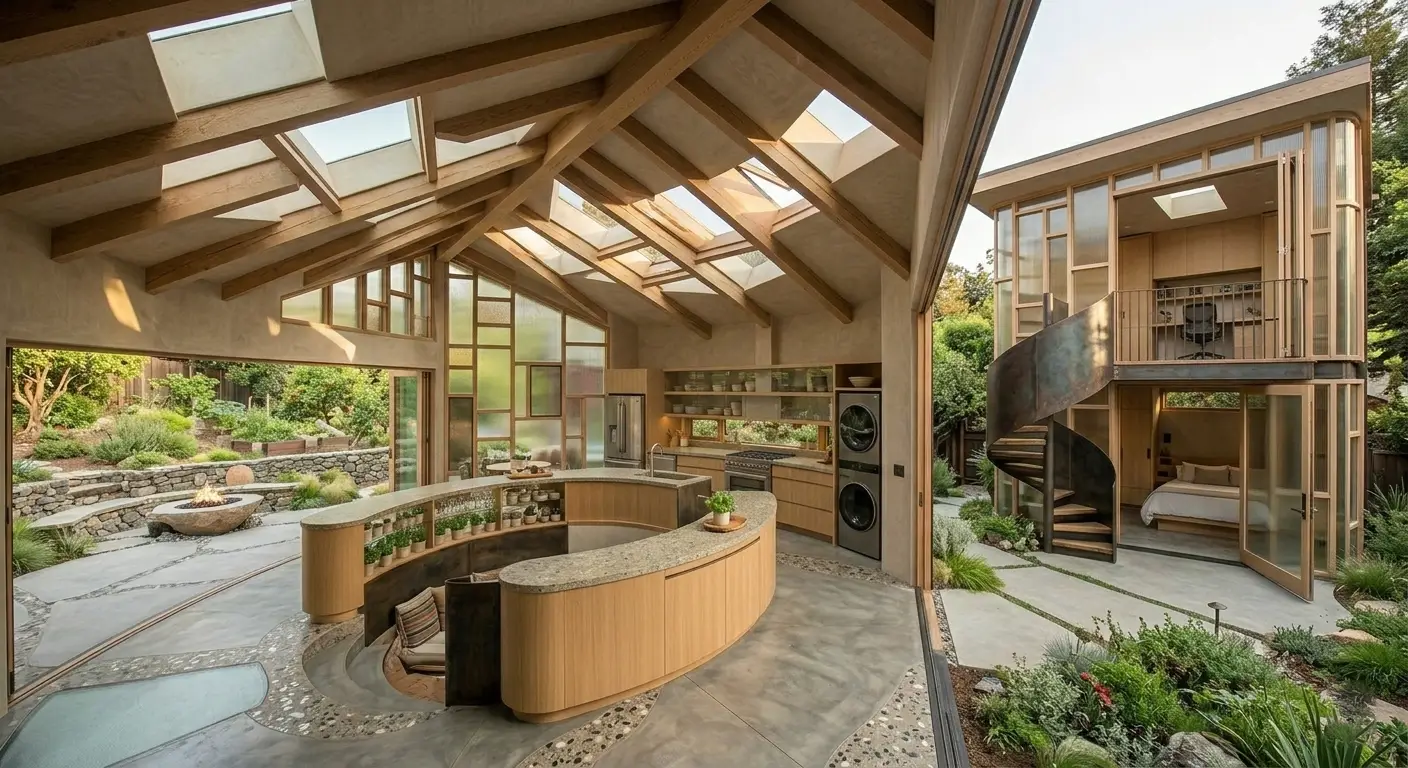
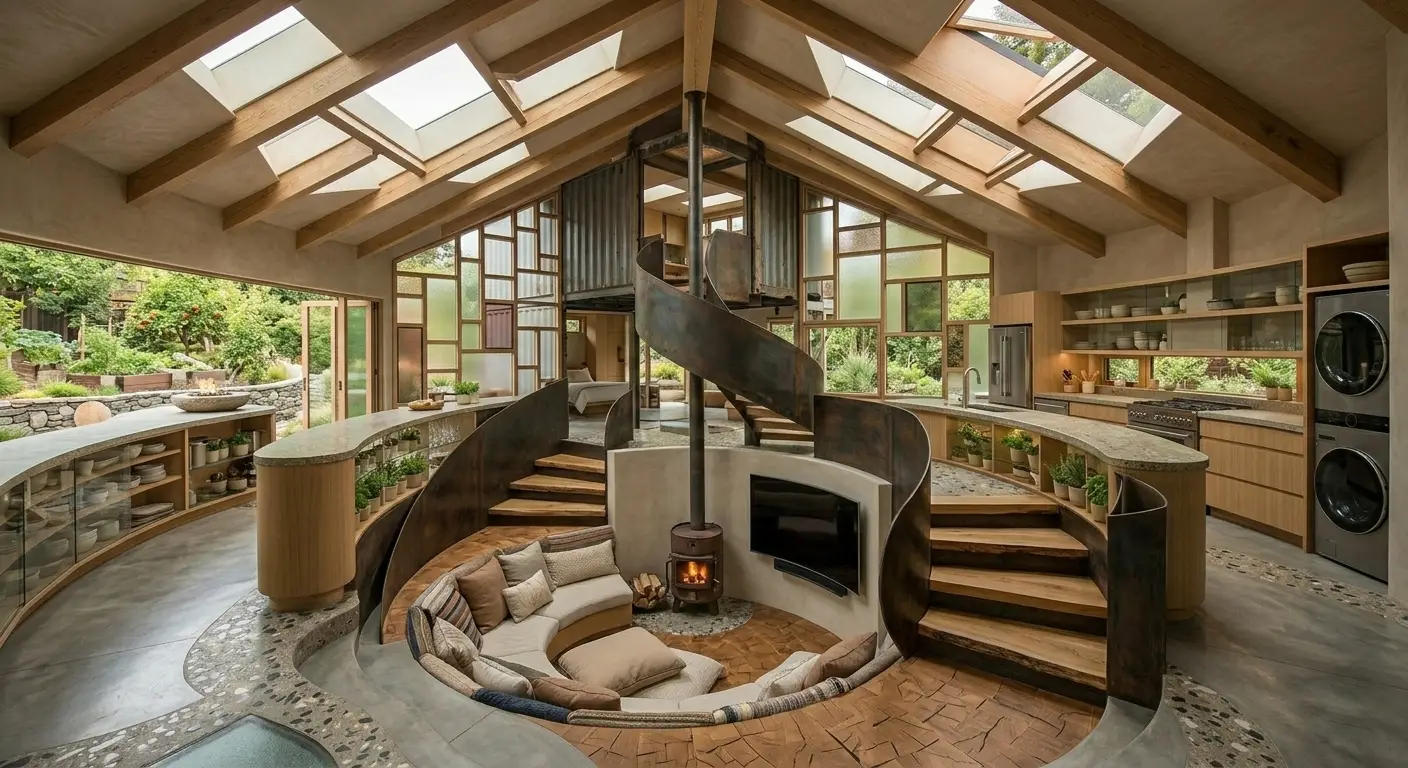
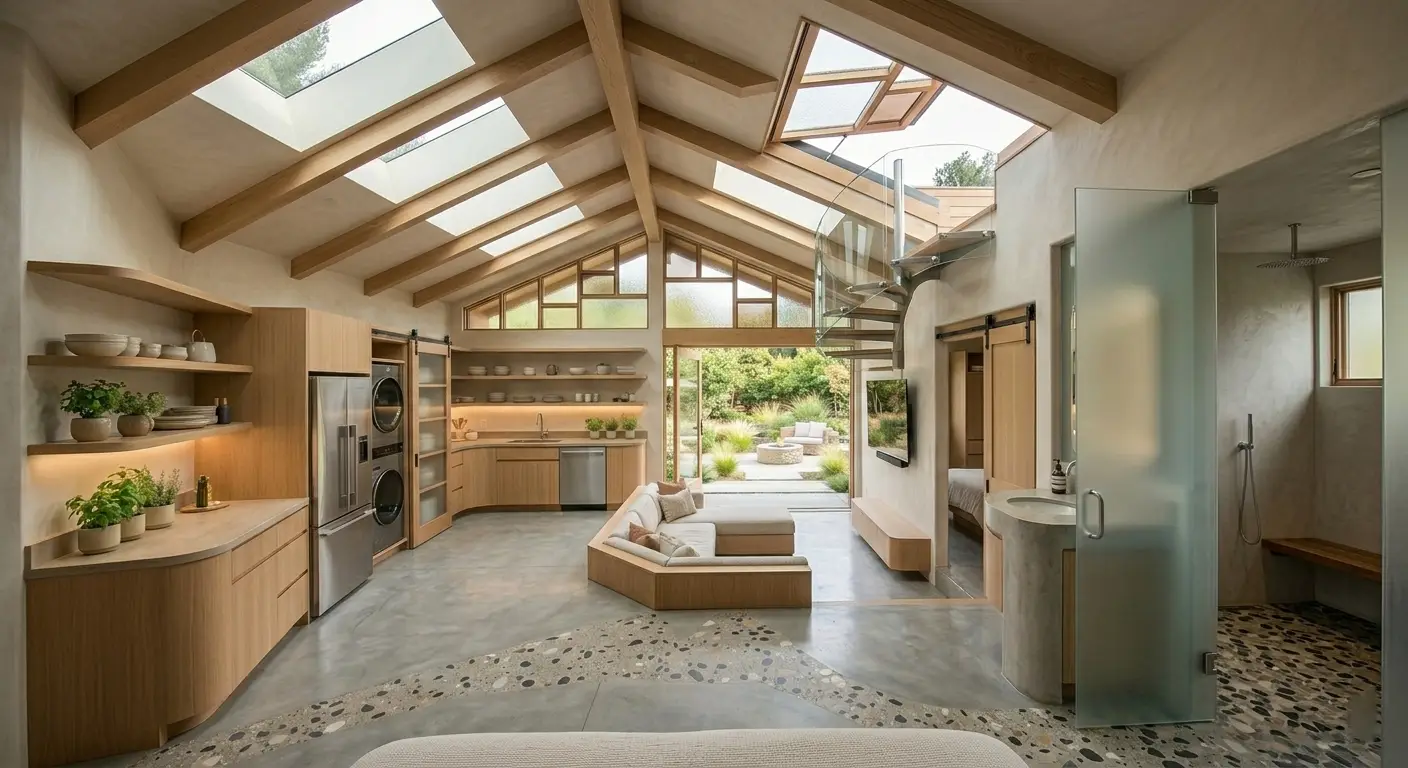
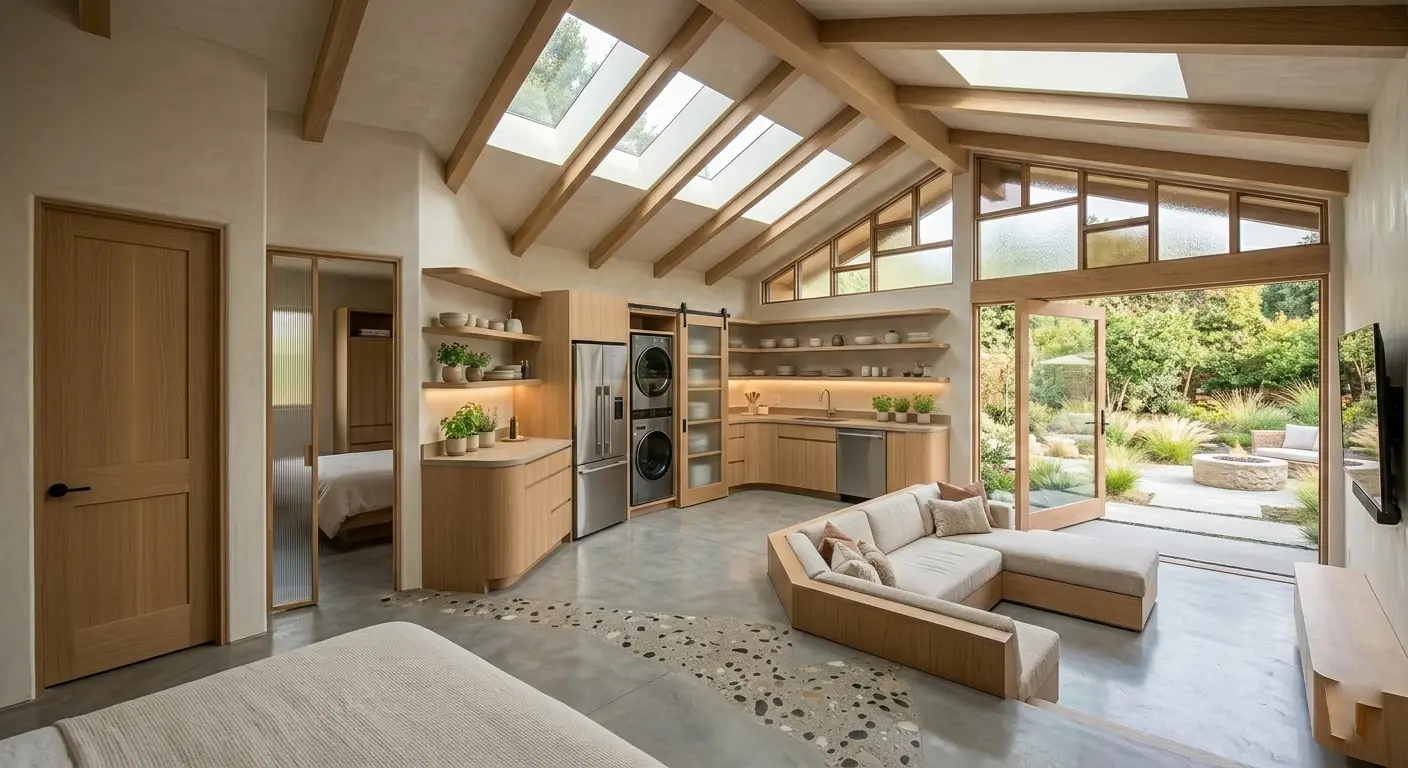
What to Build at 450 Square Feet: Suite, ADU, or Something Else?
Data from 52 real Realm projects on 450 sq ft ADUs, garage conversions, primary suites, and more, with median costs and honest perspective from the field.
|
March 4, 2026
In this article:
Four hundred and fifty square feet is the size at which a kitchen island with seating stops being a wish and becomes a standard layout feature. Where a two-bedroom garage conversion stops being a tight exercise in space planning and becomes a genuinely comfortable living configuration. Where a primary suite can include a soaking tub, a separate shower, a walk-in closet large enough to use as a dressing room, and a reading nook, all in the same addition.
Based on 52 closed Realm projects, the median cost is $200,000 and the average is $255,782. The tighter spread between those two numbers compared to the 400 sq ft bracket reflects greater consistency across project types at this size: the footprint is substantial enough that most builds carry a similar cost floor, which makes the median a more reliable planning anchor here than at any bracket below it.
Key Takeaways
- At 450 square feet, a two-bedroom ADU stops requiring layout optimization and starts requiring layout design. Both bedrooms can have real clearance, proper closets, and furniture that fits normally without any of the common areas paying a penalty.
- The median project cost is $200,000, matching the 400 sq ft median, with an average of $255,782. The narrower spread reflects greater cost consistency across project types at this size.
- Kitchen expansions at 450 sq ft reach chef-kitchen territory, with room for a butler's pantry, island seating on multiple sides, and a full appliance wall alongside complete dining integration.
- A primary suite addition at this footprint becomes a full private wing, with room for a bedroom, a luxury ensuite, a walk-in closet, and a sitting area or reading nook.
- Thirteen project types appear in the data, the widest range of any bracket in the series, reflecting how broadly capable this footprint is across different homeowner goals.
- Sunrooms and enclosed patios appear for the first time at this size, offering meaningful additional living space at a lower per-square-foot cost than a fully conditioned addition in California and Pacific Northwest climates.
The Size Where "Apartment" Stops Being an Exaggeration
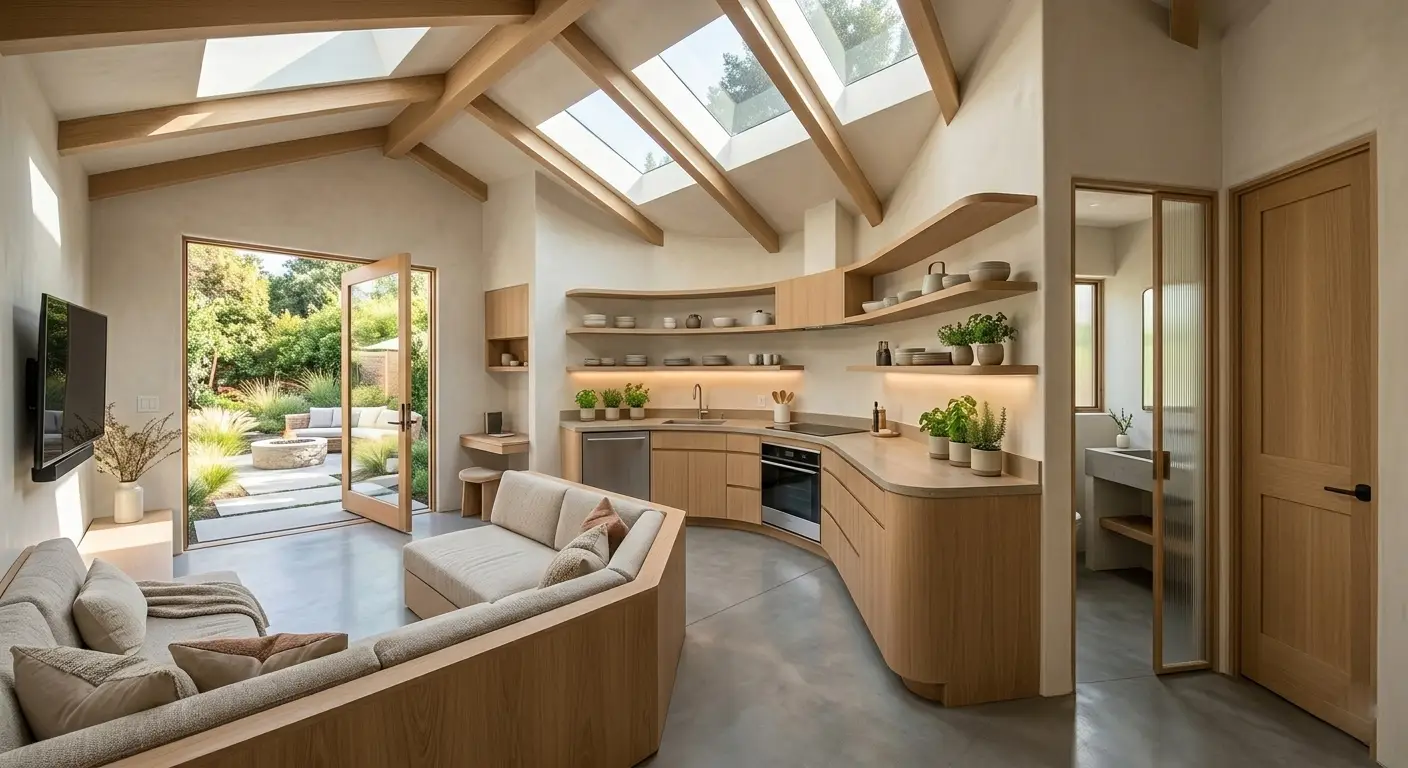
Four hundred and fifty square feet is approximately 18 by 25, or a slightly more square 21 by 21. The most useful comparison is a well-designed one-bedroom apartment in a newer building, the kind where the kitchen has real counter space on both sides of the sink, the bedroom door closes and the room has furniture clearance on three sides, and the living area feels like a living area rather than a hallway with a couch in it. That's 450 square feet when it's been designed with intention.
At this size, the spatial conversation shifts from "can this work?" to "how do we make this exceptional?" The functions are not competing for space. The layout is not a series of compromises. The design work is about the quality of each area and the relationships between them, not about whether everything fits.
Step Inside the Footprint Before You Draw a Single Line
Mark out an 18 by 25 rectangle on your driveway or rear yard and walk through it before you do anything else. Don't bring a tape measure or a notebook. Just walk. Stand in the center and look toward each wall. Picture a kitchen island you can walk around on all sides, a bedroom with a king bed and bedside tables, and a living area with a proper couch. At 450 square feet, none of that requires imagination to make fit. The exercise is useful not because it confirms feasibility but because it replaces the abstraction of a square footage number with a physical memory you can carry into every planning conversation.
Why Thirteen Project Types Converge at This Size
The widest project variety in the entire dataset appears at 450 square feet, and it reflects something real about this footprint: virtually any residential renovation goal can be accomplished at a genuinely high quality level here. Rental income, personal comfort, outdoor living, remote work, resale value, family growth: each of those goals has at least one strong project type at 450 sq ft that serves it well. That versatility is what draws thirteen distinct project categories to this size, and it's also what makes the choice between them the most consequential planning decision you'll make. Learn how Realm helps homeowners narrow that choice down before any contractor conversations begin.
Thirteen Categories, One Sweet Spot
The 52 projects at this size cover thirteen categories. The most frequently built are garage conversion ADUs, detached ADUs, and kitchen expansions, followed by bedroom additions, above-garage ADUs, and primary suite additions. After those come living space additions, sunrooms and enclosed patios, basement ADUs, JADUs, pool houses and casitas, second-story additions, and a catch-all for specialty builds.
The appearance of sunrooms and pool houses at this size bracket, both absent from smaller brackets in the series, reflects that 450 square feet is large enough for these project types to produce genuinely substantial results rather than token additions. A 450 sq ft sunroom is a real room. A 450 sq ft pool house with a full kitchen is a complete outdoor entertainment environment.
Project by Project: What Fits, What It Costs, and What to Watch For
Garage Conversion ADU: Where the Two-Bedroom Threshold Becomes Real
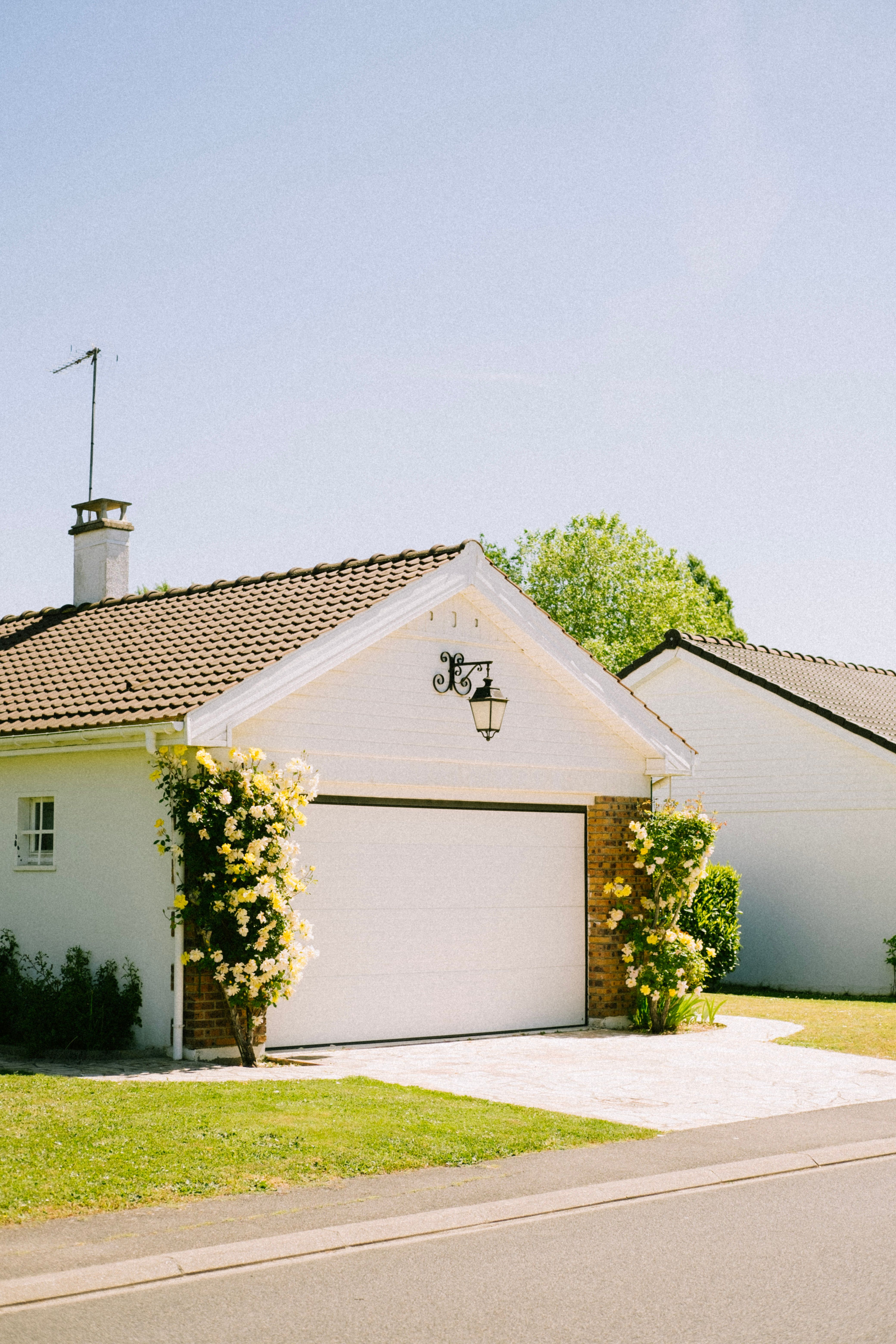
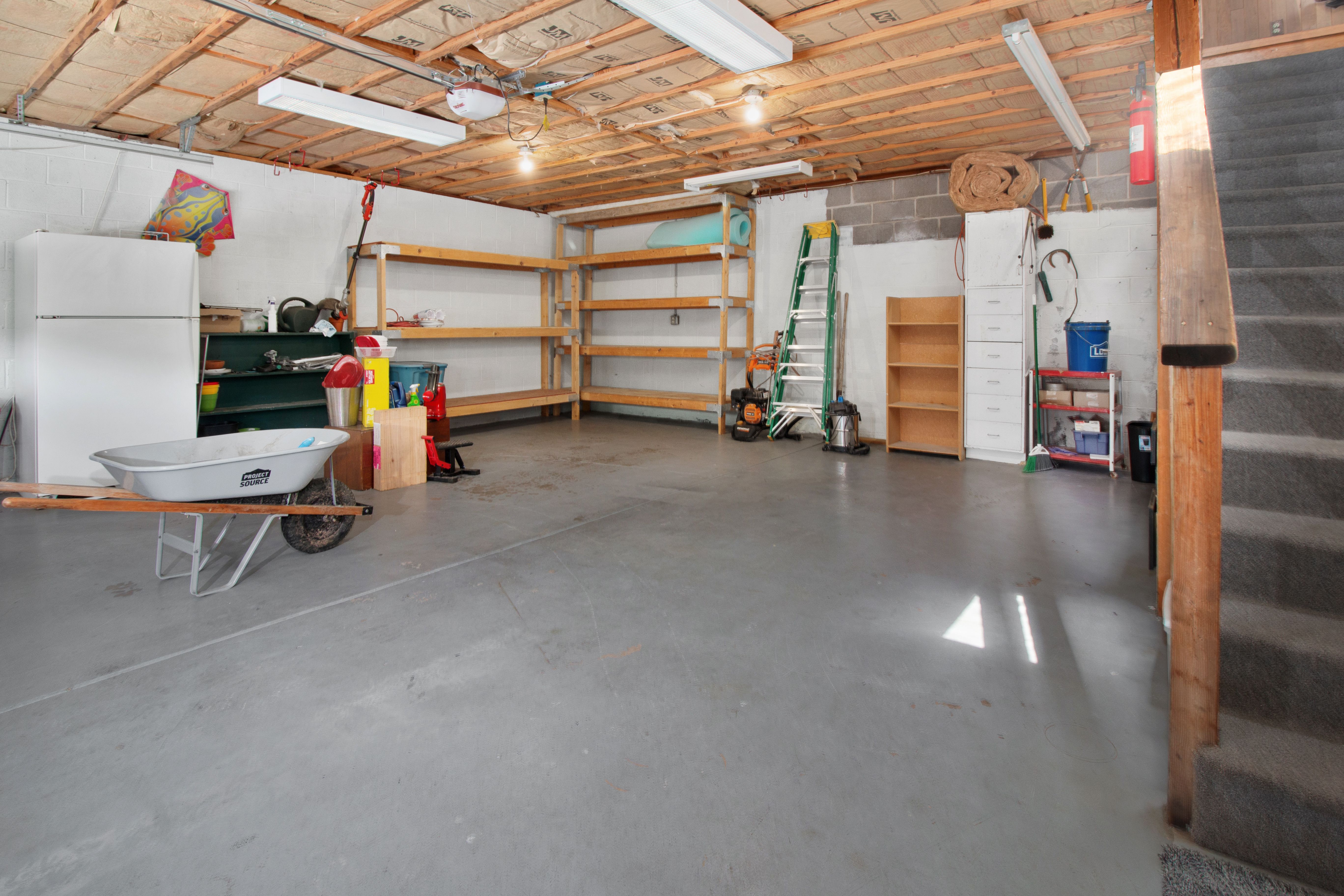
A 450 square foot garage conversion crosses the line where a two-bedroom layout stops being a design challenge and becomes a comfortable default. Both bedrooms have real clearance for a full-size bed and furniture. The kitchen has room for an island. The living area fits a couch and a coffee table without borrowing from the dining space. This is the version of a garage conversion that a tenant can genuinely call home without any sense of having traded down from a standard apartment.
In most of Realm's markets, a two-bedroom unit commands rents meaningfully higher than a one-bedroom at the same finish level. At 450 square feet, the garage conversion delivers that two-bedroom product at the cost efficiency that reusing an existing foundation and structure makes possible.
The trade-off that needs a real answer before you commit: Losing a two-car garage means losing covered parking for two vehicles, and the implications of that vary considerably by neighborhood, household size, and local resale norms. This is not a decision to defer until the permits are being filed. A Realm advisor can help you evaluate the rental income projection against the full picture for your specific location.
Detached ADU: The Freestanding Unit That Commands Premium Rents
A detached ADU at 450 square feet is a standalone residential unit that competes with market-rate rental apartments on every dimension that tenants evaluate: bedroom count, privacy, kitchen quality, bathroom finish, and the independence of a front door that opens onto your own space rather than a shared hallway. At this size, the unit can deliver a spacious one-bedroom or a properly configured two-bedroom, both at a quality level that attracts long-term tenants rather than high-turnover ones.
The full independence that a detached structure provides translates directly into rental premium and tenant quality across Realm's California and Washington markets. The cost premium over a garage conversion reflects a new foundation, full MEP runs from the main home, and more extensive site work. For homeowners building with a long horizon, the return on that investment tends to show up in both rental income and long-term property value.
The planning investment that protects the budget: Site work variables, utility connection fees, and permitting costs are the biggest drivers of budget variance on a detached build. A detailed scope before contractor conversations begin is what keeps bids comparable and prevents the surprises that derail projects at this cost level. Realm's advisors help homeowners build that scope before the contractor conversations start.
Kitchen Expansions: Chef-Level Space That Redesigns How You Cook and Entertain
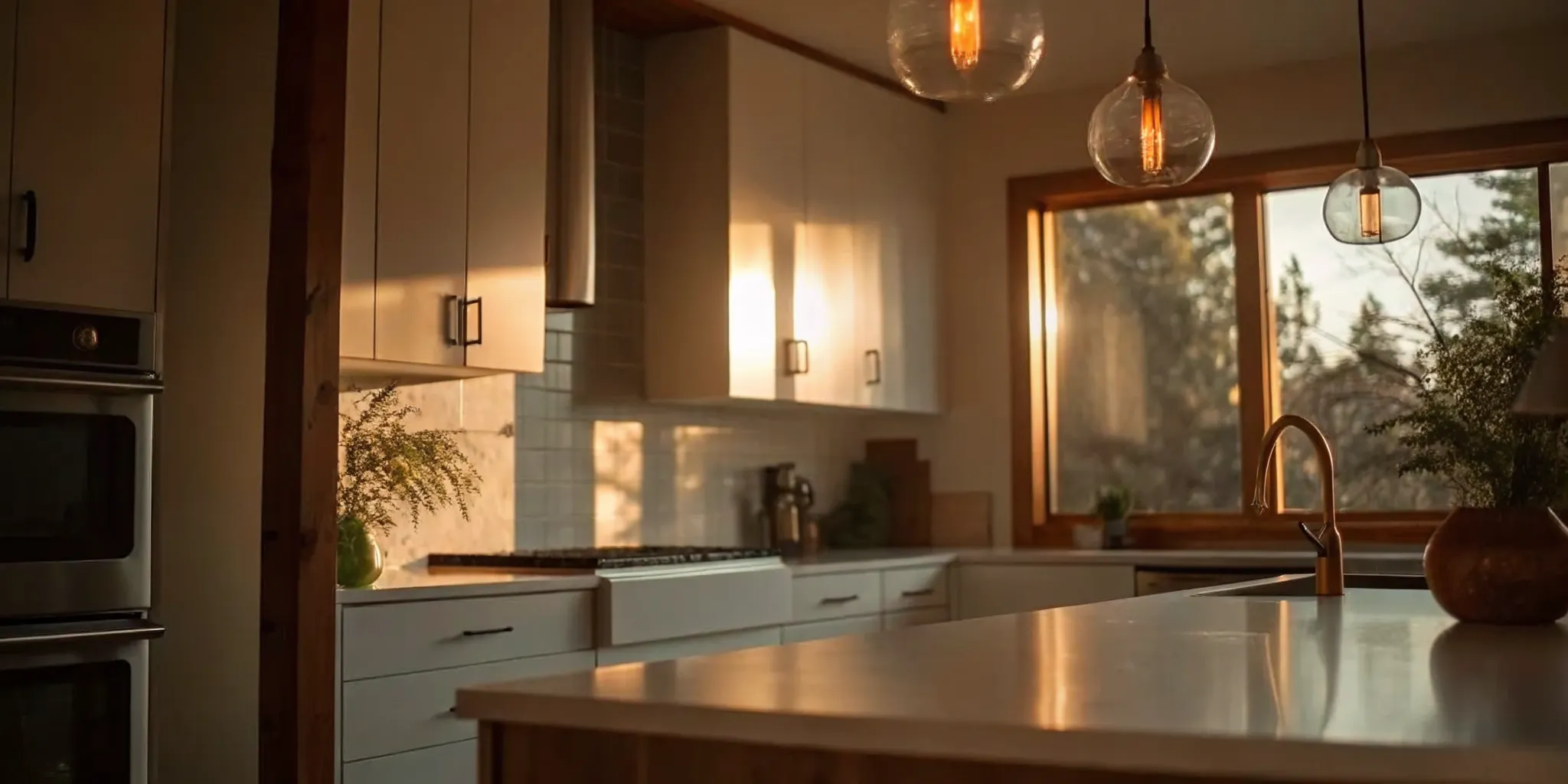
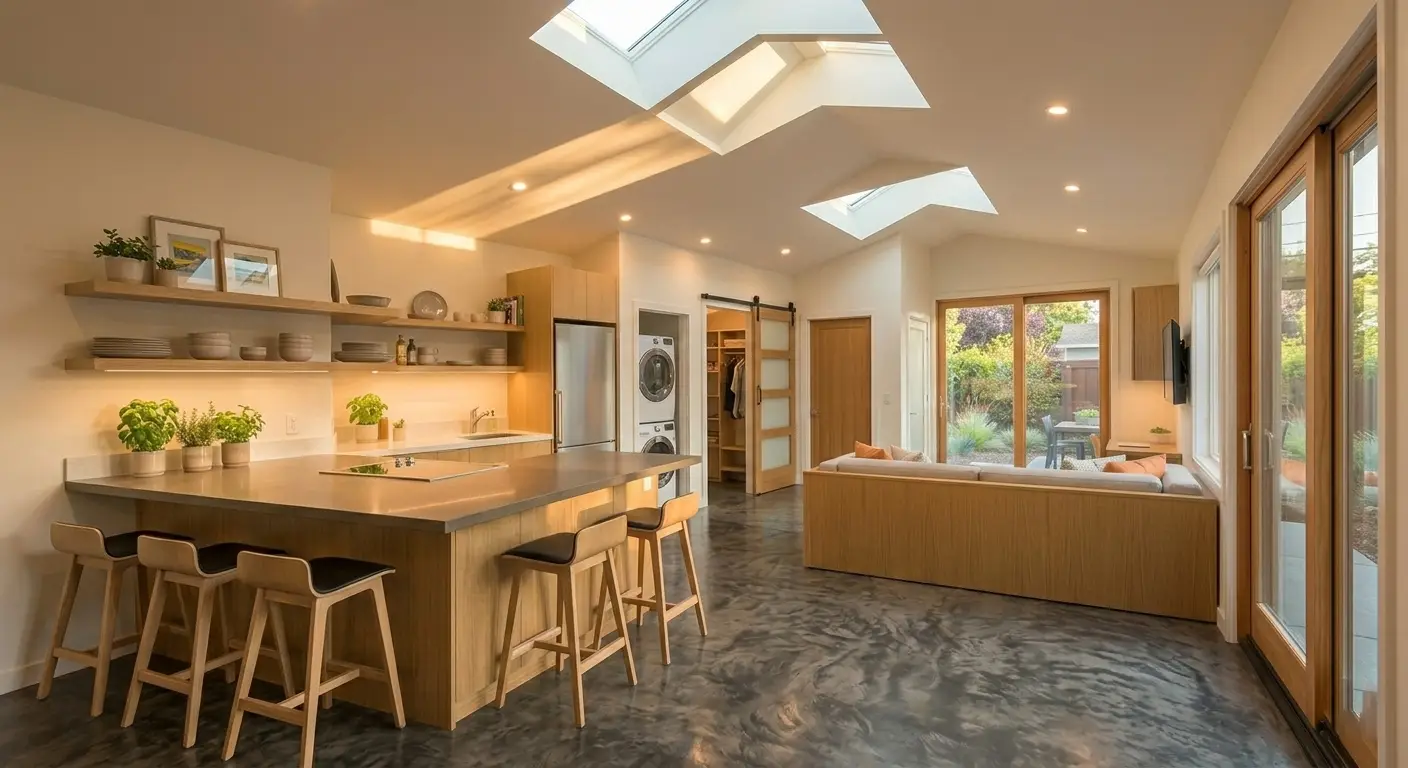
A 450-square-foot kitchen expansion reaches a scale that most homeowners associate with a full custom kitchen build rather than an addition: a butler's pantry, an island with seating on multiple sides, a dedicated appliance wall, and complete integration with the dining area. At this size, the kitchen stops being a room where cooking happens and becomes the central environment around which the home's daily life organizes itself.
The documented ROI on kitchen expansions is amplified at this size by the permanence of the transformation. A cosmetic remodel improves what's already there. An expansion at 450 square feet replaces the floor plan constraint that a cosmetic remodel can never touch. For homeowners who cook seriously, entertain regularly, or simply spend the majority of their home time near the kitchen, the quality-of-life return at this scale is among the most durable of any project in the dataset. You can read more on planning large-scale kitchen projects in the Realm resource library.
What the scope always includes at this scale: Structural engineering, load-bearing wall removal, and utility rerouting. These are predictable components of a well-planned project at this size, not mid-construction discoveries. They belong in the budget from the first conversation.
Bedroom Addition: Turning a Starter Home Into a Family Home
A bedroom addition at 450 square feet can deliver two full bedrooms with a shared bath, which is the configuration that most reliably moves a property into the next price tier in California and Washington resale markets. The data describes this accurately: at this size, a two-bedroom addition can transform a starter home into a family home. Both bedrooms have enough clearance and closet space to function as real rooms, not spaces that technically qualify as bedrooms but read as something smaller when you walk through them.
In California and Washington, moving a home from two bedrooms to four is one of the most consistently documented high-ROI renovation investments available, because it expands the buyer pool into the family segment that dominates move-up purchasing in Realm's markets.
The floor plan logic that determines long-term value: Two new bedrooms need logical hallway access, bathroom proximity that makes sense for both rooms simultaneously, and a connection to the existing home that reads as intentional rather than structural improvisation. Design that connection from the first planning conversation.
Above-Garage ADU: A Two-Bedroom Unit Above the Driveway
An above-garage ADU at 450 square feet is the version of this project type that makes a genuine two-bedroom layout achievable above a two-car garage footprint. Accounting for the approximately 50 square feet the staircase takes, there is enough usable space for two bedrooms, a bathroom, a kitchen, and a living area with the kind of layout efficiency that produces a livable result rather than a technically achievable one.
The structural requirement remains the defining cost variable: whether the existing garage is built to support a habitable space above or needs to be rebuilt or reinforced. That determination belongs in the planning phase, not the design phase, because the answer has a significant impact on total project cost.
A comparison worth running before you commit: Price out a detached ADU on the same lot alongside the above-garage option. The structural engineering premium sometimes brings the total costs closer together than the initial framing suggests. A Realm advisor can help you run that comparison for your specific garage and property.
Primary Suite Addition: A Wing, Not Just a Room
At 450 square feet, a primary suite addition stops being a large bedroom with a nice bathroom and becomes a private wing of the home. There's room for a bedroom with genuine furniture clearance, a luxury ensuite with a soaking tub and a separate walk-in shower, a double vanity with full counter space, a walk-in closet large enough to function as a dressing room, and a sitting area or reading nook that makes the suite feel like a destination rather than just the room where you sleep.
The long-term value this addition produces in Realm's California and Washington markets is consistent and well-established for homes where the absence of a proper primary suite was a known competitive disadvantage. At 450 square feet, that disadvantage is not just eliminated; it's replaced by a feature that positions the home at the top of its competitive tier.
The design decision that shapes the outcome: The spatial relationship between the bedroom, the bathroom, the closet, and the nook has more good configurations at 450 square feet than at smaller sizes, and a meaningful quality gap between the best ones and the rest. Investing in getting that right before construction begins produces results that hold up for decades. Talk to a Realm advisor about designing your primary suite addition at this footprint.
Living Space Addition: Connecting the Home to How You Actually Live
A 450-square-foot living space addition is a large, purposeful expansion that creates an open-concept great room capable of holding a full sectional, a dining table for eight, and a kitchen that serves both without any area feeling crowded. Sliding glass doors or bi-fold panels connecting the addition to a rear yard or covered patio are standard at this size, and in California and Pacific Northwest climates those connections extend the usable space well beyond the square footage of the addition itself.
This is the addition most frequently paired with a kitchen expansion in Realm's service areas. Together they address the entire back of the home's ground floor as a single, cohesive project, which is both more efficient in construction and more effective in result than tackling them separately.
Sunroom / Enclosed Patio: More Living Space for Less Per Square Foot
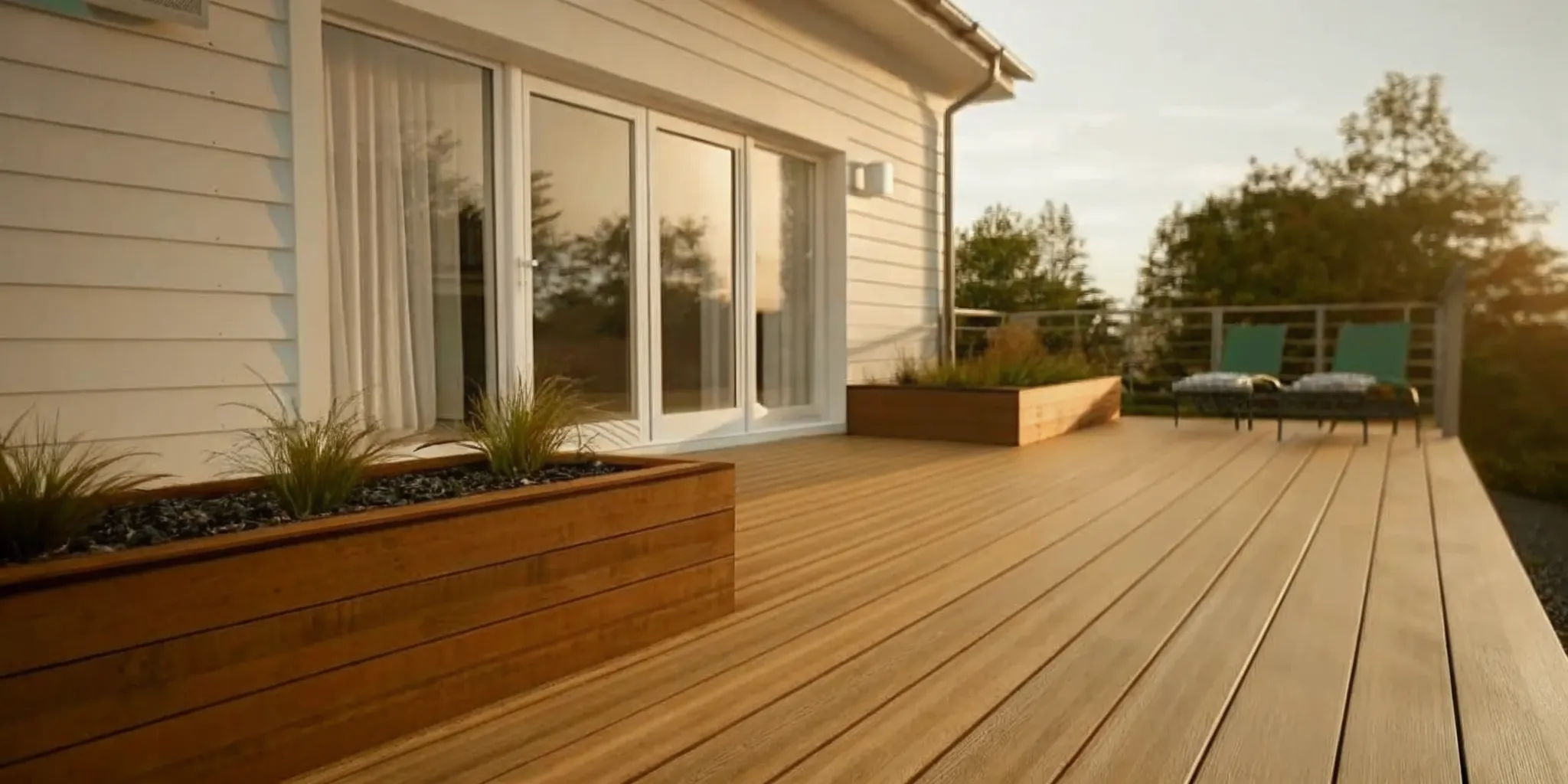
The sunroom and enclosed patio category makes its first appearance in the series at this size bracket with enough frequency to carry its own section. At 450 square feet, an enclosed patio or sunroom is a substantial room: large enough to function as a dedicated gym, a yoga studio with proper clearance, or a year-round family room with an indoor-outdoor character that no fully conditioned addition can replicate at the same cost.
The lower per-square-foot cost compared to a fully framed addition comes from the reduced structural and insulation requirements. In California and Pacific Northwest climates, that trade-off is minor for most of the year. The honest question to ask before choosing this project type is how you plan to use the space and what months of the year matter most to you.
The trade-off that matters most: A sunroom without full insulation and HVAC may be uncomfortable during extreme heat or cold. If the space needs to function as a home office year-round, a fully conditioned addition will serve better. If it's a fitness space, a gathering room, or a casual retreat for nine or ten months of the year, the cost-per-square-foot efficiency is hard to beat.
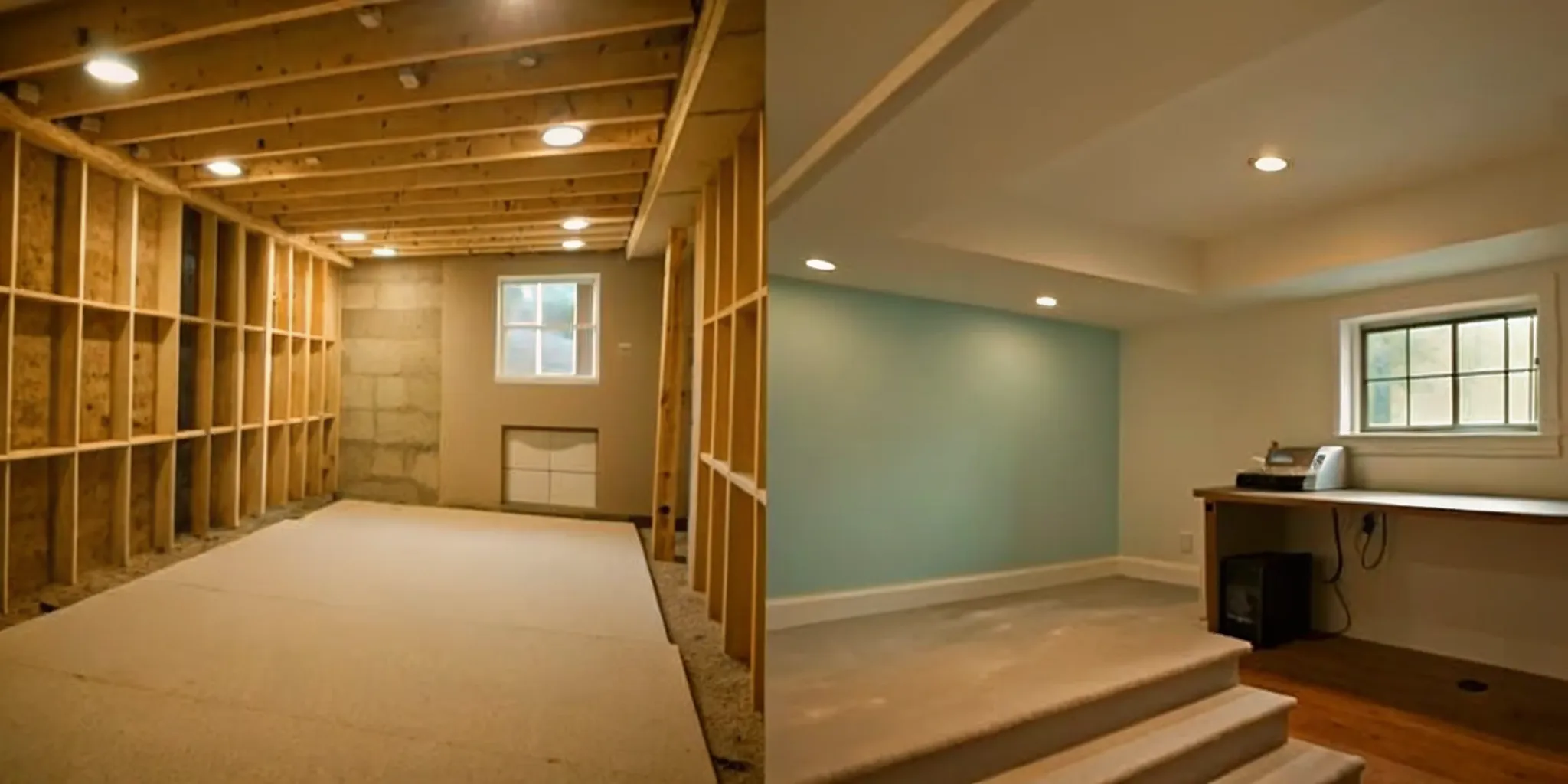
Basement ADU / Conversion: Below-Grade Living Done at Scale
Basement ADUs at 450 square feet appear primarily in Seattle projects in Realm's data. At this size, the conversion delivers a complete one-bedroom, one-bath apartment with a separate entrance via an exterior stairwell, a full MEP buildout, and enough square footage for a living area that has real room to breathe rather than just satisfying minimum habitable space requirements.
The cost efficiency advantage of reusing existing walls, foundation, and partial utilities remains the primary case for a basement conversion. The variables that determine whether that advantage holds, egress requirements, waterproofing needs, and exterior stairwell construction, need to be assessed site-specifically before design work begins.
The design priority that determines long-term rental viability: Natural light and egress quality are the two factors that most directly influence whether a tenant chooses to stay or leave at lease renewal. At 450 square feet, there is enough room to design both thoughtfully rather than just satisfying the minimum code standard.
JADU: The Maximum Version of a Low-Disruption Rental Unit
At 450 square feet, a JADU approaches the upper limit of what California law permits for this project type and produces its most complete expression: a unit that feels genuinely like a separate apartment rather than a converted room. The kitchenette, bathroom, sleeping area, and living zone each have enough space to function as distinct areas rather than overlapping functions packed into the same footprint.
The permitting advantages are the same as at smaller sizes but feel more significant at 450 sq ft because the resulting unit is so much more capable: California's streamlined ADU approval process, no new foundation, minimal site-work cost, and a faster timeline to occupancy than any ground-up or garage conversion alternative in most jurisdictions.
The trade-off in plain terms: Even at 450 square feet, a JADU has an efficiency kitchen rather than a full one and maintains the shared-entry configuration with the main home. For in-law arrangements and short-term rentals, these are manageable characteristics. For long-term tenants who value full independence, a detached unit will typically serve the relationship better.
Pool House / Casita: Completing the Backyard
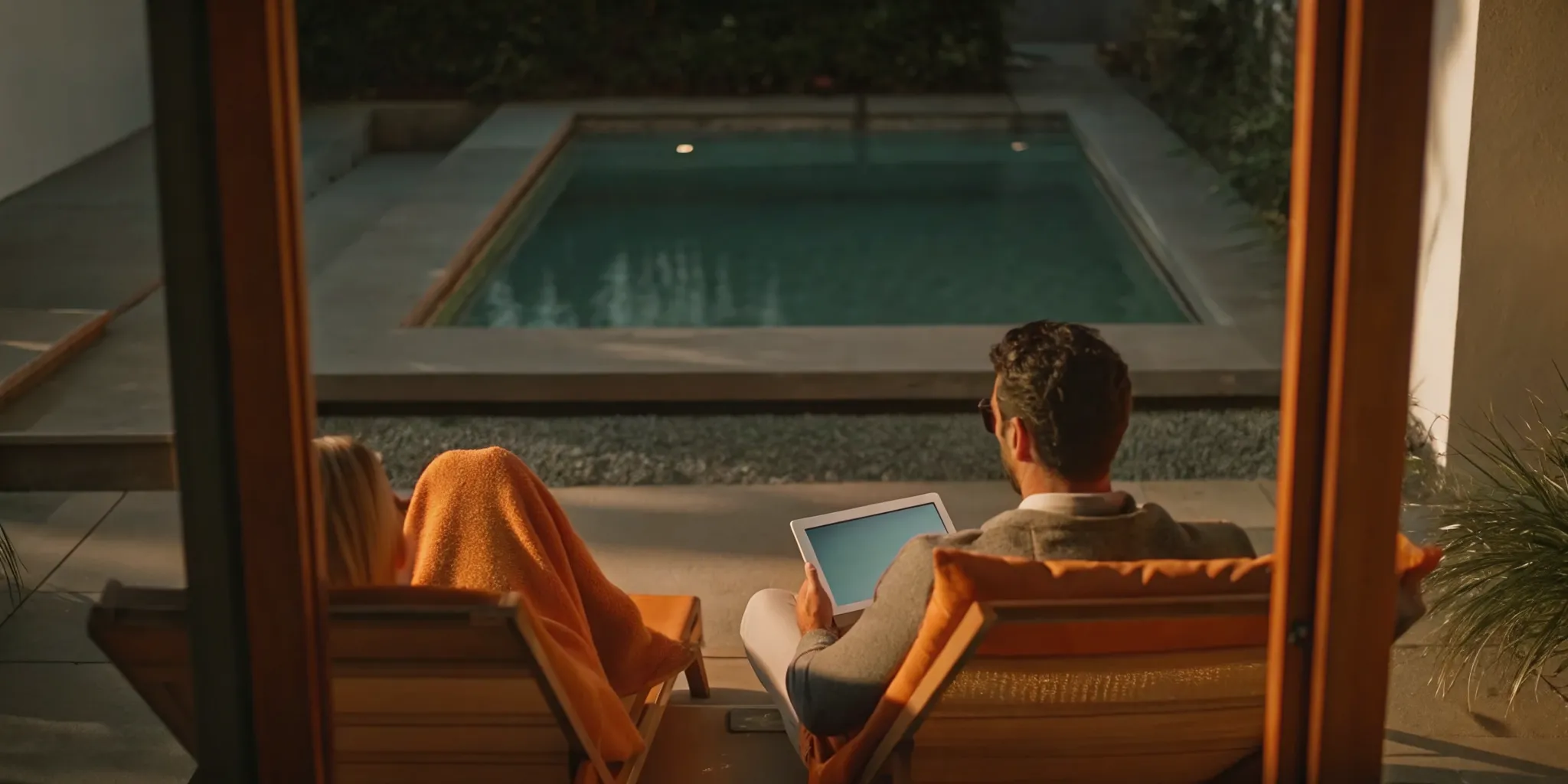
A pool house at 450 square feet is the version of this project type that graduates from a changing room with a bathroom into a complete entertainment environment. There's room for a full kitchen rather than a kitchenette, a proper dining or lounge area, a full bath, and a sleeping configuration that makes extended guest stays comfortable. At this size, the casita functions as a self-contained secondary living space rather than a backyard amenity.
This project almost always appears alongside a pool renovation or a broader backyard project. Pricing and planning the casita as part of a combined outdoor scope from the start typically produces better construction sequencing and more efficient overall cost than treating them as separate contracts.
Second-Story Addition: Maximizing a Constrained Lot
A second-story addition at 450 square feet delivers a one-bedroom, one-bath suite above the existing footprint, most commonly above a two-car garage. The structural complexity, roofing tie-ins, staircase design, and construction disruption to the occupied home that define this project type are at their most significant at this size.
For homeowners on small urban lots in the Bay Area and dense Los Angeles neighborhoods who have no realistic path to lateral expansion, it remains the only option that delivers meaningful square footage and bedroom count gains. The structural assessment that precedes the design phase is not optional at this scale.
Other Specialty Additions
Complex additions that don't fit neatly into any standard category represent a small share of the 450 sq ft dataset: multi-use combinations, specialty rooms serving highly specific purposes, or builds that combine elements of two or more project types. For these projects, a precise scope definition before soliciting bids is the most important planning discipline available. Without one, contractor quotes are not comparable and the selection process produces false confidence rather than useful information.
Connecting Your Goal to the Right Project Type
Thirteen project types at 450 square feet is the widest variety in the series. The right one among them is determined almost entirely by what you're trying to accomplish and what you're starting with.
Rental income points toward a garage conversion, detached ADU, JADU, above-garage unit, or basement conversion. The choice between them depends on your existing structure, your lot, your budget, and the privacy requirements of your specific tenant situation.
Outdoor living and lifestyle points toward a sunroom, an enclosed patio, or a pool house. These projects serve a different kind of goal from rental income or family space, and at 450 square feet they deliver results substantial enough to justify the investment.
Resale value in California and Washington points toward whatever your specific market rewards most reliably. At 450 sq ft, that is typically a primary suite in homes that lack one, or a bedroom count increase that expands the property's buyer pool.
Daily comfort and livability points toward a primary suite addition or a living space and kitchen expansion. These are investments in how you experience your home every morning, not financial instruments with a clear payback period.
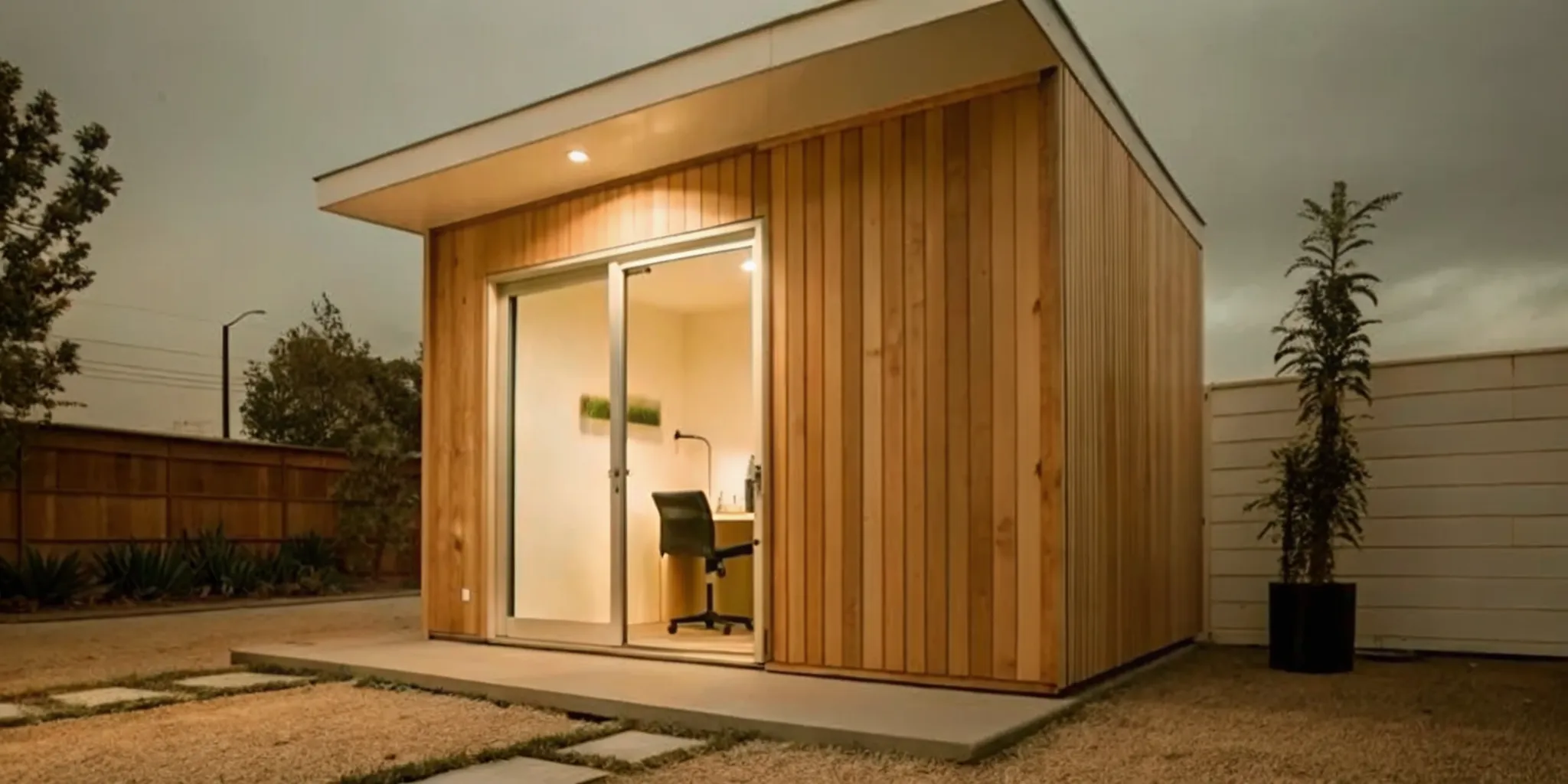
Remote work points toward a detached office or studio. At 450 square feet, the project produces a professional-quality workspace that functions as a real office rather than an upgraded shed.
Working through the choice between these goals with someone who knows your market and can translate your situation into an accurate project scope before you spend a dollar on contractors is what Realm's advisors are built for.
What to Resolve Before the First Contractor Quote
Your lot's buildable envelope. Setbacks, lot coverage limits, height restrictions, and utility access define what's physically and legally achievable on your specific property before any design preference enters the conversation. Discovering a constraint after you've committed to a floor plan is one of the most expensive and most preventable disruptions in renovation planning. Realm's advisors verify these conditions at the start of every project, before design work begins.
Whether a two-bedroom garage conversion is realistic for your specific garage. At 450 square feet, a two-bedroom layout in a garage conversion is achievable, but it depends on whether the garage dimensions support the floor plan required. Confirming the actual footprint of your garage before targeting a specific bedroom count is an early step that protects both the design process and the budget.
Whether a sunroom serves your actual use case. At 450 square feet, the cost savings of an enclosed patio versus a fully conditioned addition are real and meaningful. The question is whether those savings are appropriate for the way you plan to use the space. A gym or a casual entertainment room that's used seasonally is a strong fit. A year-round workspace or a primary bedroom is not.
Frequently Asked Questions
How much does a 450 sq ft home addition cost? Based on 52 closed Realm projects at this size, the median cost across all project types is $200,000 and the average is $255,782. The tighter spread between those numbers compared to the 400 sq ft bracket reflects more consistent project profiles at this size. Garage conversions and JADUs tend to come in below the median. Detached ADUs, kitchen expansions, primary suite additions, and second-story additions tend to land at or above it depending on site conditions, finish level, and local permitting fees. Talk to a Realm advisor to get a realistic estimate for your specific project and location.
Is a 450 sq ft ADU considered a large unit in California? By ADU standards, yes. California ADU regulations cap most JADUs at 500 square feet, and 450 sq ft sits near the upper end of the smaller-format ADU range. In practical terms, a 450 sq ft ADU is large enough for a two-bedroom layout that functions comfortably, a full kitchen with an island, and a living area that doesn't feel tight. In all of Realm's markets, a two-bedroom ADU at this size is a genuinely competitive rental product that attracts long-term tenants and commands rents that produce meaningful returns on the investment.
What can I realistically build in my backyard with 450 square feet? More than most homeowners anticipate. A detached ADU with two bedrooms and a full kitchen. A standalone home office suite with a three-quarter bath. A pool house with a full kitchen and a proper entertainment space. A sunroom or enclosed patio that functions as a gym, a studio, or a year-round family room. At 450 square feet, the primary constraints are setbacks, lot coverage limits, and utility access, not the capability of the footprint itself. A Realm advisor can help you understand what your specific lot and local regulations actually allow before you commit to a design.