Garage Conversion vs. Detached ADU: How to Decide Which Is Right for Your Lot
Garage conversion or detached ADU? Realm Advisors break down real costs, California setback rules, and which path works best for your lot.
|
June 2, 2026
In this article:
Most homeowners who arrive at this decision have already done the hard work of deciding to build an ADU. They know they want the unit. They just got bids on both paths, the numbers are further apart than they expected, and now they are not sure which comparison is even the right one to make. This question comes up in roughly seven out of ten ADU advisory calls at Realm where the homeowner has an existing garage. It is one of the most consequential decisions in the whole process, and it is almost impossible to get a straight answer from a contractor because most contractors specialize in one path or the other. Here is how Realm Advisors approach it, after navigating this decision on hundreds of projects across California and Washington.
Why Does This Decision Feels Harder Than It Should?
Both paths get you a permitted, rentable ADU. But they start from very different baselines, and the cost gap between them is rarely what homeowners expect. The common assumption is that a garage conversion is always cheaper because you already have a structure. That is sometimes true. It is not always true. A garage with structural issues, a low ceiling, or a compromised slab can cost nearly as much to rehabilitate as it would to build a clean detached unit from scratch. And in California, a single regulatory factor, the solar requirement that applies to new detached builds but not to conversions, can shift the economics significantly before you have even opened a wall. The decision is not about which type of ADU is better in general. It is about which path is right for your lot, your existing structure, and your goals.
The Four Factors That Actually Determine Which Path Is Right
Most content on this topic gives you a generic pros and cons list. The problem is that the pros and cons do not apply equally to every property. These are the four factors that actually drive the decision. 1. Your lot size and configuration. A narrow urban lot with limited rear yard space may not support a detached build at a size that makes financial sense. A large lot with an undersized or poorly placed garage may be a better candidate for a detached unit than a conversion. 2. What your existing garage structure can actually support. Foundation condition, ceiling height, floor slab integrity, and proximity to the property line all affect whether a conversion is practical at the size and quality level you need. A garage that looks functional from the outside can have significant constraints once an architect opens it up. 3. California and Washington solar requirements. New detached ADUs in California are required to have solar under Title 24. Garage conversions are generally exempt. This is a material cost difference that changes the comparison in ways many homeowners do not account for until they see the final bids. 4. The ADU size you actually need. Most garages are 400 to 500 square feet. If you want a two-bedroom unit, a single-car garage cannot get you there. A detached new build gives you control over footprint in a way that a conversion does not.
Garage Conversion: What You Are Actually Getting
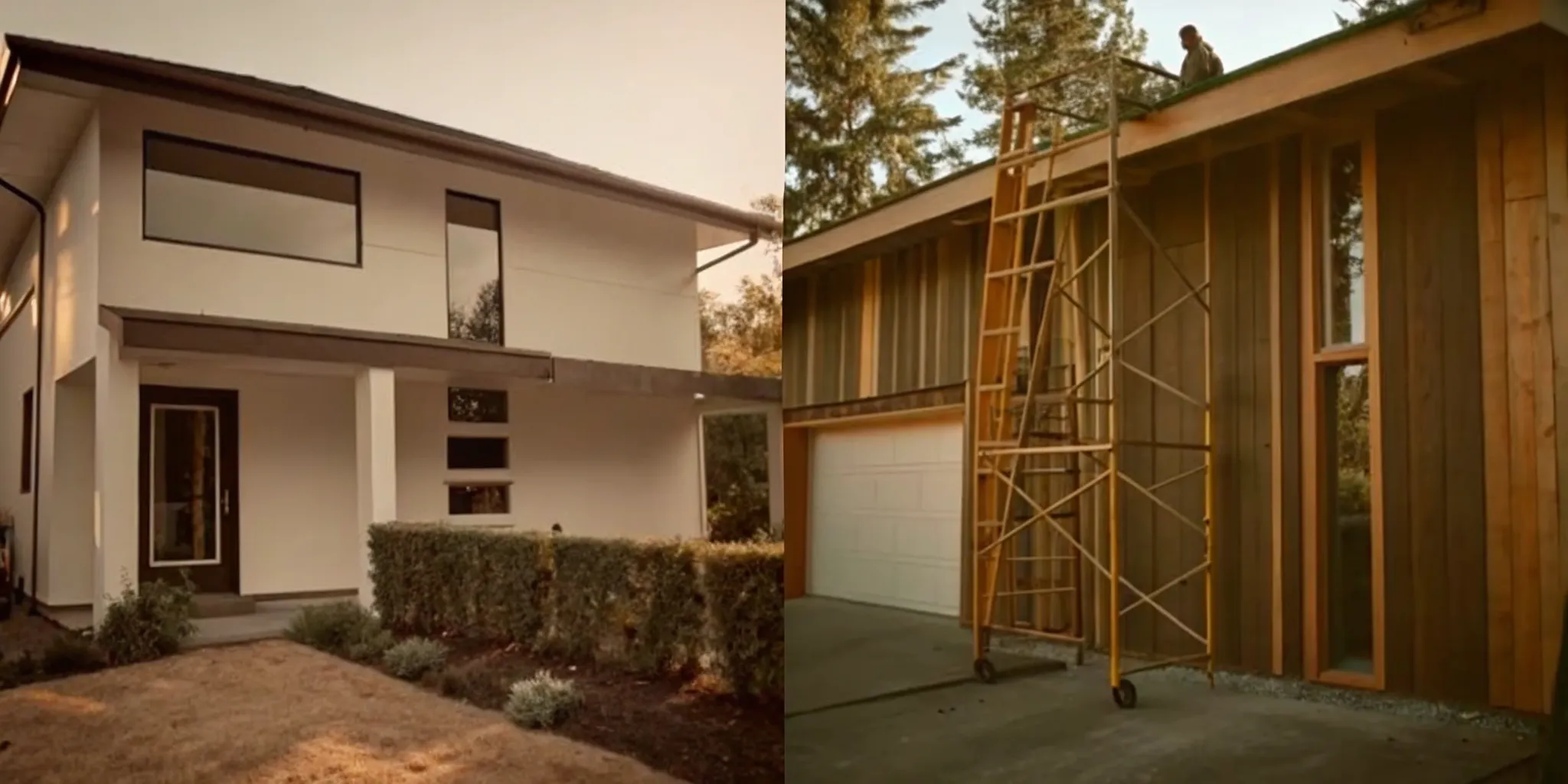
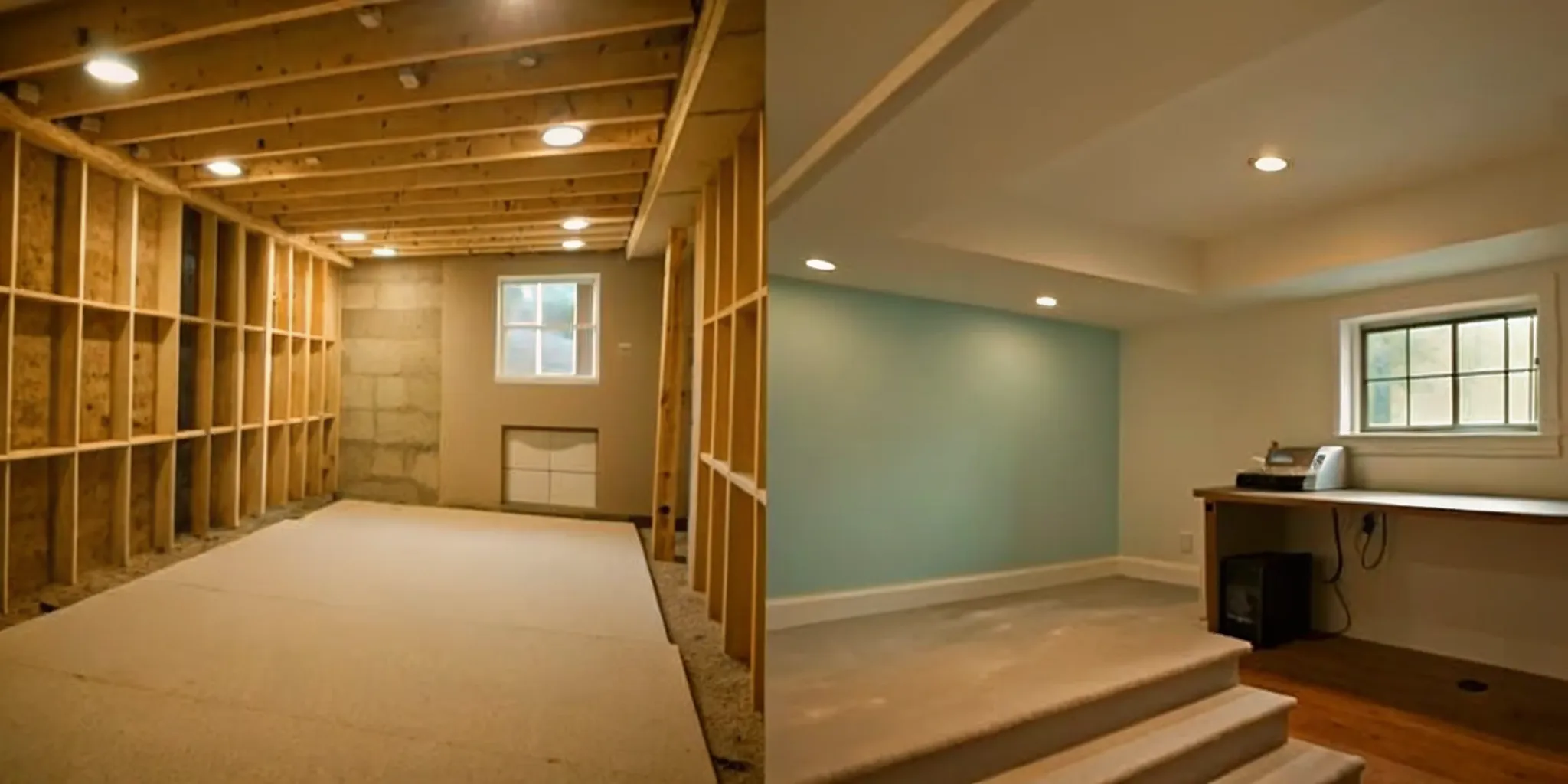
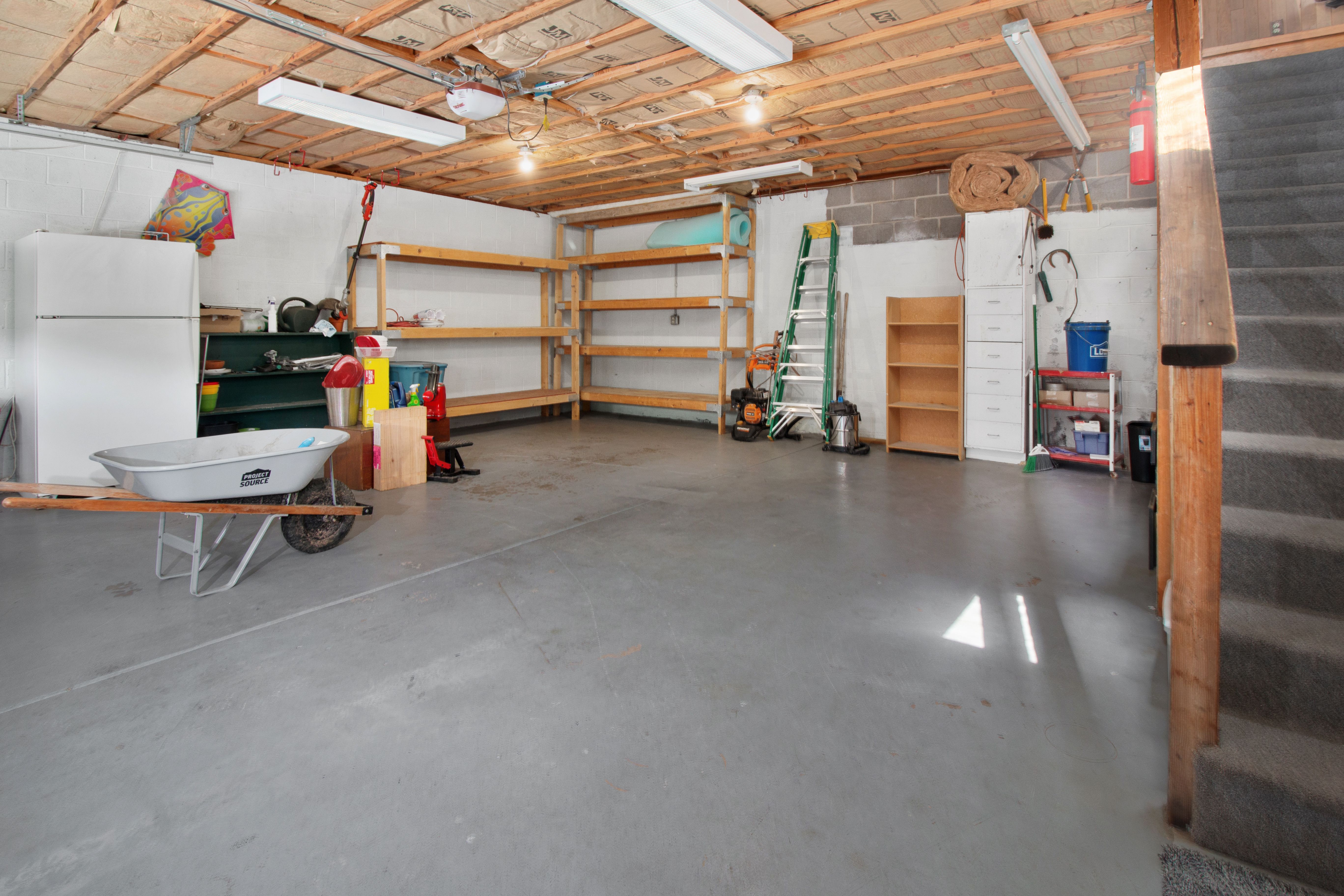
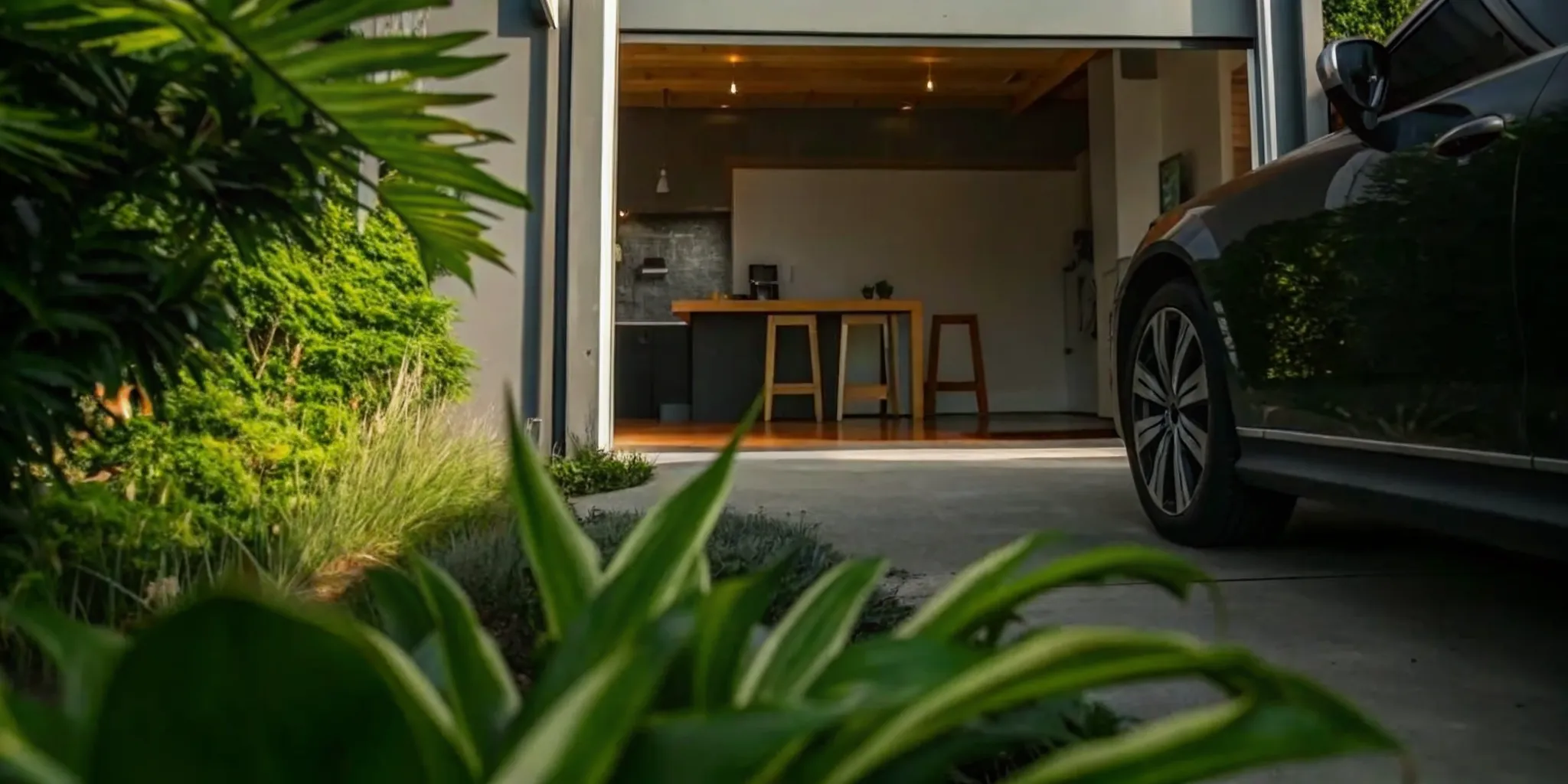
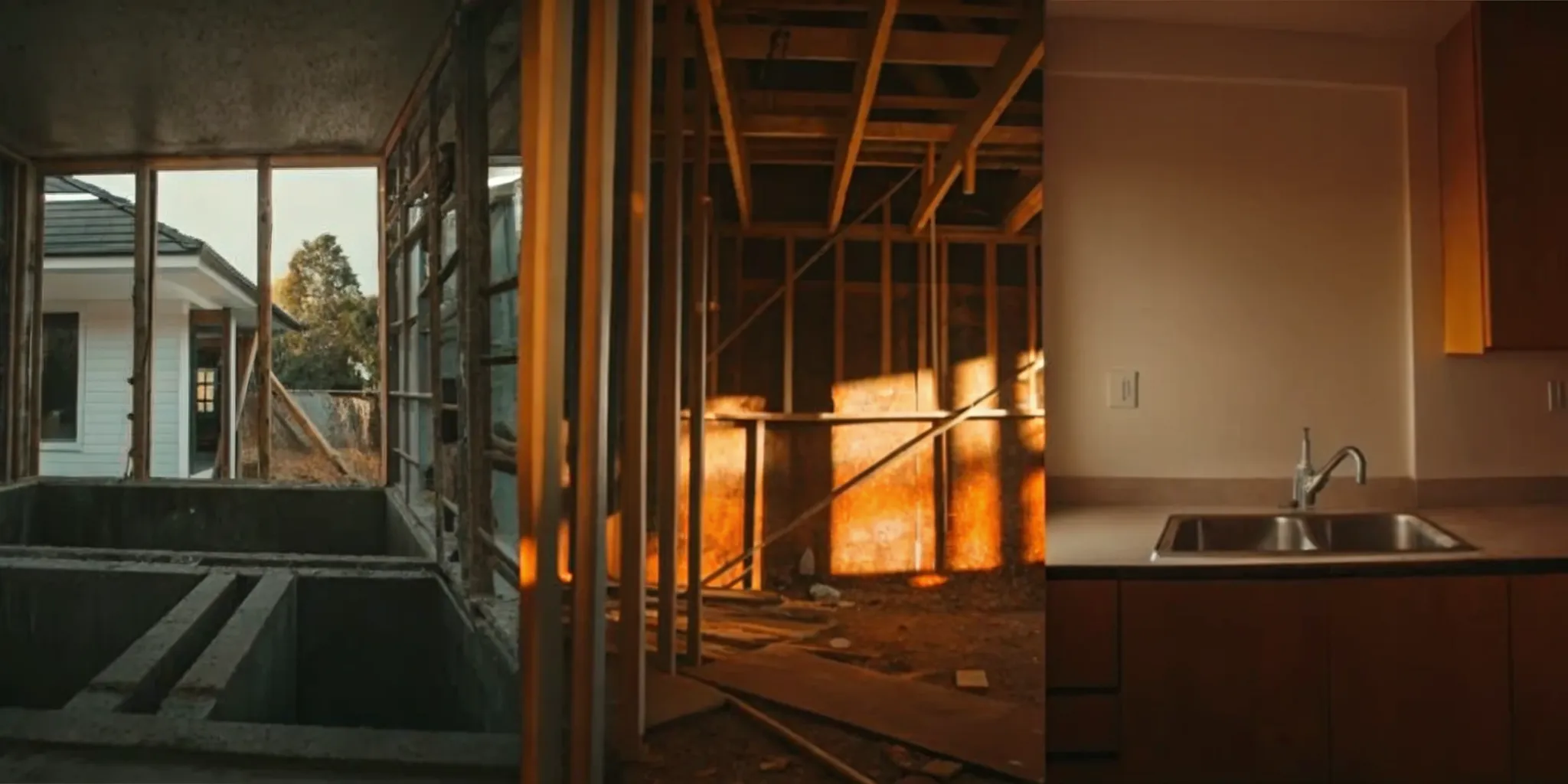
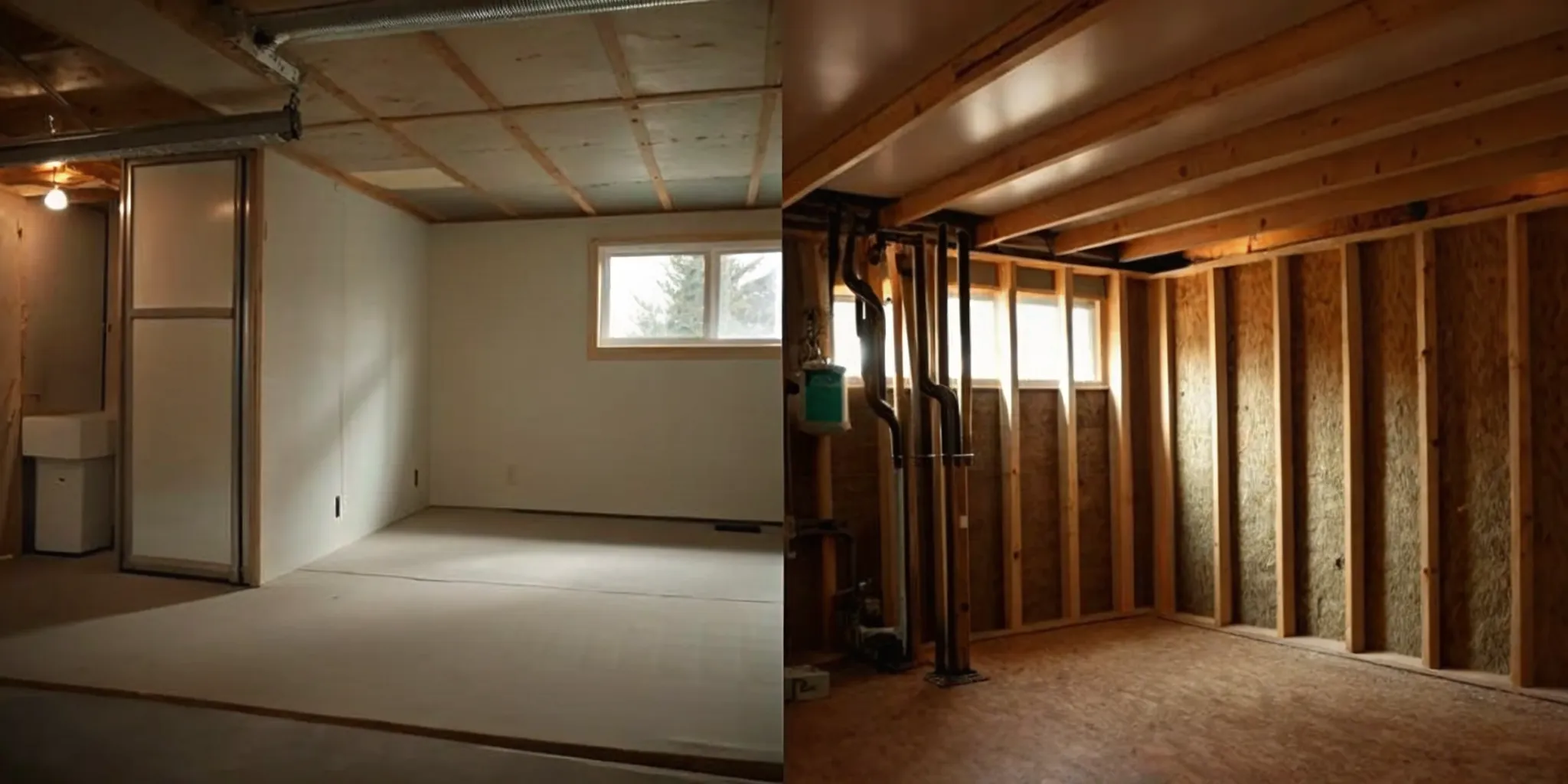
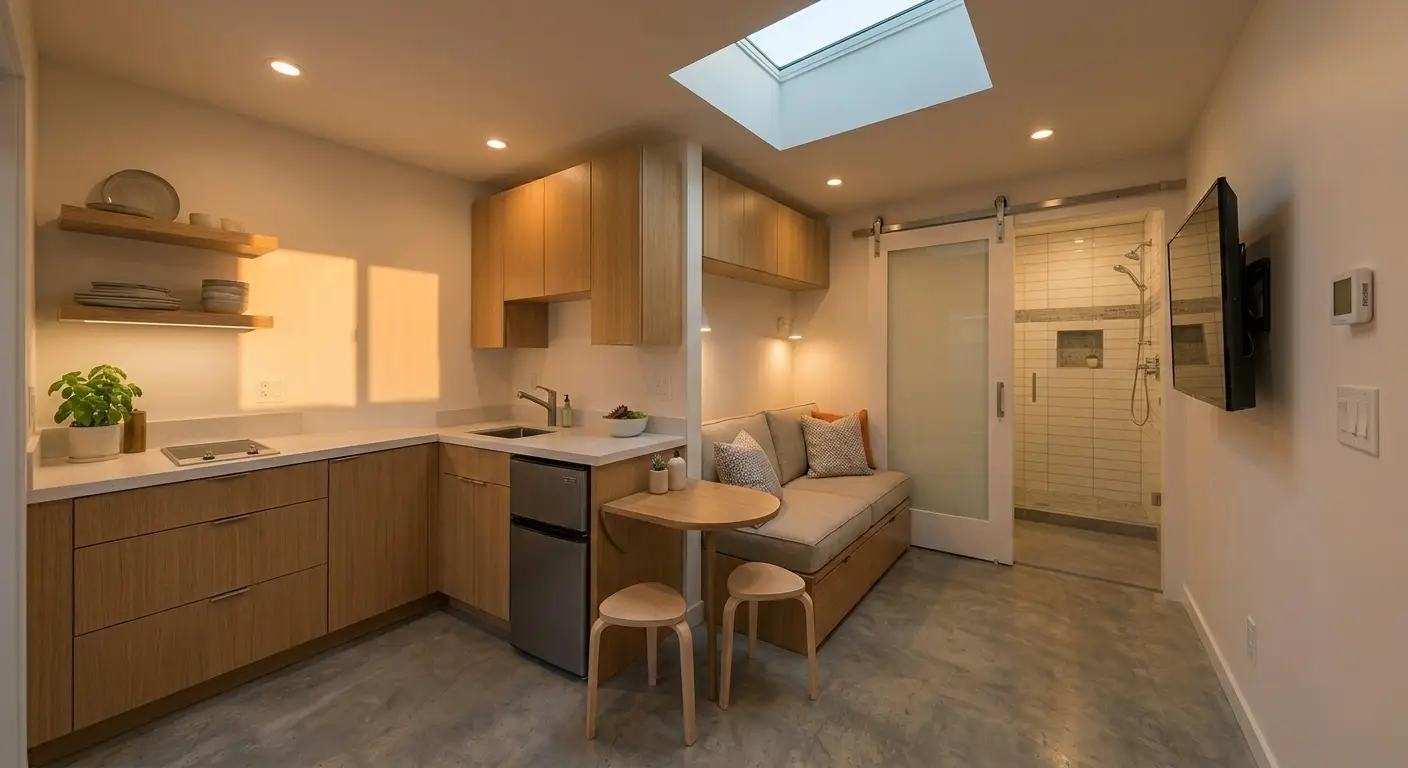
The appeal of a garage conversion is straightforward. The foundation is already there. The exterior framing is already there. You are converting an existing structure rather than building one from the ground up, and that saves real money on two of the most expensive line items in any construction project. But here is what most homeowners do not fully grasp until the bid comes in. In the vast majority of garage conversions, the interior is a complete gut. Walls, insulation, electrical, plumbing, windows, HVAC, and often the floor are all new. You are not renovating the garage. You are building a living unit inside a shell that provides foundation and exterior walls. As one Realm Advisor explained during a recent call: "The garage conversion and attached ADU are very similar. In one case I have to build a foundation, and in the garage I don't, and I have to build stucco on three sides instead of four." That is the real cost advantage. It is real, but it is narrower than most homeowners expect going in. The conversion path also carries a category of risk that new builds do not. Hidden conditions inside an existing structure can surface mid-project and generate change orders. As another advisor put it: 'Working with an existing structure is not always easier than a new build. We could tear open one wall and find something that has to be fixed. If this was an ADU in your backyard starting from scratch, yes, all day long. But with an existing structure, there are unknowns.' If you are working with a tighter budget and want to see how homeowners have approached garage conversions cost-effectively, our garage conversion ideas on a budget covers the decisions that keep costs down without compromising the finished unit. For homeowners who have already decided on the conversion path and are ready to compare bids, the ADU Bid Review Guide covers exactly what to look for in a conversion bid, including the line items where contractors most often leave room for mid-project surprises.
Detached New Build: What You Are Actually Getting
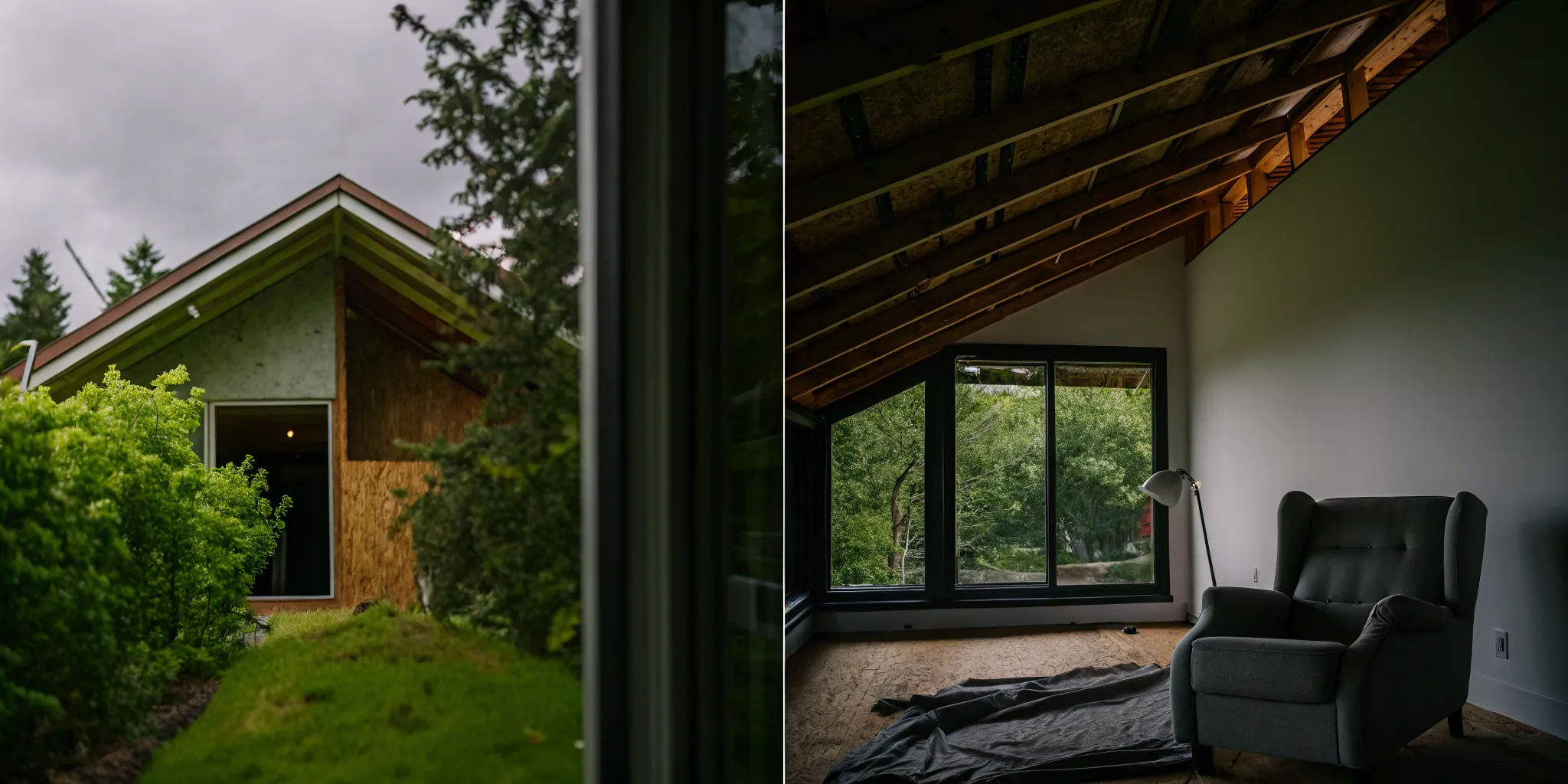
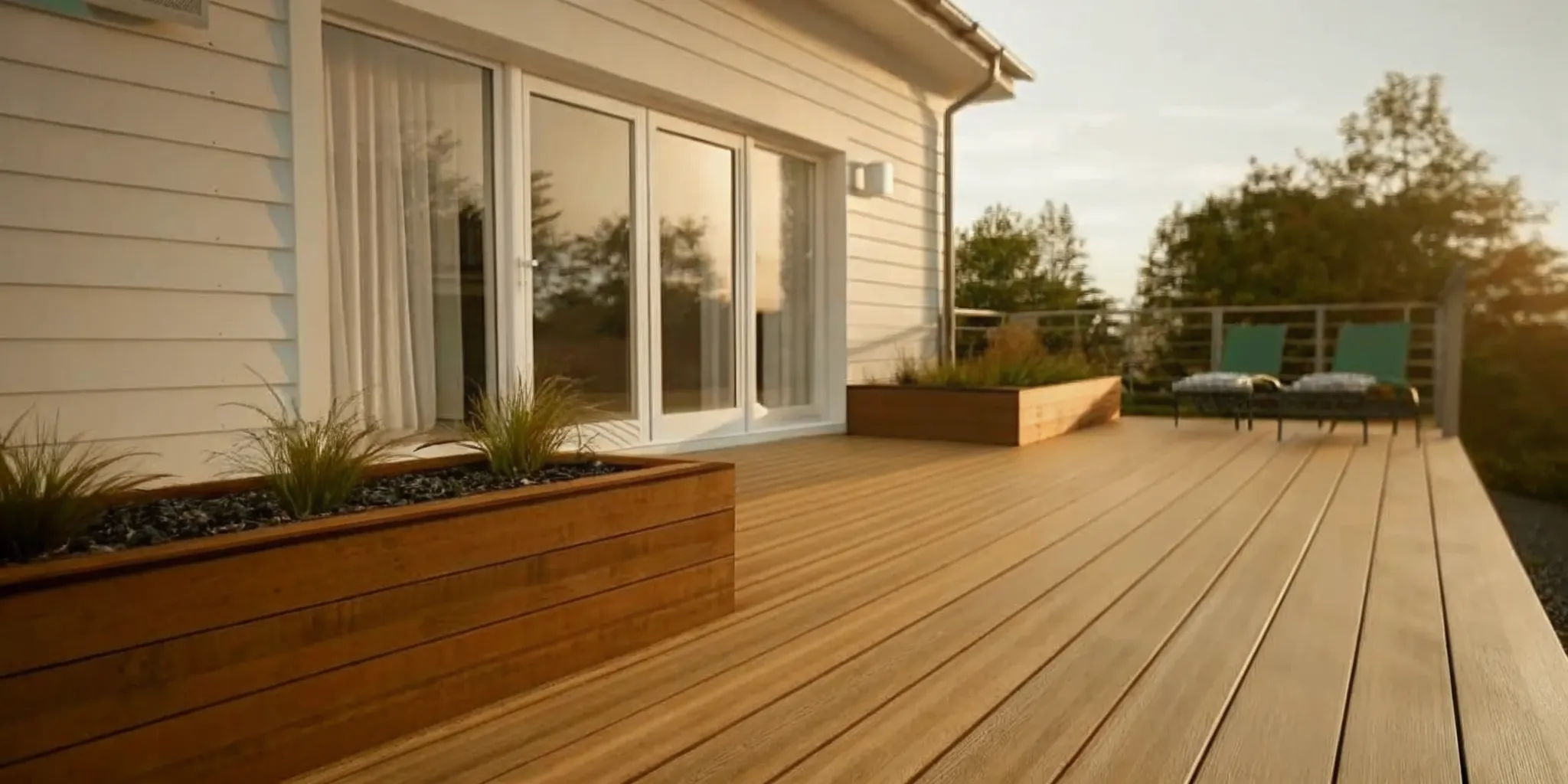
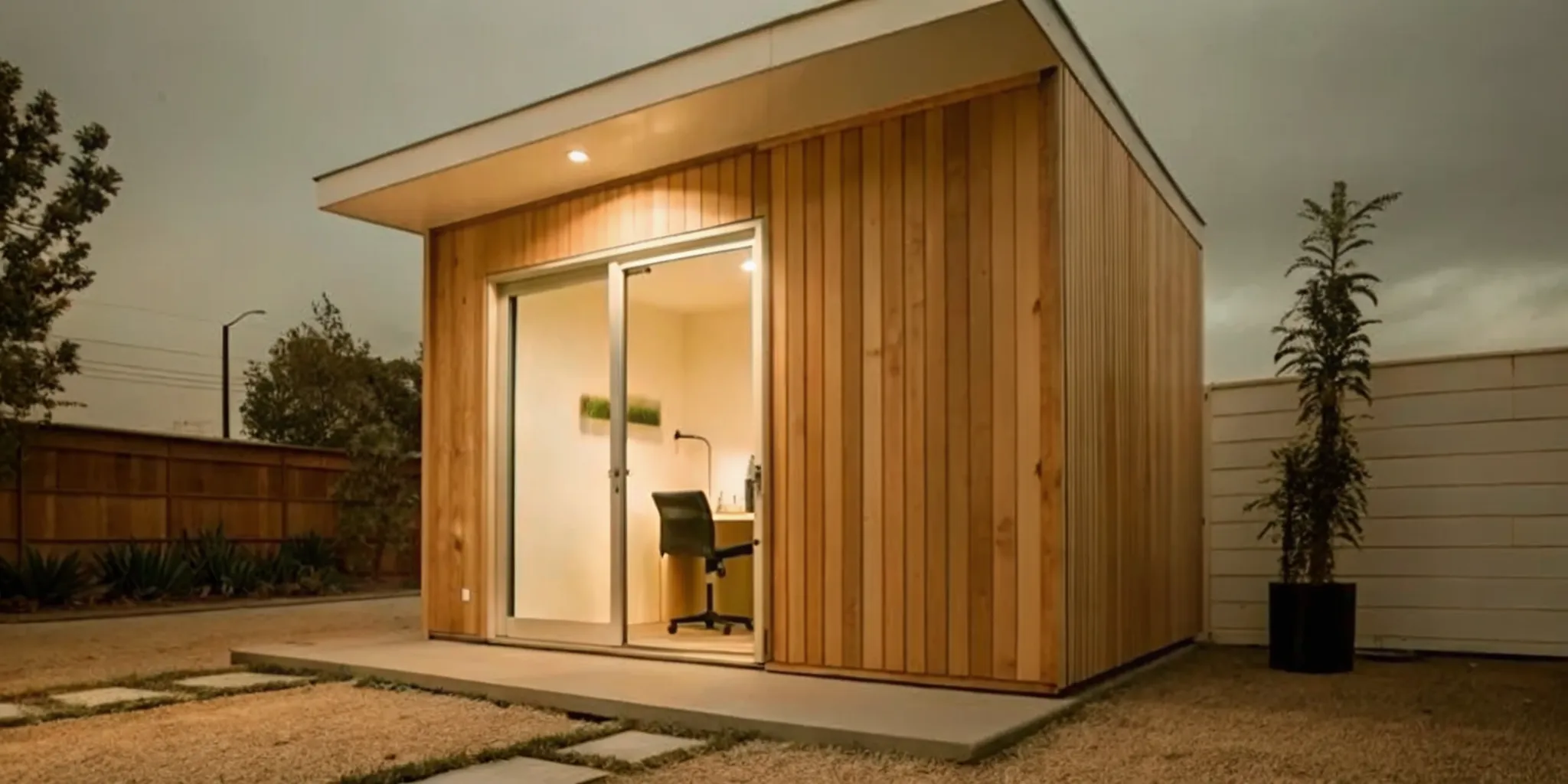
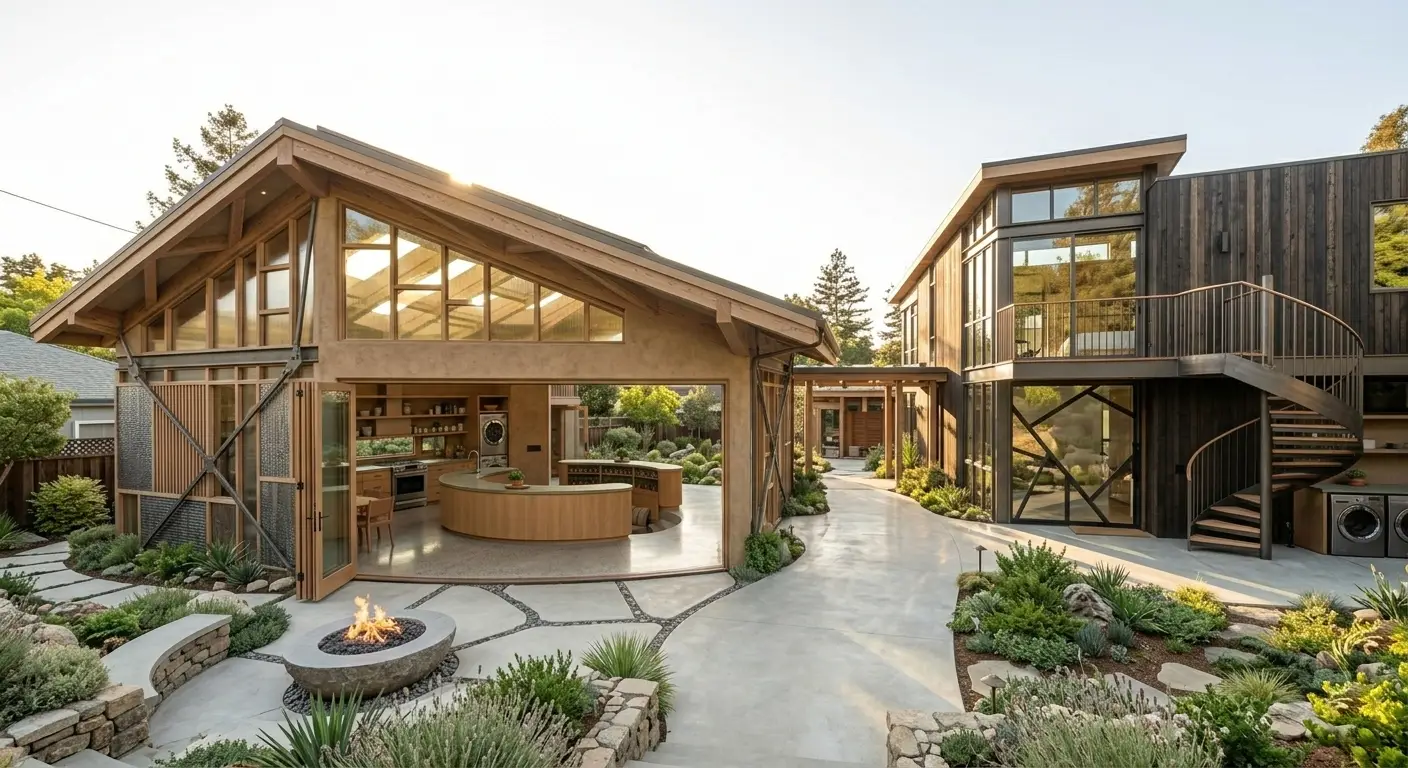
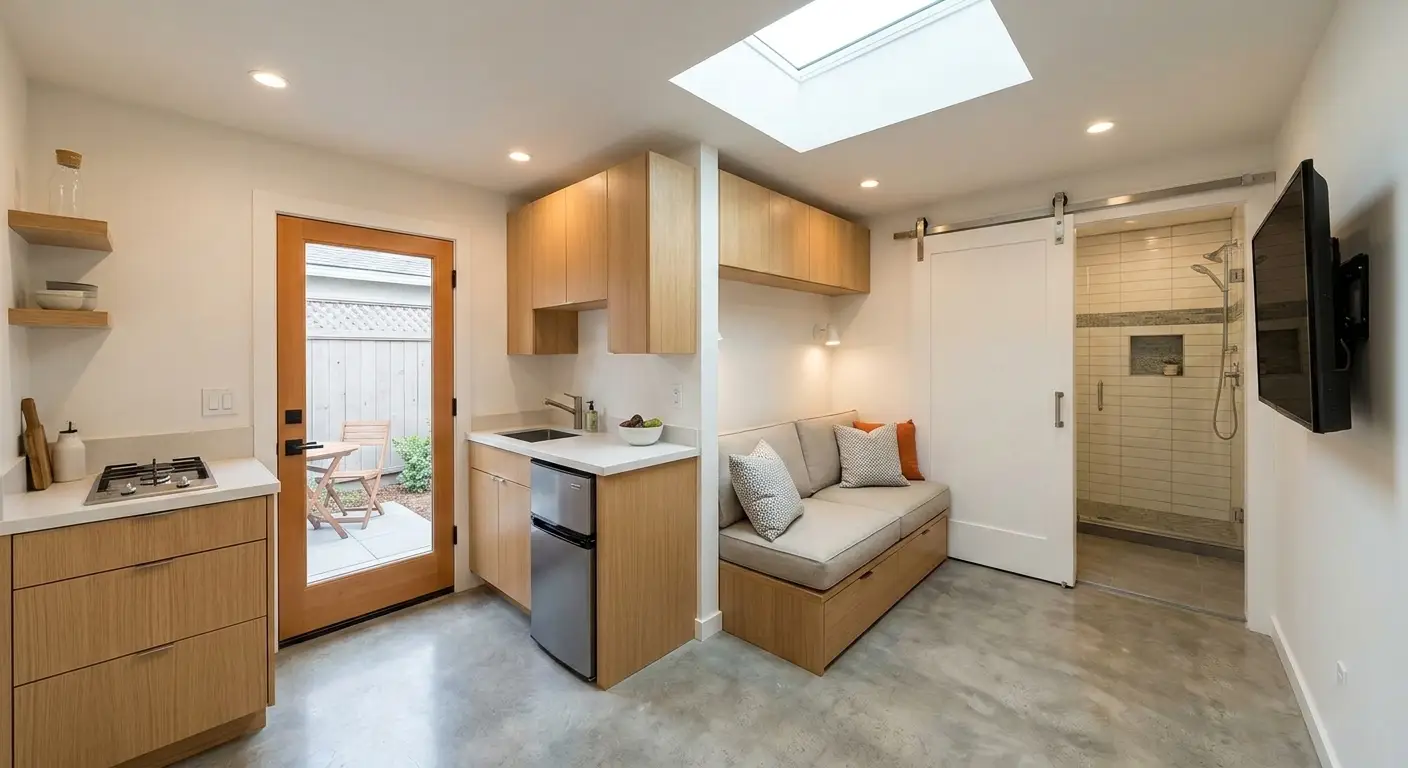
A detached new build starts from a clean slate. You control the footprint, the ceiling height, the layout, and the orientation on the lot. You are not working around existing framing or dealing with a structure that was designed to store cars rather than house people. The tradeoffs are cost and complexity. A new detached build requires a foundation pour, full exterior framing, and in California, solar panels under Title 24. Those three items alone account for a significant portion of the cost gap between the two paths. The design flexibility is real and worth valuing. A detached unit can be built to the footprint you actually want, oriented for privacy and natural light, and laid out for the rental experience you are targeting. A garage conversion delivers what the garage delivers, and you work around it.
The Cost Reality
Garage conversions in California and Washington markets typically run $150,000 to $240,000 all in. Detached new builds typically run $250,000 to $400,000 and above. That is a meaningful gap, and for many homeowners it is the deciding factor. But the gap narrows in specific situations. A garage with foundation problems, structural damage, or a compromised slab can add $20,000 to $50,000 in remediation costs before the living unit work even begins. A garage with ceiling height below what is required for habitable space may need a structural intervention that eliminates much of the cost advantage. As one Realm Advisor noted: "Typically, working with an existing structure saves anywhere from 10 to 15 percent versus building a new structure." Not 30 to 40 percent. Ten to fifteen. Add the solar requirement on the detached path, and the effective cost gap narrows further. If you are financing the build, those numbers change again. Our guide to financing an ADU construction project breaks down how construction loans, HELOCs, and renovation financing products affect the real cost of each path over time.
The Solar Factor: The Variable Most Homeowners Miss
If you are in California and comparing a garage conversion to a detached new build, the solar requirement deserves its own section because it consistently changes the math in ways homeowners do not expect. New detached ADUs in California are subject to Title 24 energy standards, which require solar installation. Garage conversions are generally exempt because they involve an existing structure rather than new construction. The cost of solar on a new detached ADU depends on system size, roof orientation, and installer pricing. One Realm Advisor gave a homeowner this estimate on a recent call: "If it's a new detached build, it's going to require solar. If you do a garage conversion, then you don't have to do solar. My guess is probably like $8 to $10,000 for solar." In practice, the range Realm sees across projects runs from $10,000 to $40,000 depending on system specifications and local utility interconnection requirements. At the high end of that range, the solar line item alone closes a significant portion of the cost gap between conversion and new build. Before you decide that the detached path is too expensive, confirm with your contractor what the solar specification looks like for your specific lot, and make sure it is itemized in the bid rather than bundled into a general allowance.
What Your Existing Garage Can and Cannot Support
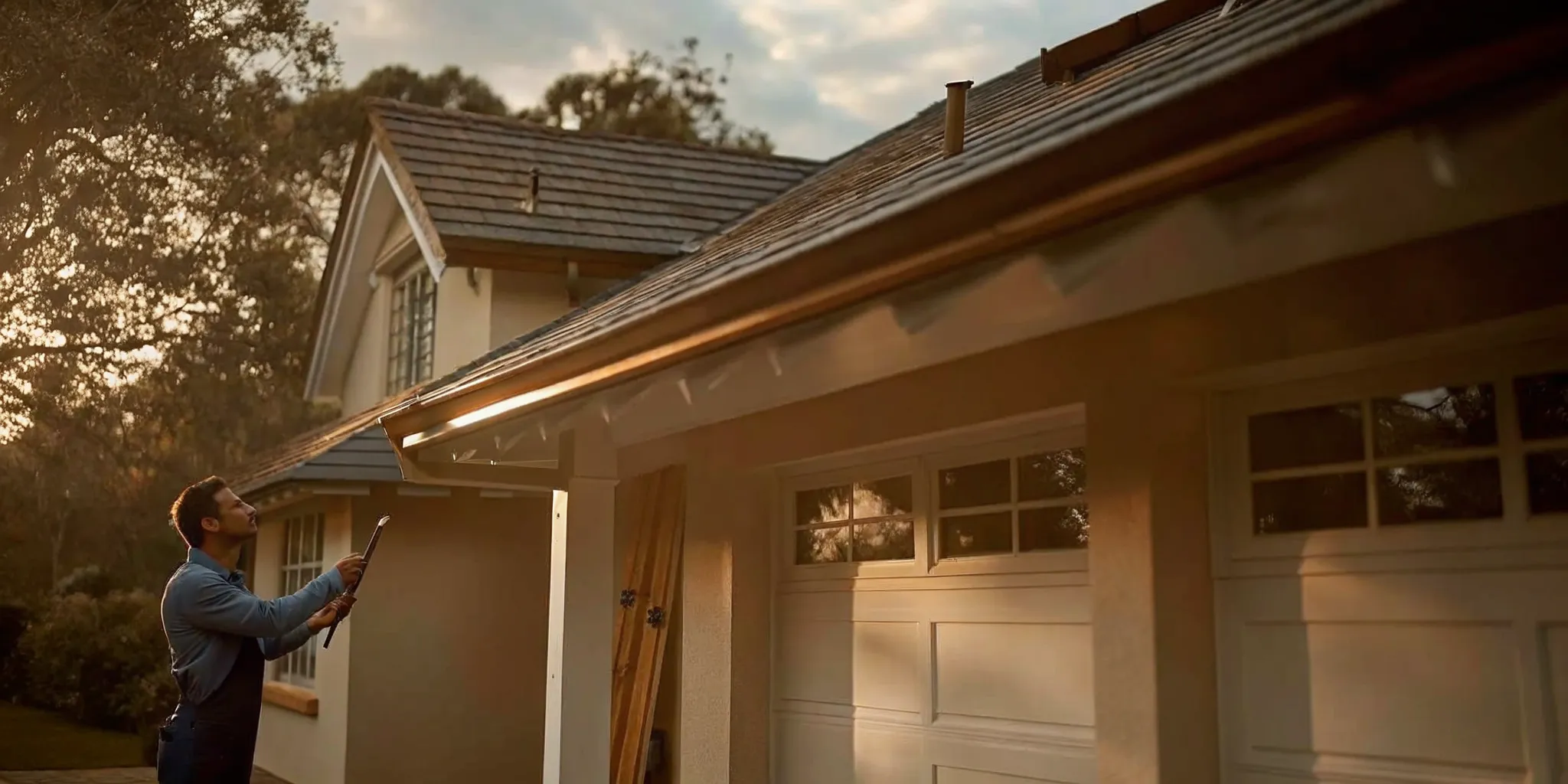
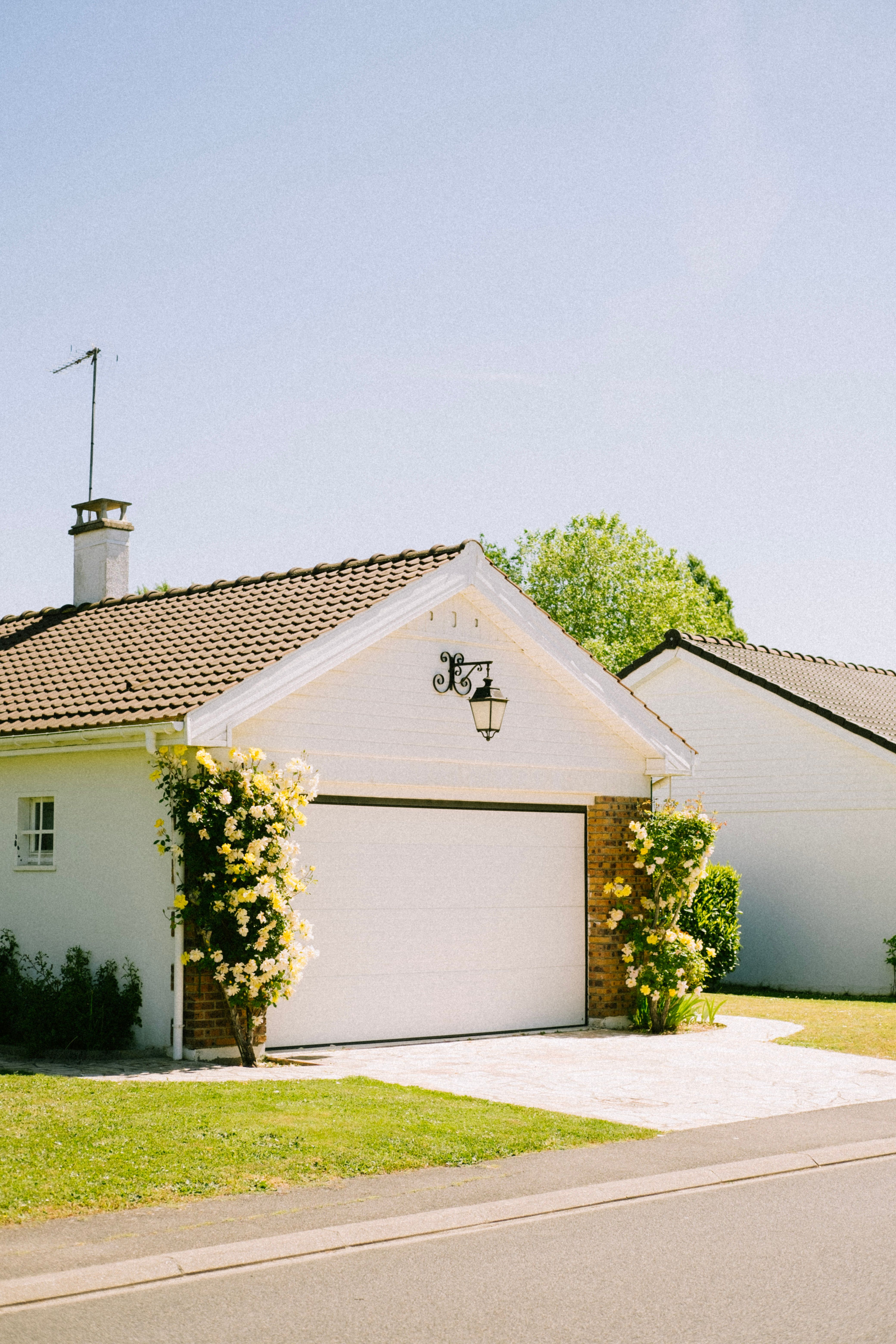
Not every garage is a good conversion candidate. Here are the structural and site factors Realm Advisors assess before recommending the conversion path. Ceiling height. Most residential garages have an 8-foot ceiling or lower. California building code requires a minimum ceiling height of 7 feet 6 inches for habitable space. In garages at exactly 8 feet, the finished ceiling after insulation and drywall can fall short of that threshold. Solutions exist, including raising the roof plate or using spray foam insulation to minimize ceiling loss, but they add cost and complexity. Floor slab condition. Garage slabs are not poured to the same standard as residential foundation slabs. Cracks, unlevel surfaces, and inadequate thickness can require remediation before the floor can be finished for habitable use. Proximity to the property line. Under California state law, ADUs can be located as close as 4 feet from the rear and side property lines. Many garages already sit near that boundary, which is often why they look like good conversion candidates. But confirm current setback requirements with your city before assuming the conversion is straightforward. ADU regulations in California change frequently, and local jurisdictions sometimes have requirements that differ from state minimums. Footprint. A single-car garage is typically 200 to 250 square feet of usable interior space. A two-car garage gives you 400 to 500 square feet. The footprint dictates what unit type is possible. A studio or a small one-bedroom is achievable in a two-car garage. A two-bedroom is not, without expansion. If you are working through what is actually possible within your garage footprint, our article on what to build at 450 square feet walks through the layout options and tradeoffs at a typical two-car garage size.
The Kitchen Scope Decision on Either Path
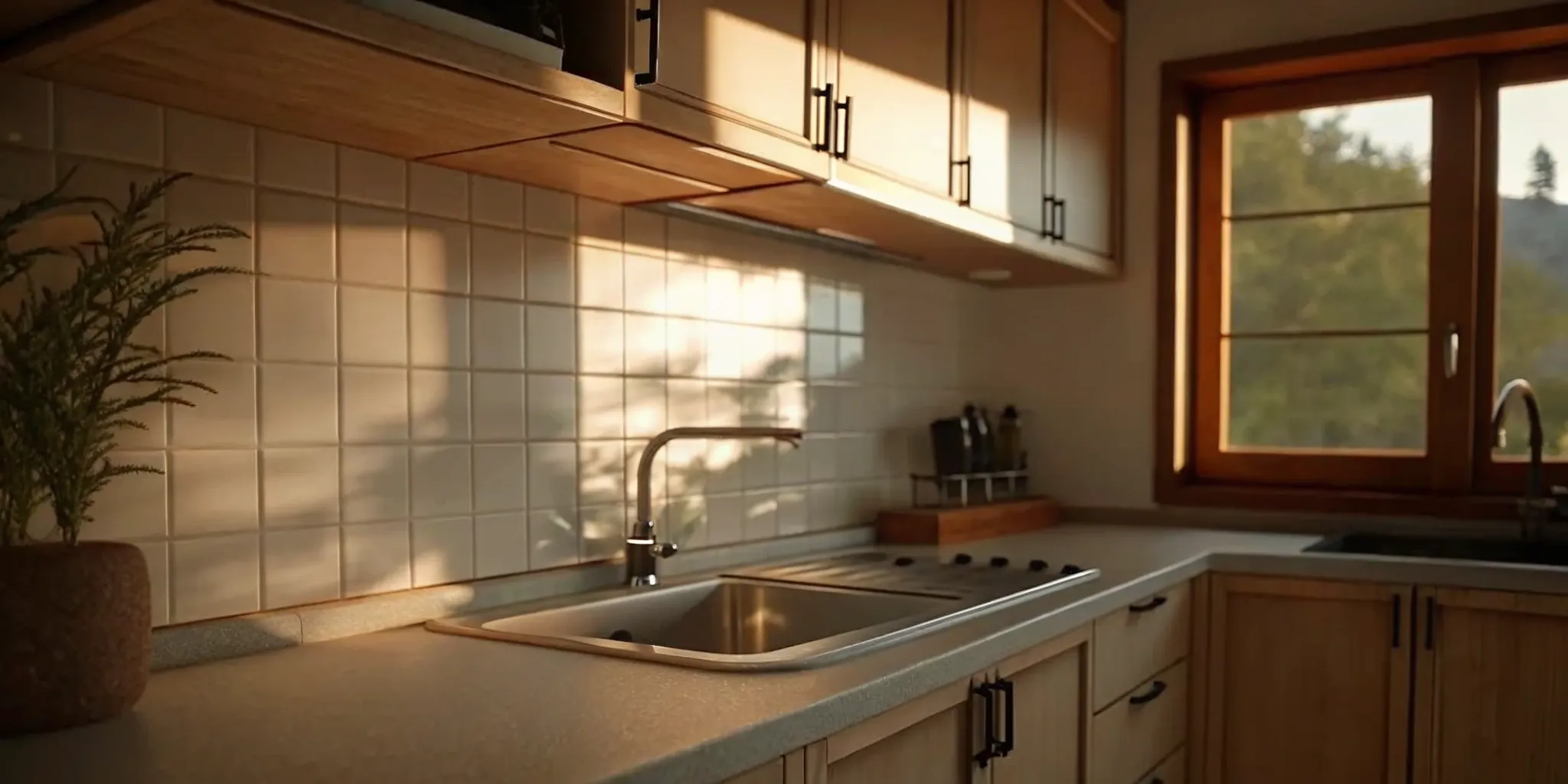
Whether you go with a garage conversion or a detached new build, one of the first scoping decisions you will face is how much kitchen to include. The range runs from a code-compliant kitchenette to a full residential kitchen, and the cost difference between them is $15,000 to $25,000 with a rental income impact that is often smaller than homeowners expect. This decision plays out slightly differently depending on which ADU type you are building. A garage conversion at 400 square feet constrains how much the kitchen is even practical. A detached new build gives you more layout flexibility. For a full breakdown of what each kitchen level costs, what renters actually pay more for, and how to decide which scope is right for your unit, see our article on full kitchen vs. kitchenette in an ADU.
Side-by-Side Comparison
Garage Conversion
Detached New Build Typical cost range (CA/WA) $150,000 to $240,000 $250,000 to $400,000+ Solar requirement (CA) Generally exempt Required under Title 24 Design flexibility Limited by existing footprint and framing Full control over size, layout, orientation Timeline 4 to 8 months typical 8 to 14 months typical Permit complexity Moderate, existing structure speeds some approvals Higher, full new construction review Best for Budget-conscious projects, smaller units, lots with limited rear yard space Larger units, 2-bedroom ADUs, homeowners prioritizing design and long-term rental income
How Realm Advisors Frame This Decision?
The framework Realm Advisors use on advisory calls is consistent across markets and property types. It runs in this order. First, assess the existing structure. Ceiling height, slab condition, footprint, and setback position. If the garage is not a strong conversion candidate, the decision is made before you get to cost comparisons. Second, compare all-in costs including solar on the detached path. Most homeowners receive bids that do not itemize solar separately, which understates the true cost of the new build and makes the comparison harder. Ask for the solar line item specifically. Third, check whether the garage footprint actually delivers the unit you want. A two-car garage can produce a strong studio or one-bedroom. If you need a two-bedroom, the conversion path may require an addition to the garage, which changes the economics significantly. When those three questions are answered, the right path usually becomes clear. It is not always the cheaper one on paper. It is the one that delivers the unit you can actually rent at the price point your market supports.
The Bottom Line
Not sure what the right call is for your project?
Book a free Advisor callA garage conversion is not automatically the right choice just because it costs less on the surface. A detached new build is not automatically out of reach just because the sticker price is higher. The decision comes down to your specific lot, your existing structure, your target unit size, and the full cost picture including solar. The homeowners who get this decision wrong almost always make it too early, before they have a real structural assessment and a side-by-side bid that accounts for every variable. The ones who get it right take both paths seriously and compare them with complete information. Not sure which ADU path makes sense for your lot? A Realm Advisor will look at your property, your budget, and your goals and give you a clear recommendation, including whether the solar cost changes the math on a new build. Book a call with an advisor for free. Related reading: * The ADU Bid Review Guide * How to Finance an ADU Construction Project * Garage Conversion Ideas on a Budget * What to Build at 450 Square Feet * Full Kitchen vs. Kitchenette in an ADU