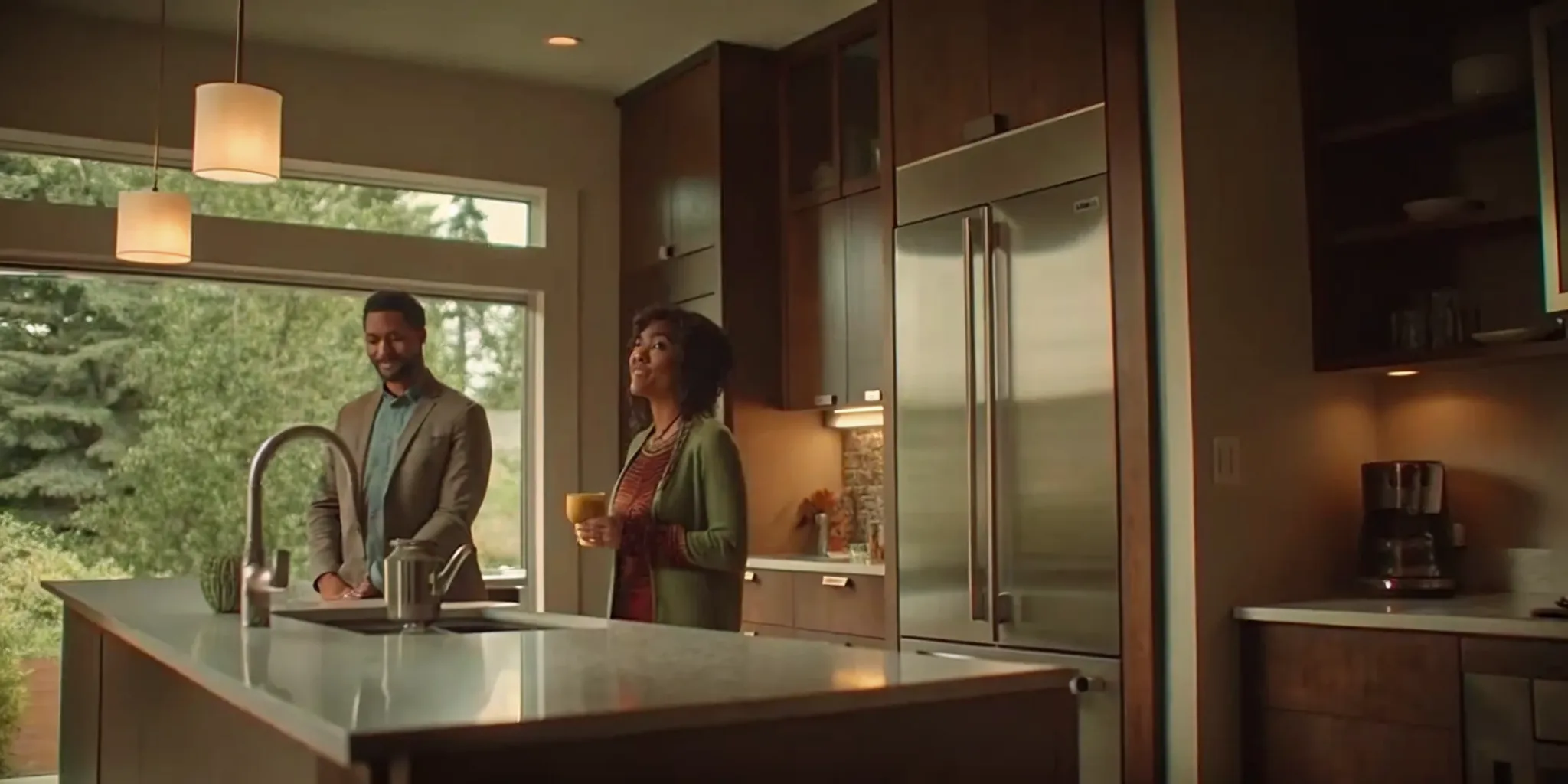
Full Kitchen vs. Kitchenette in an ADU: Which One Actually Earns More Rent?
Is a $15-25K full kitchen upgrade worth it in your ADU? Realm Advisors break down what renters pay for and when a kitchenette is the smarter call.
|
June 9, 2026
In this article:
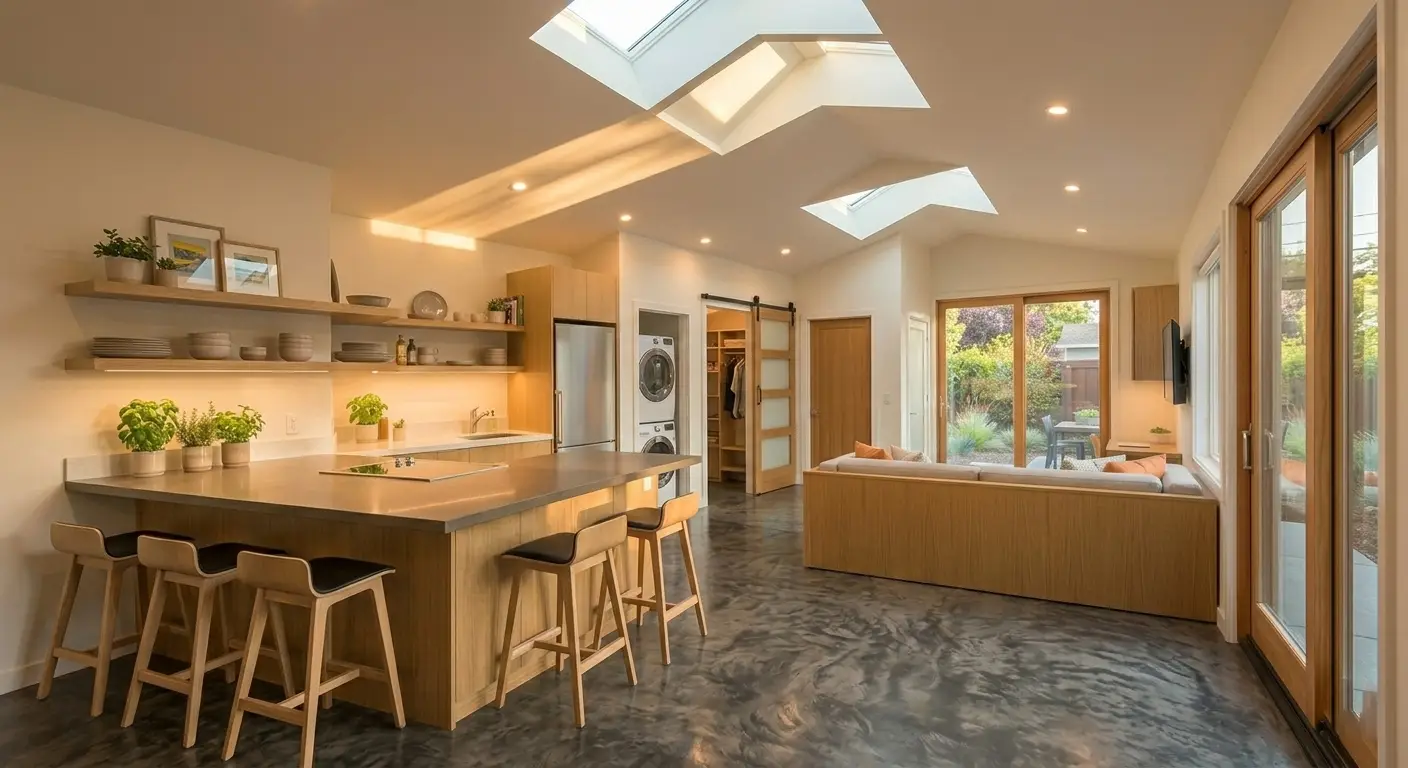
Most homeowners going through an ADU bid are handed two options: a kitchenette or a full kitchen. The contractor explains the difference in square footage and appliances. The permit coordinator explains what the county requires. And then you are left with a $15,000 to $25,000 decision and nobody willing to tell you the thing you actually need to know: does the upgrade change what you can charge in rent?
ADU contractors have an incentive to build full kitchens because they increase project scope. Permit sites can tell you what is legal, but not what renters in your specific submarket are actually willing to pay more for. This article can.
We have seen this question come up in roughly six out of ten ADU advisory calls at Realm, and it is almost never answered well, because contractors and permit coordinators do not have data on what your specific rental market actually pays for. Here is what we have learned from running that conversation with hundreds of homeowners across the Bay Area, Los Angeles, San Diego, and Seattle.
Why Does This Decision Matter More Than Most Homeowners Realize?
On paper, the choice between a kitchenette and a full kitchen looks like a kitchen decision. In practice, it is a return-on-investment decision, and the math does not always go the way you would expect.
The cost gap between a kitchenette build-out and a full kitchen in an ADU typically runs $15,000 to $25,000. That is real money. But here is what most homeowners do not find out until later: in many markets and many ADU configurations, that $15,000 to $25,000 in additional build cost produces less than $200 per month in additional rent.
Run that math forward. At $150 more per month, it takes over eight years to break even on a $15,000 kitchen upgrade, before you factor in appliance maintenance, higher replacement costs, and the fact that your renter may have preferred a lower rent with a simpler kitchen anyway. If you are still working out how to fund the build itself, our guide to financing an ADU construction project walks through the options most homeowners use and what each one costs over time.
That does not mean the full kitchen is always the wrong call. It means the right call depends on who your renter is, what your local market actually pays for, and what else you could do with that $15,000 to $25,000.
What California Law Actually Requires?
Before getting into the rental income math, it is worth clearing up a misconception that shows up constantly in this conversation. California does not require a full kitchen in a permitted ADU.
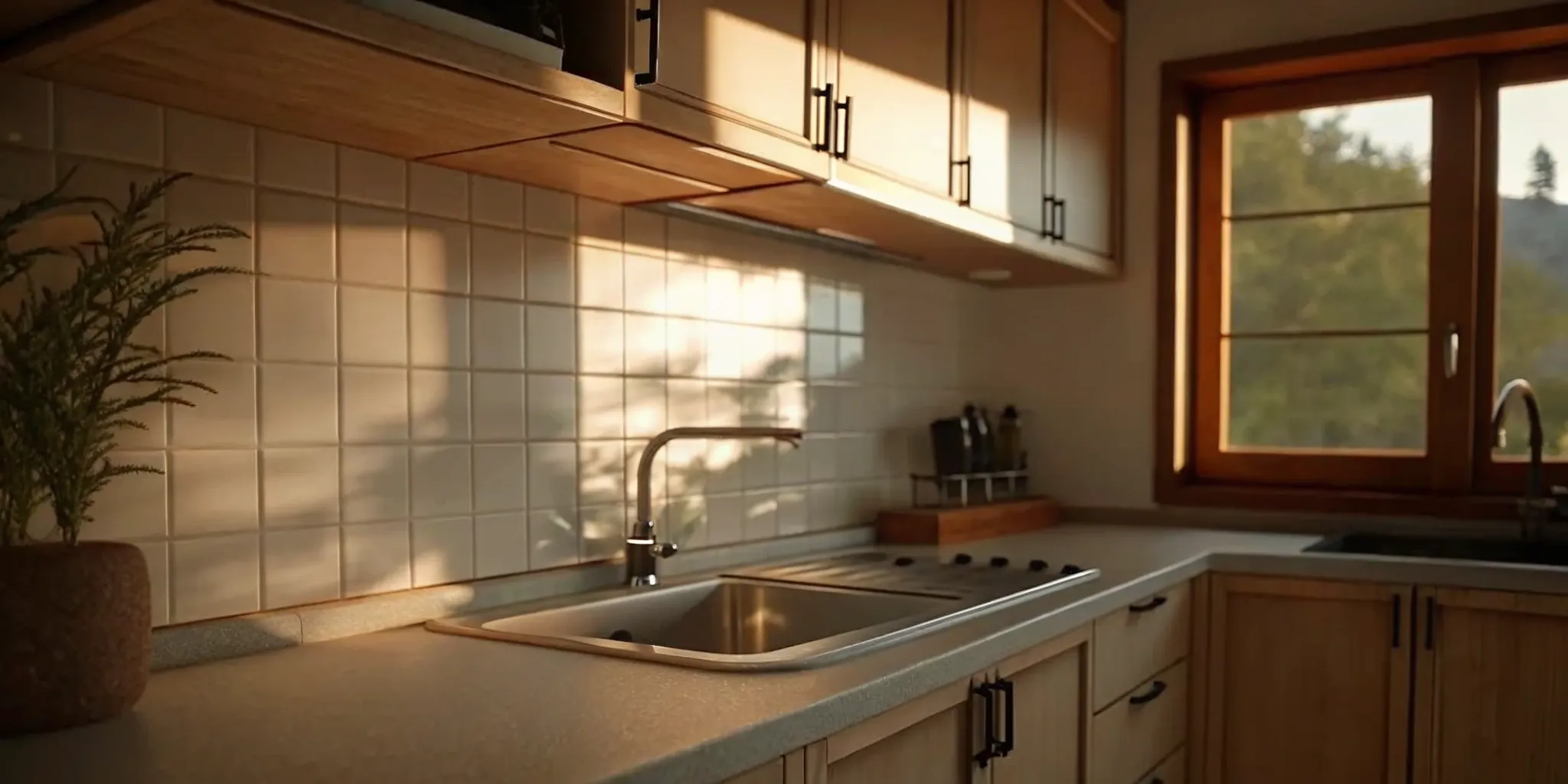
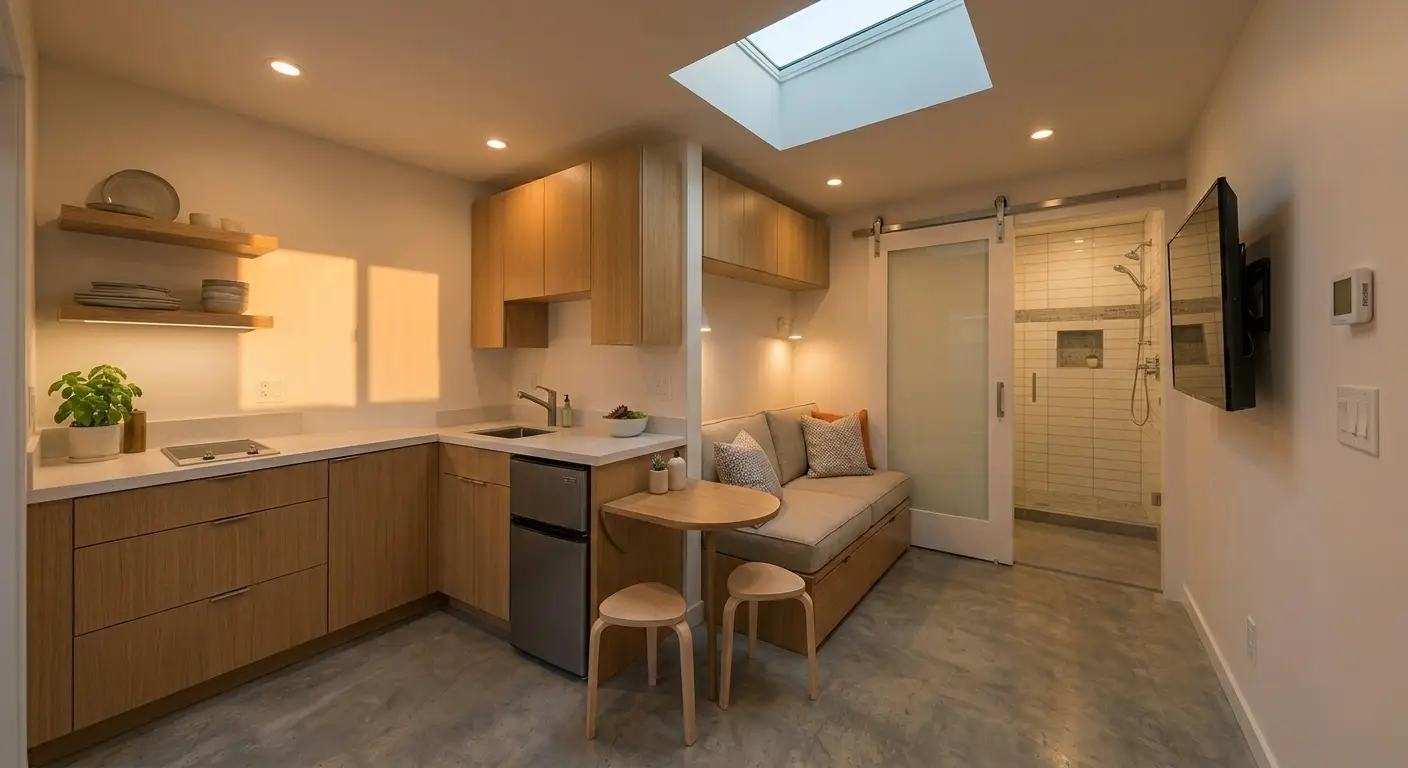
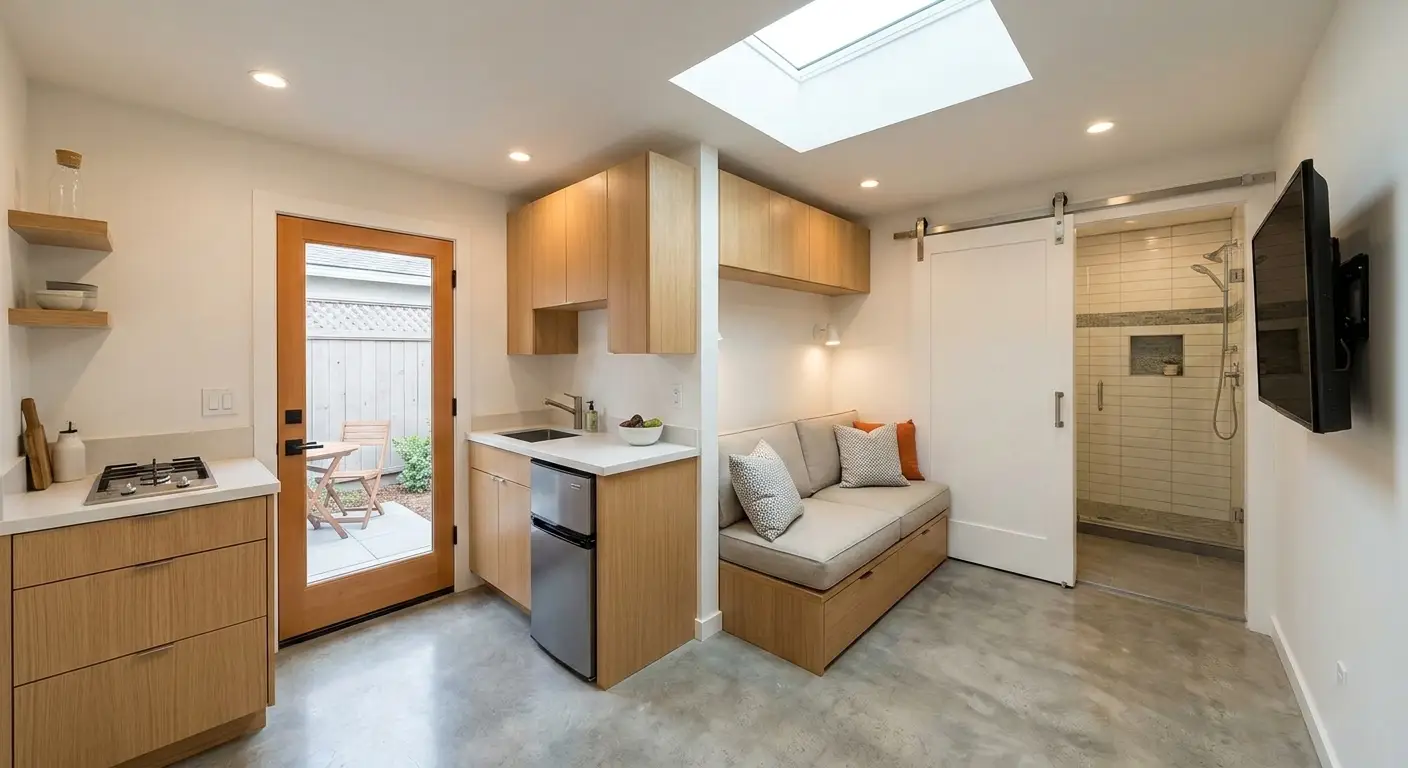
What the state requires is an efficiency kitchen, defined in the California Building Code as:
- A cooking appliance (a single or two-burner unit qualifies)
- A food storage area
- A sink
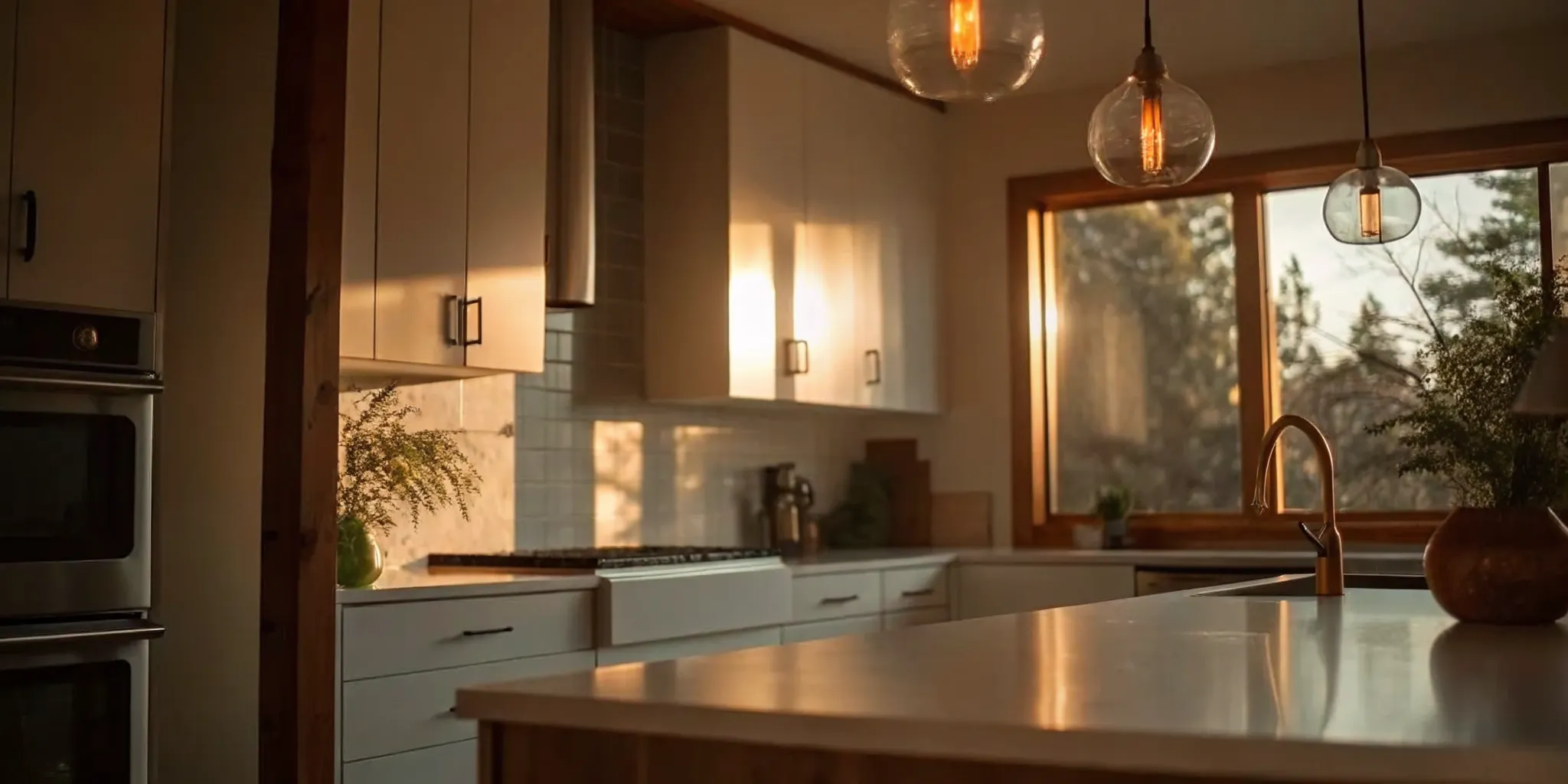
A four-burner range, a dishwasher, a full refrigerator: none of that is mandated by code. As one Realm Advisor explained to a homeowner during a recent call: "If it's a straight home addition, not an ADU, it wouldn't have that tiny kitchenette in it. That's really the only difference." The kitchenette is what legally defines the space as an ADU under California law, as codified in Government Code §65852.2, the primary statute governing ADU permitting statewide. Once you meet that threshold, anything beyond it is an upgrade, not a requirement.
This matters because it reframes the question. You are not choosing between legal and illegal. You are choosing between a code-compliant kitchenette and an upgraded full kitchen, and the question is whether the upgrade pays for itself in rent.
What Renters Actually Pay For?
This is where the contractor pitch and the rental market tend to diverge. ADU contractors have an obvious incentive to build full kitchens because they are of higher-value scope. Permit sites explain what is required. Neither source has visibility into what renters in your specific market are actually willing to pay a premium for. Realm does. Here is what our advisory data shows across the markets we serve.
In high-density, high-cost markets, including the Bay Area, coastal Los Angeles, and parts of San Diego, studios and one-bedroom ADUs typically rent in the $1,800 to $2,500 per month range. At those price points, the renter pool skews toward young professionals, couples, and remote workers. These renters want a private entrance, in-unit laundry, and reliable parking far more than they want a four-burner range. A well-finished kitchenette does not hurt you. A full kitchen does not reliably move the rent ceiling.
In markets where families or longer-term tenants are your primary renter pool, the calculus shifts. A couple with a young child, or a family member moving in for multigenerational living, is more likely to cook regularly and to value the full kitchen experience. In these cases, especially in ADUs with two or more bedrooms, or in markets where ADUs rent above $2,500 per month, a full kitchen can differentiate your unit and support a meaningfully higher rent.
For a broader look at which renovation decisions actually increase what your home is worth in California and Washington, see our breakdown of renovation projects that increase home value in CA and WA. The ADU rental income picture fits into a larger pattern of what the market rewards and what it does not.
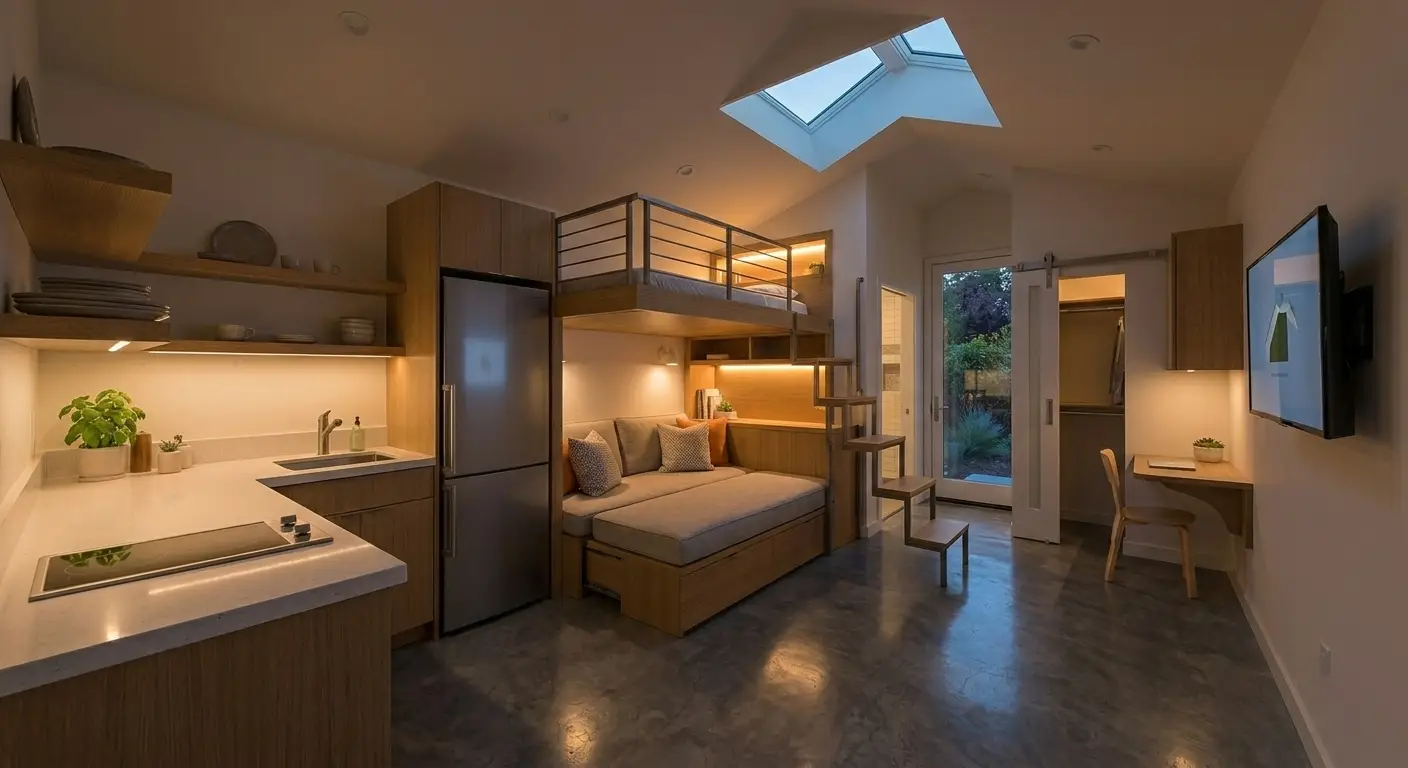
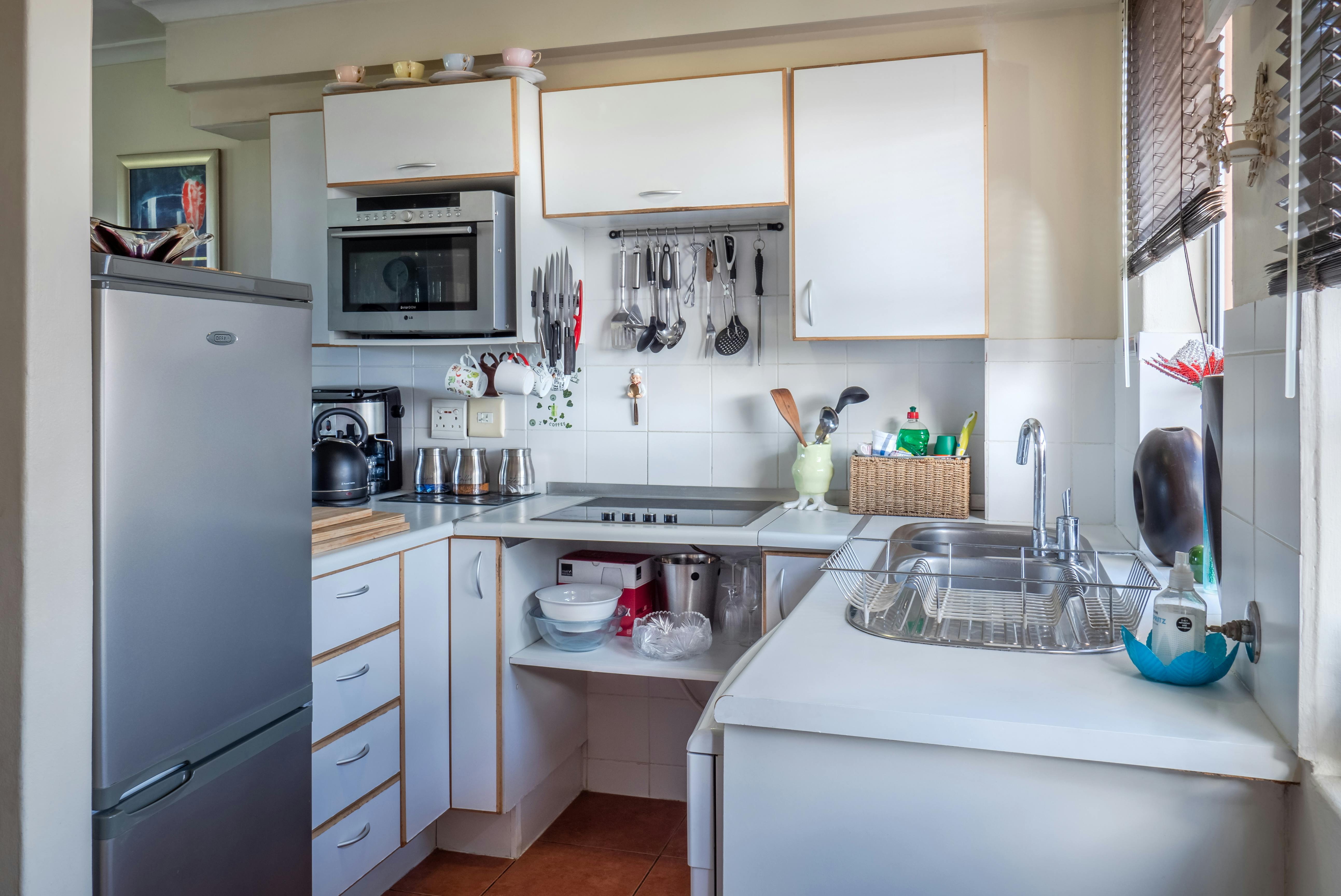
As one of our advisors put it during a call: "For a studio, you're probably looking at a studio or a small one-bedroom. 200 square feet, you're not going to have a ton of room for a full kitchen." Size constrains function. A two-burner cooktop in a 400-square-foot JADU is not a compromise. It is proportionate.
When a Full Kitchen Is Worth the Cost?
A full kitchen earns its premium under these conditions:
- Your target renter is a family or a couple with regular cooking habits. Long-term tenants who plan to cook daily value a full kitchen more than short-term renters. If your ADU configuration, including two or more bedrooms and a separate entrance, is set up to attract this renter profile, the kitchen upgrade is more defensible.
- Your local ADU market is above $2,500 per month. Above this threshold, renters have options and are comparing your unit against others. A full kitchen becomes table stakes rather than a premium.
- Your ADU has two or more bedrooms. Multi-bedroom ADUs attract tenants who expect full kitchen functionality. The mismatch between a two-bedroom layout and a kitchenette-only setup can work against you at showing time.
The ADU is for multigenerational, owner-occupied use. If a parent, in-law, or adult child is moving in, cooking access matters in a way that it often does not for market-rate renters. Build what the actual user needs.
When a Kitchenette Is the Smarter Call?
A kitchenette is the right financial decision under these conditions:
- You are targeting short-term rental or Airbnb. Short-term renters cook far less than long-term tenants. A kitchenette with a microwave and a two-burner cooktop is more than sufficient. The $15,000 to $25,000 you save goes further as a furniture or amenity budget.
- You are building a studio or small one-bedroom in a high-density market. The renter pool for small units in competitive markets prioritizes location and price. A full kitchen in a 350-square-foot unit can actually feel awkward, with too much infrastructure for the lifestyle the space supports.
- Your project is budget-constrained and you are deciding between kitchen scope and other features. This is where the real tradeoff lives, and we will come back to it below.
- Your ADU is a JADU where space is inherently constrained. JADUs are typically carved out of existing square footage. A two-burner cooktop and a sink is not a downgrade in this context. It is right-sized.
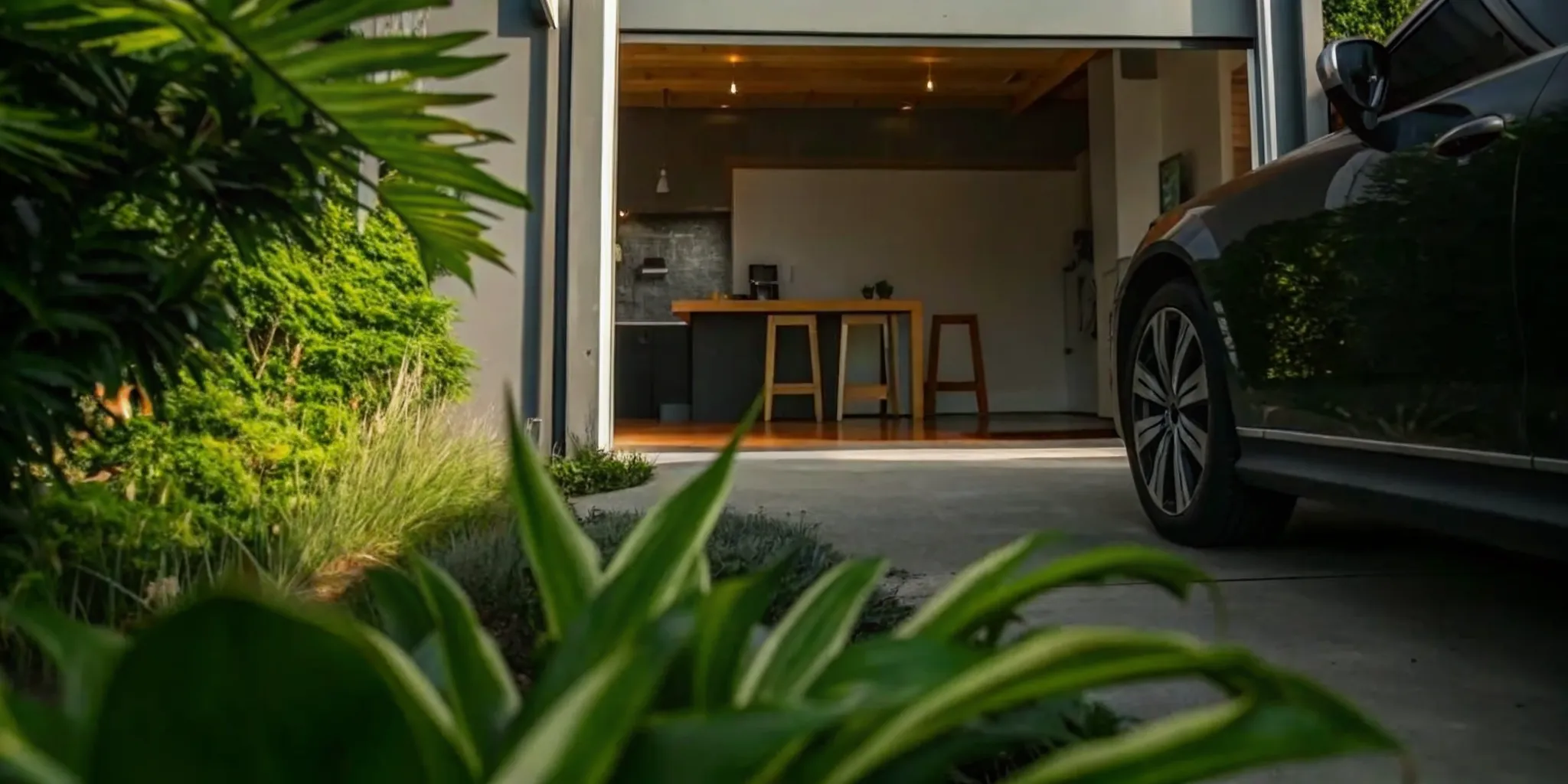
The type of ADU you are building, whether a garage conversion, a detached backyard unit, or a JADU, plays a major role in how much kitchen space is realistic. If you are still deciding on the structure itself, our comparison of garage conversion vs. detached ADU covers how each type affects your layout options, budget, and rental potential.
The $15,000 Question: Kitchen Upgrade vs. Features That Actually Move Rent
Here is the comparison most homeowners cannot find anywhere else. Say you have a $15,000 discretionary budget in your ADU scope. You can put it toward a full kitchen, or you can allocate it elsewhere. Based on what Realm Advisors have observed across hundreds of ADU rental outcomes, here is how that $15,000 performs.
Note: These ranges reflect Realm Advisory observations across Bay Area, Los Angeles, San Diego, and Seattle markets. Your specific market and unit configuration will affect outcomes. A Realm Advisor can pull actual rental comps for your area.
The pattern is consistent. Private entrance and in-unit laundry reliably move rent. Kitchen tier, in most studio and one-bedroom configurations, does not.
As our advisors put it when walking homeowners through finish-level decisions: "The kitchenette finishes, bathroom finishes, all of that sort of stuff, you're probably looking somewhere in the $10,000 range for those items. The main thing is going to be the flooring." Even the finish quality within the kitchenette category matters less than the structural features renters actually compare units on.
The Appliance Allowance Problem
One thing that catches homeowners off guard, regardless of which kitchen type they choose, is the appliance allowance built into most ADU bids.
Contractors routinely set appliance allowances low. They will quote a full kitchen, but the allowance embedded in the line item may be $800 to $1,200 for appliances that realistically cost $2,000 to $3,500 to spec properly. You do not find out until the project is mid-stream and you are looking at a change order.
This applies equally to kitchenettes. A two-burner induction cooktop, a compact refrigerator, and an over-the-range microwave from a quality brand can easily run $1,500 to $2,000. If your bid has a $600 allowance for kitchenette appliances, you are looking at an out-of-pocket surprise.
Before you finalize any bid, ask your contractor for the specific make and model they are using to calculate the allowance. If they cannot answer, that is a flag. If the answer does not match current retail pricing, that is a change order waiting to happen. Our ADU Bid Review Guide walks through exactly how to read appliance line items, catch low allowances before you sign, and negotiate before the contract is finalized.
A Simple Decision Framework
If you are not sure which kitchen type is right for your ADU, work through these four questions:
- Who is your target renter? Young professional or remote worker: a kitchenette is likely sufficient. Family or couple with a longer lease: a full kitchen is worth considering. Short-term rental or Airbnb: go with a kitchenette and spend the savings on amenities.
- What is the realistic rent ceiling in your market for this unit size? Under $2,500 per month for a studio or one-bedroom: a full kitchen rarely moves the needle. Above $2,500 per month, or with two or more bedrooms: a full kitchen is more defensible.
- Does your ADU already have the features that reliably drive rent? Private entrance, in-unit laundry, and parking come first. If any of those are missing from the plan, put the $15,000 there before upgrading the kitchen.
- Is this for owner-occupied multigenerational use? If yes, build what the user actually needs, not what maximizes ROI on paper.
What Realm Advisors Have Seen?
Homeowners who over-invest in kitchen scope, especially in small units in high-density markets, often find their rent ceiling unchanged. The exception is always the renter profile. A JADU that rents to a single working professional at $1,900 per month with a two-burner cooktop tells a different story than a two-bedroom detached ADU renting to a family at $3,200 per month with a full kitchen. Know your renter before you finalize your scope. This is one of the reasons Realm Advisors walk through the rental comp data with homeowners before the bid is finalized. The kitchen decision should be made with the local market data in hand, not after the contract is signed.
The Bottom Line
Not sure what the right call is for your project?
A full kitchen in your ADU is not inherently better or worse than a kitchenette. It is a capital allocation decision. The question is not "which is nicer?" It is "does the upgrade change what I can charge, and is that change worth the cost?" I
In most California markets, for most studio and one-bedroom ADU configurations, the answer is: not reliably. The features that consistently move rent, including private entrance, in-unit laundry, and dedicated parking, should come before kitchen upgrades in your budget priority order.
Trying to figure out how much kitchen your ADU actually needs? A Realm Advisor can show you the rental comps for your specific market and unit size, and help you decide whether the kitchen upgrade changes the rent enough to justify the cost. Book a free Advisor call and get the numbers for your specific market before you finalize the scope.